Showing posts with label classics. Show all posts

Saturday, May 25, 2013

Rabbit Hunting & Adams' Watership Down


It's not often that I side with gun-toting psychopaths, but I'll make an exception for Mr. Rodney Wold of Kentucky. Here is yesterday's Daily Mail article about him, "Man threatens his neighbor with an AK-47 in a dispute over rabbits:"
A 64-year-old man brandishing an AK47 assault rifle allegedly threatened his neighbor after spotting him trying to scare rabbits away from his garden.
Rodney Wold, from Louisville, shouted from his porch: "If you want to hunt something, hunt men," according to police.
The dispute on Thursday started when Wold's neighbor was using an air rifle to scare rabbits away from his back garden. When Wold saw the neighbor, he allegedly fetched the AK47 from his house and appeared on his porch moments later, brandishing it.
"He loaded the magazine with, I believe it was, 19 rounds and went back outside and pointed it at his neighbor," police spokesman Carey Klain said.
Sounds like excellent material for the next Steven Seagal movie! Anyway, for a novel that will help you see the world from rabbits' perspective (and maybe even see Mr. Wold as a hero), try Richard Adams' Watership Down:
Richard Adams's bunny-centric epic...follows a warren of Berkshire rabbits fleeing the destruction of their home by a land developer. As they search for a safe haven, skirting danger at every turn, we become acquainted with the band and its compelling culture and mythos.
Adams has crafted a touching, involving world in the dirt and scrub of the English countryside, complete with its own folk history and language (the book comes with a "lapine" glossary, a guide to rabbitese).  As much about freedom, ethics, and human nature as it is about a bunch of bunnies looking for a warm hidey-hole and some mates...

Monday, May 13, 2013

Kenya Asylum Break, Psychiatric Hospitals, & Kesey's One Flew Over the Cuckoo's Nest


From today's BBC article "Kenyan patients escape from Nairobi's Mathari hospital:"
Forty mentally ill patients have escaped from the Mathari Mental Hospital in Kenya's capital, Nairobi, after overpowering guards, police say.
A search has been launched for the patients, some of whom are known to be violent, police told the BBC. Kenya's Standard newspaper reports that the group escaped from the state hospital after complaining that the medicine given to them was ineffective.
Mathari is the biggest psychiatric hospital in Kenya. In 2011, rights groups called for an investigation into alleged human rights abuses at the hospital following a CNN documentary "Locked up and Forgotten". The CNN crew reported that during a visit to the hospital, they found a dead body locked up in a seclusion cell with a patient. Senior Nairobi police officer Moses Ombati told the BBC the patients had staged a protest, before overpowering guards and escaping.
For a novel about a psychiatric hospital, try Ken Kesey's classic One Flew Over the Cuckoo's Nest:
In this classic of the 1960s, Ken Kesey's hero is Randle Patrick McMurphy, a boisterous, brawling, fun-loving rebel who swaggers into the world of a mental hospital and takes over.
A lusty, life-affirming fighter, McMurphy rallies the other patients around him by challenging the dictatorship of Nurse Ratched. He promotes gambling in the ward, smuggles in wine and women, and openly defies the rules at every turn.
But this defiance, which starts as a sport, soon develops into a grim struggle, an all-out war between two relentless oppnonents: Nurse Ratched, back by the full power of authority, and McMurphy, who has only his own indomitable will. What happens when Nurse Ratched uses her ultimate weapon against McMurphy provides the story's shocking climax.
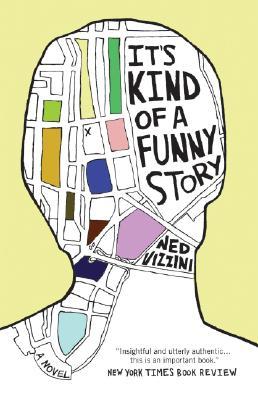
For a newer, young-adult psychiatric hospital novel, try It's Kind of a Funny Story by Ned Vizzini:
Like many ambitious New York City teenagers, Craig Gilner sees entry into Manhattan’s Executive Pre-Professional High School as the ticket to his future. Determined to succeed at life—which means getting into the right high school to get into the right college to get the right job—Craig studies night and day to ace the entrance exam, and does. That’s when things start to get crazy.
At his new school, Craig realizes that he isn't brilliant compared to the other kids; he’s just average, and maybe not even that. He soon sees his once-perfect future crumbling away. The stress becomes unbearable and Craig stops eating and sleeping—until, one night, he nearly kills himself.
Craig’s suicidal episode gets him checked into a mental hospital, where his new neighbors include a transsexual sex addict, a girl who has scarred her own face with scissors, and the self-elected President Armelio. There, isolated from the crushing pressures of school and friends, Craig is finally able to confront the sources of his anxiety.
Ned Vizzini, who himself spent time in a psychiatric hospital, has created a remarkably moving tale about the sometimes unexpected road to happiness.

Wednesday, March 13, 2013

The Iditarod & Henry's Murder on the Iditarod Trail


For those who enjoyed the Retirement Homes Are Murder recommendation from our retirement home post, we have another murder mystery for you.  But first, the news. 

From today's NPR article "Winning Musher Is Oldest Champion In Iditarod History:"
"Mitch Seavey scored one for the AARP-eligible crowd Tuesday night by becoming the oldest champion in Iditarod history," the Anchorage Daily News writes this morning. According to Alaska Public Telecommunications, the 53-year-old Seavey crossed the finish line at 10:39 p.m. local time on Tuesday — 2:39 a.m. ET Wednesday. It has "checkpoint to checkpoint" coverage of the race posted here. The Daily News says Seavey and his team of sled dogs finished the 1,000-mile race in "9 days, 7 hours, 39 minutes, 56 seconds." His team was led by "Tanner, a 6-year-old, orange-brown husky." Before this, the oldest musher to have led his team to victory was Jeff King. He was 50 when he won the race in 2006, the Daily News says. Seavey and his son Dallas are now the oldest and youngest winning mushers in Iditarod history. Dallas Seavey was 25 when he won the race in 2012. Mitch Seavey has won the Iditarod twice.

Want some Iditarod fiction? Try Sue Henry's Murder on the Iditarod Trail:
The winner of Alaska's world-famous Iditarod -- a grueling, eleven-hundred-mile dog sled race across a frigid Arctic wilderness---takes home a $250,000 purse. But this year, the prize is survival. Only the toughest and the most able come to compete in this annual torturous test of endurance, skill, and courage. Now, suddenly and inexplicably, the top Iditarod contestants are dying one by one in bizarre and gruesome ways. Jessie Arnold, Alaska's premier female "musher," fears she may be the next intended victim, but nothing is going to prevent her from aggressively pursuing the glory and the rewards that victory brings.
Oh yeah. Agatha Christie meets Jack London.

 If you're not into mysteries, you could try something by Hatchet-man Gary Paulsen. His dog-sledding books include both Winderdancea non-fiction account of his Iditarod experiences, and Dogsong, a young adult novel about an Eskimo boy's epic sled journey:
Something is bothering Russel Susskit. He hates waking up to the sound of his father's coughing, the smell of diesel oil, the noise of snow machines starting up. Only Oogruk, the shaman who owns the last team of dogs in the village, understands Russel's longing for the old ways and the songs that celebrated them. But Oogruk cannot give Russel the answers he seeks; the old man can only prepare him for what he must do alone. Driven by a strange, powerful dream of a long-ago self and by a burning desire to find his own song, Russel takes Oogruk's dogs on an epic journey of self-discovery that will change his life forever.

And while there's no Iditarod in Jack London's The Call of the Wild, there is a lot of dog sledding action, so you might want to give that a shot as well:
The story takes place in the extreme conditions of the Yukon during the 19th-century Klondike Gold Rush, where strong sled dogs were in high demand. After Buck, a domesticated dog, is snatched from a pastoral ranch in California, he is sold into a brutal life as a sled dog.

UPDATE:  there's a good review of Murder on the Iditarod Trail on the St. Thomas Dog Blog.

Friday, February 8, 2013

British Horsemeat Scandal & Sinclair's The Jungle

From today's CNBC article "First Burgers, Now Lasagna: Horsemeat Scandal Widens:"
Testing has confirmed that beef lasagna produced by food manufacturer Findus contained horsemeat, Britain's Food Standards Agency (FSA) said on Thursday... Investigations into suppliers have been launched in recent weeks after revelations that beef products sold at major British supermarkets including Tesco and fast food chain Burger King contained horsemeat.
Perfect book for this issue? Upton Sinclair's meat-packing classic, The Jungle:
1906 bestseller shockingly reveals intolerable labor practices and unsanitary working conditions in the Chicago stockyards as it tells the brutally grim story of a Slavic family that emigrates to America full of optimism but soon descends into numbing poverty, moral degradation, and despair. A fiercely realistic American classic that will haunt readers long after they've finished the last page.
(This description is from the book's page on Amazon.)


The book's final three chapters are politically preachy and can safely be skipped. Since the book was published in 1906, it is available free online.