Showing posts with label satire. Show all posts

Wednesday, May 15, 2013

The IRS & Wallace’s The Pale King


From yesterday’s BBC article “Outrage grows at IRS 'targeting' of conservative groups:”
The outrage over reports the US tax collection authority singled out conservative groups for extra scrutiny has continued to build. Three Congressional panels are planning hearings into actions by the Internal Revenue Service (IRS)...
The number of groups filing with the IRS for tax-exempt status shot up between 2010-12, after a Supreme Court decision loosened restrictions on campaign spending by groups not formally affiliated with candidates' campaigns.
Ahead of the 2012 presidential election, conservative groups complained to the IRS and to members of Congress that their applications for tax-exempt status were being held up and had received undue scrutiny…
While the head of the IRS tax-exempt division has said the "absolutely inappropriate" actions were limited to the agency's branch office in Cincinnati, Ohio, the Washington Post reported on Tuesday additional queries to conservative groups came from the Washington office and at least two other branch offices.
For a novel about the IRS, try The Pale King by David Foster Wallace:
The agents at the IRS Regional Examination Center in Peoria, Illinois, appear ordinary enough to newly arrived trainee David Foster Wallace. But as he immerses himself in a routine so tedious and repetitive that new employees receive boredom-survival training, he learns of the extraordinary variety of personalities drawn to this strange calling. And he has arrived at a moment when forces within the IRS are plotting to eliminate even what little humanity and dignity the work still has.

Monday, April 29, 2013

Indian Wars, Wounded Knee Massacre, & Berger's Little Big Man


From Saturday's BBC article "To whom does Wounded Knee belong?:"
Part of the historical site at Wounded Knee is up for sale. Should it be developed as a landmark or left in peace out of respect for the Sioux people who died there?
Almost as soon as the 1890 massacre at Wounded Knee was over, the battle to define what happened on that bleak December day began... [A]s many as 300 unarmed men, women and children were killed. And official reports from some in government criticizing the massacre were simply buried.
For the Sioux descendants still living in the Pine Ridge reservation, who remember first-hand accounts of the atrocity, the news that a key part of that painful history could be sold outside the tribe has come as a shock.
A 40-acre parcel of land that's part of the massacre site is up for sale, and its owner has given the tribe until 1 May to come up with the $3.9m (£2.5m) asking price. If they don't, land owner James Czywczynski says he will be forced to accept one of several offers he has already secured from commercial buyers, who may attempt to capitalize on the land as a tourist attraction.
For a novel about the Indian Wars (including massacres like Wounded Knee), try Thomas Berger's Little Big Man:
'I am a white man and never forget it, but I was brought up by the Cheyenne Indians from the age of ten.' So starts the story of Jack Crabb, the 111-year old narrator of Thomas Berger's masterpiece of American fiction. As a "human being", as the Cheyenne called their own, he won the name Little Big Man. He dressed in skins, feasted on dog, loved four wives and saw his people butchered by the horse soldiers of General Custer, the man he had sworn to kill.
As a white man, Crabb hunted buffalo, tangled with Wyatt Earp, cheated Wild Bill Hickok and survived the Battle of Little Bighorn. Part-farcical, part-historical, the picaresque adventures of this witty, wily mythomaniac claimed the Wild West as the stuff of serious literature.

You also might like Dances with Wolves by Michael Blake:
Ordered to hold an abandoned army post, John Dunbar found himself alone, beyond the edge of civilization. Thievery and survival soon forced him into the Indian camp, where he began a dangerous adventure that changed his life forever.

Thursday, April 18, 2013

Canadian Politics & Fallis' The Best Laid Plans


From yesterday’s Guardian article “Justin Trudeau takes up father's torch for Canada's Liberal party:”
There are few equivalents to the political power and promise associated with membership of the storied Kennedy clan. But in Canada, being the eldest son of former prime minister Pierre Elliott Trudeau comes close…
Now, more than a decade after Trudeau's death, his first-born son, Justin, has taken up his father's torch. An MP since 2008, he was elected leader of the Liberal party last weekend with an overwhelming 80% of votes cast…
Now Trudeau, 41, has a task more daunting than living up to his famous name. His challenge leading up to the next federal election in 2015 is to return the once dominant Liberal party to power. It is no easy job given that the Liberals, who made up the government in 2006, are now in greatly diminished third place in the House of Commons.
For a novel about Canadian politics, try The Best Laid Plans by Terry Fallis:
A burnt-out politcal aide quits just before an election — but is forced to run a hopeless campaign on the way out. He makes a deal with a crusty old Scot, Angus McLintock — an engineering professor who will do anything, anything, to avoid teaching English to engineers — to let his name stand in the election. No need to campaign, certain to lose, and so on.
Then a great scandal blows away his opponent, and to their horror, Angus is elected. He decides to see what good an honest M.P. who doesn’t care about being re-elected can do in Parliament. The results are hilarious — and with chess, a hovercraft, and the love of a good woman thrown in, this very funny book has something for everyone.

Political Appointees, Diplomats, & Boyd's A Good Man in Africa


 From last week’s Washington Post editorial, “Presidents are breaking the U.S. Foreign Service:”
…What accounts for the Foreign Service being marginalized? The most visible factor is the overwhelming — and growing — presence of political appointees in mid-level and top leadership positions at the State Department.
For all their merit, political appointees are short-term officials, subject to partisan, ­personality-specific pressures. They do not notably contribute to the institution’s longer-term vitality, and their ascension creates a system inherently incapable of providing expert, nonpartisan foreign policy advice…
Since 1975, the number of top leadership positions … filled by career Foreign Service officers has fallen from 61 percent in 1975 to 24 percent in 2012. Only five of the 35 special envoys, representatives, advisers and coordinators appointed during President Obama’s first term were Foreign Service officers.

For a hilarious, satirical novel about life as a diplomat (in this case, a British diplomat), try A Good Man in Africa by William Boyd -- one of my top ten favorite novels of all time:
In the small African republic of Kinjanja, British diplomat Morgan Leafy bumbles heavily through his job. His love of women, his fondness for drink, and his loathing for the country prove formidable obstacles on his road to any kind of success.
But when he becomes an operative in Operation Kingpin and is charged with monitoring the front runner in Kinjanja’s national elections, Morgan senses an opportunity to achieve real professional recognition and, more importantly, reassignment.
After he finds himself being blackmailed, diagnosed with a venereal disease, attempting bribery, and confounded with a dead body, Morgan realizes that very little is going according to plan...

Wednesday, April 3, 2013

E-Cigarettes & Buckley's Thank you for Smoking


I've covered pot and alcohol; now it's time to move on to cigarettes.  Electronic cigarettes, that is.

From the March 23rd editorial in The Economist, "No smoke. Why the fire?:"
Some inventions are so simple, you have to wonder why no one has come up with them before. One such is the electronic cigarette. Smoking tobacco is the most dangerous voluntary activity in the world. More than 5m people die every year of the consequences. That is one death in ten. People smoke because they value the pleasure they get from nicotine in tobacco over the long-term certainty that their health will be damaged. So it seems rational to welcome a device that separates the dangerous part of smoking (the tar, carbon monoxide and smoke released by the process of combustion) from the nicotine. 
And that is what an e-cigarette does. It uses electricity from a small battery to vaporise a nicotine-containing solution, so that the user can breathe it in. E-cigarettes do not just save the lives of smokers: they bring other benefits too. Unlike cigarettes, they do not damage the health of bystanders. They do not even smell that bad, so there is no public nuisance, let alone hazard, and thus no reason to ban their use in public places. Pubs and restaurants should welcome them with open arms.  
No wonder the e-cigarette market is growing. Though still small compared with that for real smokes, it doubled in America last year and is likely to do so again in 2013. 
Who could object? Quite a lot of people, it seems. Instead of embracing e-cigarettes, many health lobbyists are determined to stub them out. Some claim that e-cigarettes may act as “gateways” to the real thing. Others suggest that the flavourings sometimes added to the nicotine-bearing solution make e-cigarettes especially attractive to children...
It seems that the next evolution in the long history of tobacco has arrived.

For a book about cigarettes and the tobacco lobby, try Christopher Buckley's satirical novel Thank You for Smoking:
Nick Naylor likes his job. In the neo-puritanical nineties, it's a challenge to defend the rights of smokers and a privilege to promote their liberty. Sure, it hurts a littIe when you're compared to Nazi war criminals, but Nick says he's just doing what it takes to pay the mortgage and put his son through Washington's elite private school St. Euthanasius. He can handle the pressure from the antismoking zealots, but he is less certain about his new boss, BR, who questions whether Nick is worth $150,000 a year to fight a losing war. Under pressure to produce results, Nick goes on a PR offensive. But his heightened notoriety makes him a target for someone who wants to prove just how hazardous smoking can be. If Nick isn't careful, he's going to be stubbed out.

Tuesday, April 2, 2013

Reality TV & Peltier's Reality Boulevard


From today's BBC article "French reality TV doctor kills himself after contestant dies:"
A doctor who worked on French adventure reality TV show Koh Lanta has killed himself in Cambodia after one of the programme's contestants died. In a suicide note, Thierry Costa, 38, said his name had been "sullied by the media" over the death of Gerald Babin a week ago. Mr Babin had a heart attack during filming on the island of Koh Rong. Some media reports had criticised Dr Costa, saying he had taken too much time to treat the 25-year-old. Mr Babin had complained of cramps on the first day of filming on the southern Cambodian island on 22 March. Dr Costa administered emergency care before Mr Babin was airlifted to a mainland hospital where he died. French authorities have launched a preliminary investigation into Mr Babin's death. Broadcaster TF1 announced last week it would axe the popular show, described as France's version of Survivor, in response to his death.
For a novel about reality television, try Reality Boulevard by Melissa Jo Peltier:
When Oscar-winning producer Marty Maltzman’s award-winning non-fiction series Lights and Sirens is suddenly cancelled after 16 seasons, the quirky documentary film-maker and his colorful staff find themselves unemployed and out on the streets in an artificial new Hollywood filled with Kardashians, Survivors and Real Housewives. As the collection of oddball characters adapt to a surreal world where the lines between truth and lies are blurred – both on and off the screen – this darkly funny novel reveals an insider’s view of Hollywood and Reality TV.

Tuesday, March 26, 2013

Inflated Legal Bills & Blachman's Anonymous Lawyer


From yesterday's New York Times article "Suit Offers a Peek at the Practice of Inflating a Legal Bill:"
They were lawyers at the world’s largest law firm, trading casual e-mails about a client’s case. One made a sarcastic joke about how the bill was running way over budget. Another responded by describing a colleague’s approach to the assignment as “churn that bill, baby!” The e-mails, which emerged in a court filing late last week, provide a window into the thorny issue of law firm billing. The documents are likely to reinforce a perception held by many corporate clients — and the broader public — that law firms inflate bills by performing superfluous tasks and overstaffing assignments. 
The internal correspondence of the law firm, DLA Piper, was disclosed in a fee dispute between the law firm and Adam H. Victor, an energy industry entrepreneur. After DLA Piper sued Mr. Victor for $675,000 in unpaid legal bills, Mr. Victor filed a counterclaim, accusing the law firm of a “sweeping practice of overbilling.” 
Mr. Victor’s feud with DLA Piper began after he retained the firm in April 2010 to prepare a bankruptcy filing for one of his companies. A month after the filing, a lawyer at the firm warned colleagues that the entrepreneur’s bill was mounting. “I hear we are already 200k over our estimate — that’s Team DLA Piper!” wrote Erich P. Eisenegger, a partner at the firm. Another DLA Piper lawyer, Christopher Thomson, replied, noting that a third colleague, Vincent J. Roldan, had been enlisted to work on the matter. “Now Vince has random people working full time on random research projects in standard ‘churn that bill, baby!’ mode,” Mr. Thomson wrote. “That bill shall know no limits.”
I don't mean to be unfair to lawyers (I'm sure lots of professions overcharge), but this story was too good to pass up. For a novel to match this, I think satire would be best. It's hard to imagine To Kill a Mockingbird or A Time to Kill focusing much on billable hours. So my recommendation is Jeremy Blachman's hilarious Anonymous Lawyer, "A wickedly funny debut novel about a high-powered lawyer whose shockingly candid blog about life inside his firm threatens to destroy him." I love how it opens:
I see you. I see you walking by my office, trying to look like you have a reason to be there. But you don't. I see the guilty look on your face. You try not to make eye contact. You try to rush past me as if you're going to the bathroom. But the bathroom is at the other end of the hall. You think I'm naïve, but I know what you're doing. Everyone knows. But she's my secretary, not yours, and her candy belongs to me, not you. And if I have a say in whether or not you ever become a partner at this firm--and trust me, I do--I'm not going to forget this. My secretary. My candy. Go back to your office and finish reading the addendum to the lease agreement. I don't want to see you in the hall for at least another sixteen hours. AND STOP STEALING MY CANDY.

Monday, March 25, 2013

Medical School & Shem's House of God


I've previously posted about the difficulties of caregiving.  How about the difficulties of being a doctor -- or even just training to be one?

From today's Boston Globe article "Empathy gap in medical students:"
Flint Wang was eager to start his third year of medical school, when he would finally break free of the classroom and treat patients. But once in the hospital, Wang, like many classmates, felt insecure and discouraged. Doctors don’t hesitate to point out students’ knowledge gaps. And neither do some patients. Medical training can be so stressful that it is sometimes difficult to connect with those being treated. “Your knowledge is shaky and you walk around the wards frazzled,’’ said Wang, 25, who nonetheless is glad he decided to become a doctor. 
The third year of medical school can be particularly bruising. But growing research suggests that something about this formative but punishing experience may harden students toward patients — a transformation that could persist years down the road. At Boston University School of Medicine, where Wang is now in his fourth year, Dr. Daniel Chen has found in studies that students’ empathy scores fell between the time they started medical school and the time they graduated. The most significant drop occurred in the third year, just as students started caring for their first patients.
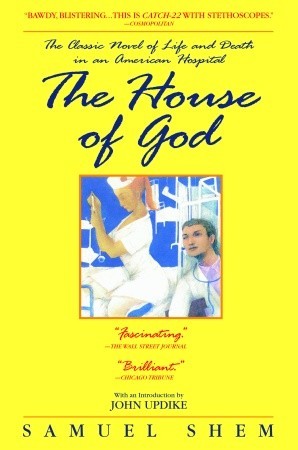
For a novel about medical school, try The House of God by Samuel Shem:
The hilarious novel of the healing arts that reveals everything your doctor never wanted you to know. Six eager interns -- they saw themselves as modern saviors-to-be. They came from the top of their medical school class to the bottom of the hospital staff to serve a year in the time-honored tradition, racing to answer the flash of on-duty call lights and nubile nurses. But only the Fat Man --the Clam, all-knowing resident -- could sustain them in their struggle to survive, to stay sane, to love-and even to be doctors when their harrowing year was done.
And according to the 2009 NYT article "A Book Doctors Can’t Close," the book is still frequently read among the medical community:
It was a raunchy, troubling and hilarious novel that turned into a cult phenomenon devoured by a legion of medical students, interns, residents and doctors. It introduced characters like “Fat Man” — the all-knowing but crude senior resident — and medical slang like Gomer, for Get Out of My Emergency Room. Called “The House of God,” the book was drawn from real life, and 30 years after its initial publication, it is still part of the medical conversation. Written by a psychiatrist, Stephen Bergman, under the pseudonym Samuel Shem, M.D., the novel is based on his grueling, often dehumanizing experiences as an intern at Harvard Medical School’s Beth Israel Hospital in 1974... 
What makes “The House of God” singularly compelling is its brutally honest portrayal of the absurd tragedies and occasional triumphs of hospital life; the once-common abuse of young physicians by their superiors; and the anger and frustration these interns directed at themselves and patients. The novel introduced many derogatory terms to the medical culture. Gomer referred to the elderly, chronically ill patients no intern wants to deal with. The shorthand LOL in NAD (Little Old Lady in No Apparent Distress), was for patients needlessly admitted by their private physicians for expensive work-ups...

Sunday, March 24, 2013

Musharraf's Return & Hanif's A Case of Exploding Mangoes


From today's BBC story "Musharraf returns to Pakistan despite threats:"
Former Pakistani President Pervez Musharraf has arrived back in Pakistan, ending four years of self-imposed exile and defying death threats. A protection detail of heavily armed commandos met him after his plane from Dubai touched down in Karachi airport. A mass rally in the city was cancelled. General Musharraf plans to lead his party in the May general election...  He faces a string of charges including conspiracy to murder, but on Friday the Pakistani authorities granted him protective bail in several outstanding cases, freeing him from immediate arrest once he sets foot in Pakistan. One of the charges is that he failed to provide adequate security for opposition leader Benazir Bhutto after she returned from exile in 2007. Two deadly explosions, in which nearly 140 people died, greeted her arrival in Karachi on 19 October. She was killed that December at a rally in Rawalpindi.
For a satirical novel about Pakistaini politics (and assassinations), try A Case of Exploding Mangoes by Mohammed Hanif:
Ali Shigri, Pakistan Air Force pilot and Silent Drill Commander of the Fury Squadron, is on a mission to avenge his father's suspicious death, which the government calls a suicide. Ali's target is none other than General Zia ul-Haq, dictator of Pakistani. Enlisting a rag-tag group of conspirators...Ali sets his elaborate plan in motion. There's only one problem: the line of would-be Zia assassins is longer than he could have possibly known.
If satire isn't really your thing, of if you'd prefer a book more focused on Pakistani society than Pakistani politics, you might like In Other Rooms, Other Wonders by Daniyal Mueenuddin:
Daniyal Mueenuddin's collection of linked stories illuminates a place and a people through an examination of the entwined lives of landowners and their retainers on the Gurmani family farm in the countryside outside of Lahore, Pakistan. An aging feudal landlord's household staff, the villagers who depend on his favor, and a network of relations near and far who have sought their fortune in the cities confront the advantages and constraints of station, the dissolution of old ways, and the shock of change. Mueenuddin bares - at times humorously, at times tragically - the complexities of Pakistani class and culture and presents a vivid picture of a time and a place, of the old powers and the new, as the Pakistani feudal order is undermined and transformed.

Friday, March 22, 2013

University Faculty Politics & Russo's Straight Man


From Wednesday's Atlanta Journal-Constitution article "Emory faculty tables vote of no confidence in Wagner:"
Emory University President James W. Wagner, shown in an October 2012 photo, was censured by the faculty for his column about the notorious three-fifths compromise reached by the founders of the U.S. Constitution. Emory University faculty again tabled holding a vote of no confidence in President James Wagner, but agreed to meet within the next three weeks to continue the debate. “This is a serious issue and we want to get this right,” said Stefan Lutz, faculty governance chairman for the College of Arts and Sciences. Faculty in the college met privately with Wagner on Wednesday to discuss a variety of topics ranging from communication issues to cuts to college programs to the national condemnation Emory received because of a column he wrote. In the essay Wagner used the notorious three-fifths compromise as an example of how people with opposing viewpoints can work together toward a common goal. 
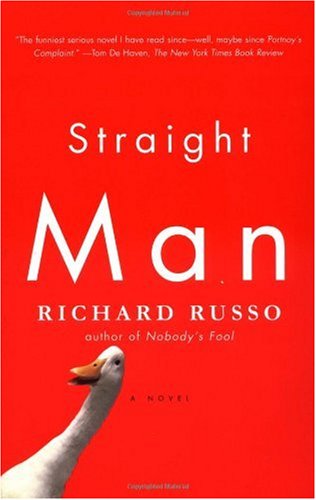
Wagner's essay was a major news story when it broke last month. I was glad to find the Atlanta Journal-Constitution's follow-up article because it allows me to mention one of my favorite novels, Richard Russo's Straight Man:
William Henry Devereaux Jr. finds himself past midlife, chair of the English department at an academic backwater, not having produced a book in 20 years, embroiled in departmental politics, maybe about to lay off colleagues, maybe on the block himself... Still, his relationships with his father, wife, daughter, and students occupy most of his time, until one day, wearing fake nose, glasses, and mustache, he threatens on TV to kill one of the campus ducks every day until his departmental budget is finalized, making the national morning talk shows.
There's a great review of Straight Man on the Tales from the Reading Room blog.

Sunday, March 10, 2013

Caregiving Difficulties & Evison's The Revised Fundamentals of Caregiving


 From last month's NYT editorial "The Reluctant Caregiver:"
Now and then, I refer to the people that caregivers tend to as “loved ones.” And whenever I do, a woman in Southern California tells me, I set her teeth on edge. She visits her mother-in-law, runs errands, helps with the paperwork — all tasks she has shouldered with a grim sense of duty. She doesn’t have much affection for this increasingly frail 90something or enjoy her company; her efforts bring no emotional reward... “It’s important to acknowledge that every relationship doesn’t come from ‘The Cosby Show,’” said Barbara Moscowitz when I called to ask her about reluctance. Ms. Moscowitz, a senior geriatric social worker at Massachusetts General Hospital, has heard many such tales from caregivers in her clinical practice and support groups... For a reluctant caregiver, “the satisfaction is, you haven’t turned your back,” Ms. Moscowitz said. “You can take pride in that.”
Okay: interesting moral quandary that I hadn't previously considered. And the debate only gets deeper in the comments section. Here's the most popular comment:
I strongly disagree with Ms. Moskowitz's claim that there's satisfaction in knowing you haven't turned your back, and you can take pride in that. I'm looking back with resentment and regret at the two years I've already spent in the caregiver role, and I can't imagine that I'll look back in 5 or 10 years or whenever it's over and feel anything but greater resentment and greater regret. I'm never getting these years back, after all, and by the time it's over it may be too late even to get a reasonable level of health back. I think it does caregivers a disservice to sugar-coat the reality, and claim that even for the reluctant caregiver, there's a benefit there at that end. I'd much prefer to hear the unvarnished truth - that many of us are simply unfortunate enough to be conscripted into a lengthy period of life-wasting, soul-sucking servitude for which there is no compensation and no benefit. I think if more people started telling the truth about this, it might make a dent in everyone's expectation that adult children (daughters and daughters-in-law, in particular) should and will just suck it up and do it.
Pretty heavy themes.  For a novel about difficult caregiving, try Jonathan Evison's The Revised Fundamentals of Caregiving:
Benjamin Benjamin has lost virtually everything: his wife, his family, his home, his livelihood. With few options, Ben enrolls in a night class called The Fundamentals of Caregiving, where he is instructed in the art of inserting catheters and avoiding liability, about professionalism, and on how to keep physical and emotional distance between client and provider. But when Ben is assigned to tyrannical nineteen-year-old Trevor, who is in the advanced stages of Duchenne muscular dystrophy, he soon discovers that the endless mnemonics and service plan checklists have done little to prepare him for the reality of caring for a fiercely stubborn, sexually frustrated adolescent with an ax to grind with the world at large. Though begun with mutual misgivings, the relationship between Trev and Ben evolves into a close camaraderie, and the traditional boundaries between patient and caregiver begin to blur as they embark on a road trip to visit Trevor's ailing father.
NB:  article focuses on difficult caregiving for parents, while the book focuses on (initially) difficult caregiving for a client who is not a relative.

UPDATE:  some well-written reviews of The Revised Fundamentals of Caregiving are available on The Book Reporter, the Fiction Writers' Review, and the Next Best Book Blog.

Thursday, February 7, 2013

Corruption in India & Adiga's The White Tiger

The following is from this Monday's BBC article "India court charges Suresh Kalmadi with corruption:"
A court in India has charged the chief of Delhi's 2010 Commonwealth Games, Suresh Kalmadi, with corruption. Mr Kalmadi and nine others have been charged with cheating, forgery and criminal conspiracy. He denies the charges and has pleaded not guilty. The case will be heard at a fast-track court in Delhi. Estimated to be worth $16.5m (£10m) in funds lost to the exchequer, the case is one of several corruption scandals to have rocked India's government.
A hilarious novel that discusses corruption in India is Aravind Adiga's The White Tiger:
In this darkly comic début novel set in India, Balram, a chauffeur, murders his employer, justifying his crime as the act of a "social entrepreneur." In a series of letters to the Premier of China, in anticipation of the leader’s upcoming visit to Balram’s homeland, the chauffeur recounts his transformation from an honest, hardworking boy growing up in "the Darkness"—those areas of rural India where education and electricity are equally scarce, and where villagers banter about local elections "like eunuchs discussing the Kama Sutra"—to a determined killer. He places the blame for his rage squarely on the avarice of the Indian élite, among whom bribes are commonplace, and who perpetuate a system in which many are sacrificed to the whims of a few.
(The above book review is from The New Yorker. I can't find the original New Yorker page it comes from, but here is the Amazon page I found it on.)

Tuesday, February 5, 2013

U.S. War in Afghanistan & Abram's Fobbit

From Sunday's NYT article "Pentagon Expects U.S. to Retain Presence in Afghanistan:"
The Pentagon’s top civilian and military officials on Sunday expressed an expectation, even a desire, that American troops would remain in Afghanistan after the NATO mission ends in December 2014, although they emphasized that no decision had been made.
A book that seemed insightful about working in a Forward Operating Base (FOB) in Iraq is David Abram's Fobbit. I say "seemed" because I haven't been there and wouldn't know. But the book is excellent: darkly humorous, like Catch-22 for the 2003-2011 Iraq War. While the novel is based in Iraq, I imagine that much of what was true about life in Iraq's FOBs remains true for the FOBs in Afghanistan. Here's the book description:
Fobbit takes us into the chaotic world of Baghdad’s Forward Operating Base Triumph. The Forward Operating base, or FOB, is like the back-office of the battlefield – where people eat and sleep, and where a lot of soldiers have what looks suspiciously like an office job. Male and female soldiers are trying to find an empty Porta Potty in which to get acquainted, grunts are playing Xbox and watching NASCAR between missions, and a lot of the senior staff are more concerned about getting to the chow hall in time for the Friday night all-you-can-eat seafood special than worrying about little things like military strategy. Darkly humorous and based on the author's own experiences in Iraq, Fobbit is a fantastic debut that shows us a behind-the-scenes portrait of the real Iraq war.