Showing posts with label crime. Show all posts

Thursday, May 9, 2013

The Cleveland Abductions, Kidnapping, & Sebold's The Lovely Bones


From yesterday's BBC article "Ariel Castro faces rape and kidnap charges in Ohio case:"
The owner of the Ohio house from which three women were rescued this week a decade after they went missing has been charged with kidnapping and rape, US prosecutors have said. Ariel Castro, 52, will appear in court on Thursday. His brothers Pedro, 54, and Onil, 50, will not be charged.
Amanda Berry, 27, Gina DeJesus, 23, and Michelle Knight, 32, were found in the Cleveland house on Monday. Cleveland's police chief has said the women were bound with ropes and chains.
In a news conference on Wednesday afternoon, authorities said Mr Castro would be charged with four counts of kidnapping, covering the three victims and Ms Berry's six-year-old daughter Jocelyn, alleged to have been born in captivity. Mr Castro was also charged with one count of rape against each woman.
For a novel about kidnapping and what it puts a family through, try The Lovely Bones by Alice Sebold:
The Lovely Bones is the story of a family devastated by a gruesome murder -- a murder recounted by the teenage victim...
The details of the crime are laid out in the first few pages... Susie Salmon describes how she was confronted by the murderer one December afternoon on her way home from school. Lured into an underground hiding place, she was raped and killed. But what the reader knows, her family does not. Anxiously, we keep vigil with Susie, aching for her grieving family, desperate for the killer to be found and punished.
Another novel about a kidnapping is Room by Emma Donoghue. I didn't like this book -- the five-year-old narrator drove me up the wall -- but many other readers enjoyed it and it features a child born to a kidnapped woman and their escape from the kidnapper. Here's the summary:
To five-year-old Jack, Room is the entire world. It is where he was born and grew up; it's where he lives with his Ma as they learn and read and eat and sleep and play. At night, his Ma shuts him safely in the wardrobe, where he is meant to be asleep when Old Nick visits.
Room is home to Jack, but to Ma, it is the prison where Old Nick has held her captive for seven years. Through determination, ingenuity, and fierce motherly love, Ma has created a life for Jack. But she knows it's not enough...not for her or for him. She devises a bold escape plan, one that relies on her young son's bravery and a lot of luck. What she does not realize is just how unprepared she is for the plan to actually work. T
old entirely in the language of the energetic, pragmatic five-year-old Jack, Room is a celebration of resilience and the limitless bond between parent and child, a brilliantly executed novel about what it means to journey from one world to another.

Saturday, April 20, 2013

Rio's Favelas & Lins' City of God


From Wednesday's UPI article "Brazil beefs up security before pope's visit, World Cup:"
Brazil is beefing up national security in preparation for the July visit of Pope Francis, the FIFA World Cup next year and the 2016 Olympics...
The slums, known as favelas, haven't entirely disappeared despite repeated police and paramilitary operations and remain problem areas for Brazil's law enforcement agencies, including army units used occasionally when police action fails.
The favelas are seen as hotbeds of crime, drug trade and human trafficking -- blots on the image the government of President Dilma Rousseff wants to present to the pope when he visits in July, the World Cup next year and the Olympics.
Before the pontiff's visit, Brazil will also host the FIFA Confederations Cup, an international association soccer tournament conducted June 15-30, which is a prelude to the 2014 World Cup. Brazil is the defending champion.
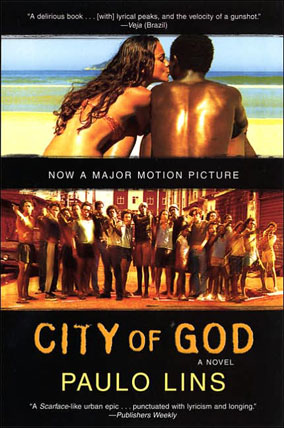
For a novel set in a favela, try City of God by Paulo Lins:
Lins's 1997 fiction debut—the source of the 2002 film published in English for the first time—chronicles two generations over three decades in the infamous Rio de Janeiro City of God, "a neo-slum of concrete, brimming dealer-doorways, sinister-silences and cries of despair."
From the slum's creation in the early 1960s for flood victims, through the rise of disco and cocaine in the 1970s, to the horrific gang wars of the 1980s, Lins traces the rise and fall of myriad, often teenaged gangsters for whom guns, girls and drugs are the tools of power.
While the film traces the divergent paths of two childhood friends, the novel rushes from vignette to vignette, with an ever-changing cast of characters with names like "Good Life," "Beelzebub" and "Hellraiser." Years, and pages, pass in a haze of smoking, drinking, snorting lines of cocaine, dancing sambas, swearing and planning the next big score. Guns dispense justice; the price for disrespect, whether to a spouse, a friend or the favela, is torture or death.
Lins, who grew up in the City, lets the horror speak for itself. He serves up a Scarface-like urban epic, bursting with encyclopedic, graphic descriptions of violence, punctuated with lyricism and longing.

Thursday, April 11, 2013

Pickpockets & Nakamura's The Thief


From yesterday's BBC story "Paris Louvre shuts as staff strike over pickpockets:"
One of the world's most visited museums, the Louvre in Paris, did not open on Wednesday because of a protest by staff over pickpockets. Staff at the museum said thieves, some of them children, were targeting both employees and tourists.
Two hundred workers took part in a strike organised by the SUD union, according to AFP news agency...
"There have always been pickpockets at the Louvre and in tourist locations in Paris, but for the last year-and-a-half the gangs have become increasingly violent," said museum supervisor Sophie Aguirre.
"Their modus operandi has become more complex. Nothing can stop them."
For a novel about a pickpocket, try The Thief by Fuminori Nakamura:
The Thief is a seasoned pickpocket. Anonymous in his tailored suit, he weaves in and out of Tokyo crowds, stealing wallets from strangers so smoothly sometimes he doesn’t even remember the snatch. Most people are just a blur to him, nameless faces from whom he chooses his victims. He has no family, no friends, no connections.... But he does have a past, which finally catches up with him when Ishikawa, his first partner, reappears in his life, and offers him a job he can’t refuse. It’s an easy job: tie up an old rich man, steal the contents of the safe. No one gets hurt. Only the day after the job does he learn that the old man was a prominent politician, and that he was brutally killed after the robbery. And now the Thief is caught in a tangle even he might not be able to escape.

Thursday, April 4, 2013

Arson, Firefighters, & Emerson's Vertical Burn


We've covered police. How about firefighters?

Here's yesterday's BBC article "Virginia 'serial arsonists' suspected of 77 blazes:"
A former volunteer fireman and his girlfriend are due in court accused of scores of arson attacks on the coast of the state of Virginia, police say. 
Charles Smith, 38, and Tonya Bundick, 40, were arrested on Tuesday morning, after a vacant house was set on fire. A police spokeswoman said each of the pair face one count of arson and one count of conspiracy over Monday's blaze, but more charges would follow. 
All the fires burned empty structures. No injuries have been reported. 
The couple are accused of setting most of the 77 fires that have been set on the Eastern Shore since November.

For a novel about arson and firefighters, try Vertical Burn by Earl Emerson:
Six months after firefighter John Finney fought his way out of a burning Seattle warehouse to get help, no one remembers him giving the directions that pinpointed his partner’s position inside. No one can remember anything about Finney except that he left his friend to die. 
But Finney doesn’t believe the fire was an accident. And he doesn’t believe the campaign against him is one either. 
Trying to reconstruct the events from that tragic day, Finney uncovers suspicious actions by men at the scene. With only one person on his side—a female firefighter who is herself an outcast in the department—Finney begins to piece together an astounding conspiracy that will turn friends into suspects and every man inside the department into a potentially deadly enemy. And the most horrific fire is yet to burn.

Monday, April 1, 2013

Asperger Syndrome & Picoult's House Rules


From yesterday's NYT article "Books of Hope, Found in Newtown Gunman’s Home:"
Words of comfort, encouragement and empathy had been available to Nancy Lanza and her son, Adam, within a pair of books that were found by the police during a search of their home in Newtown, Conn., after Mr. Lanza’s murderous rampage on Dec. 14. It is all but impossible to know if mother or son were helped by the books, “Look Me in the Eye: My Life With Asperger’s” and “Born on a Blue Day: Inside the Extraordinary Mind of an Autistic Savant,” or whether either opened, or even had use for, them. While those familiar with Mr. Lanza and his family have said he had an autism variant known as Asperger’s syndrome, investigators have not confirmed the diagnosis... 
Over the same period, Mr. Robison has been worrying about an ill-informed rush to judgment. “Reporters are saying the killer had Asperger’s syndrome, a form of autism,” he wrote on his blog on Dec. 20. “Every time a news story does that — by tying ‘killer’ and ‘Asperger’s’ in the same sentence — they are at some level implying that there is a connection between autism and mass murder. “There’s not,” he continued. “Statisticians have a phrase for this situation: Correlation does not imply causation.”
For a novel about Asperger Syndrome, try House Rules by Jodi Picoult:
When your son can't look you in the eye...does that mean he's guilty? Jacob Hunt is a teen with Asperger's syndrome. He's hopeless at reading social cues or expressing himself well to others, though he is brilliant in many ways. But he has a special focus on one subject - forensic analysis. A police scanner in his room clues him in to crime scenes, and he's always showing up and telling the cops what to do. And he's usually right. But when Jacob's small hometown is rocked by a terrible murder, law enforcement comes to him. Jacob's behaviors are hallmark Asperger's, but they look a lot like guilt to the local police. Suddenly the Hunt family, who only want to fit in, are directly in the spotlight. For Jacob's mother, Emma, it's a brutal reminder of the intolerance and misunderstanding that always threaten her family. For his brother, Theo, it's another indication why nothing is normal because of Jacob. And over this small family, the soul-searing question looms: Did Jacob commit murder?

Wednesday, March 20, 2013

Police, Email Warrants, & Connelly's The Black Echo


From yesterday's Guardian article "Justice Department backs rewriting law that allows police to read emails:"
The Justice Department said on Tuesday that it supports rewriting 26-year-old legislation that has allowed US law enforcement officials to read a person's emails without a search warrant so long as the email is older than six months or already opened. The law has long been criticized by privacy advocates as a loophole when it comes to protecting Americans from government snooping. "There is no principled basis to treat email less than 180 days old differently than email more than 180 days old," Elana Tyrangiel, acting assistant attorney general in the Office of Legal Policy, told a House judiciary subcommittee. She also said emails deserve the same legal protections whether they have been opened or not. Tyrangiel's testimony gives Congress a starting point as it begins to review a complicated 1986 law known as the Electronic Communications Privacy Act.

I thought it would be interesting to read a novel about a police officer's experiences in the US. Apparently I'm far from alone in this, as "police procedural" appears to be a huge and growing fiction sub-genre. I checked around, including looking at an online police forum, and here's what I came up with:
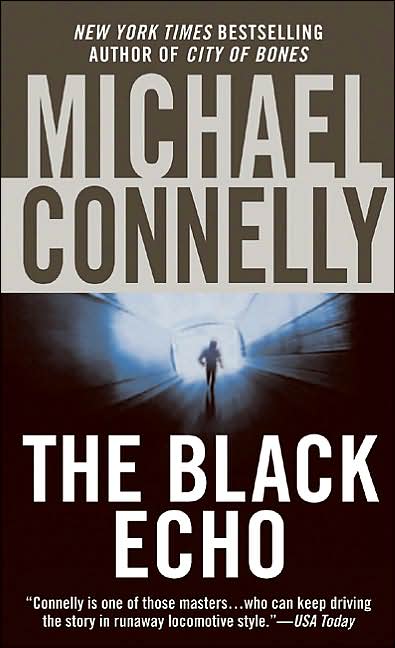
  • Michael Connelly is considered one of the best police/crime writers, and The Black Echo -- while at times clichéd and overdramatic -- appears to be a good starting point for his work:
For maverick LAPD homicide detective Harry Bosch, the body in the drainpipe at Mulholland Dam is more than another anonymous statistic. This one is personal...because the murdered man was a fellow Vietnam "tunnel rat" who had fought side by side with him in a hellish underground war. Now Bosch is about to relive the horror of Nam. From a dangerous maze of blind alleys to a daring criminal heist beneath the city, his survival instincts will once again be tested to their limit. Pitted against enemies inside his own department and forced to make the agonizing choice between justice and vengeance, Bosch goes on the hunt for a killer whose true face will shock him.
  • Suspect by Robert Crais. So the description for this novel started out fairly standard: "LAPD cop Scott James is not doing so well. Eight months ago, a shocking nighttime assault by unidentified men killed his partner Stephanie, nearly killed him, and left him enraged, ashamed, and ready to explode. He is unfit for duty...until he meets his new partner. Maggie is not doing so well, either..." At this point, I was expecting the usual trite nonsense about "Maggie, his astonishingly attractive new female partner etc etc." Instead, the author threw me a curveball and made Maggie a PTSD dog: "...Maggie is not doing so well, either. A German shepherd who survived three tours in Iraq and Afghanistan sniffing explosives before losing her handler to an IED, her PTSD is as bad as Scott's. They are each other's last chance. Shunned and shunted to the side, they set out to investigate the one case that no one wants them to touch: the identity of the men who murdered Stephanie." 
It's the 1960s. A hot August night lies heavy over the Carolinas. The corpse -- legs sprawled, stomach down on the concrete pavement, arms above the head -- brings the patrol car to a halt. The local police pick up a black stranger named Virgil Tibbs, only to discover that their most likely suspect is a homicide detective from California -- and the racially tense community's single hope in solving a brutal murder that turns up no witnesses, no motives, no clues.

Finally, I wanted to share this hilarious review of The Black Echo, by Goodreads user Kemper:
I’ve designed a gadget that will notify me when I run across clichés in crime thrillers with a *BEEP*. Let’s give it a test run on this Michael Connelly novel, shall we? So this is the first book in the series featuring a LAPD detective named Hieronymus “Harry” Bosch *BEEP*. .. ...why is it going off already? Oh, right. Quirky name for a main character. It seems to be calibrated correctly. Let’s proceed. 
In this novel published in 1992, Harry is a Vietnam veteran *BEEP* traumatized by his war experiences *BEEP* as a so-called tunnel rat who fought the VC in their network of underground passages. Harry is a driven detective whose inability to compromise often puts him at odds with his fellow cops *BEEP*. He has no family or life outside of his work *BEEP*, and he’s a borderline burn-out who lives on a diet of coffee, cigarettes and beer. *BEEP* Harry gets called to check out a dead body in a drainage pipe that everyone on the scene instantly assumes is a junkie who overdosed, but he has a hunch that it was actually a murder. *BEEP* Part of the reason Harry is convinced it was homicide is that he recognizes the victim as one of his fellow Vietnam tunnel rats. *BEEP* *BEEP* *BEEP* Damn, the old war buddy schtick really swung the needle into the red on this thing. 
Harry quickly finds evidence that the victim was involved in a high profile bank robbery that had involved tunneling into a vault and emptying the safe deposit boxes. When Harry tries to get the FBI’s attention, he meets a beautiful female agent *BEEP* *BEEP* *BEEP* named Eleanor Wish, but he also lands in hot water with his lieutenant who gets angry and yells at him a lot even though he hasn’t done anything wrong . *BEEP*. He also becomes the target of overzealous Internal Affairs cops *BEEP* that hound him even as he works with the FBI to try and solve the case. This quickly leads to a romance with Agent Wish *BEEP* *BEEP* *BEEP*..and *BEEP*….Uh oh.. I think it’s overloading…*BEEP* *BEEP* *BEEP* *BEEP* Is that smoke?? *BEEP* *BEEP* BEEP* Where’s the off switch? *BEEP* *BEEP* *BEEP**BEEEEEeeeeeeepppppp…pp..pp* Crap. I think Connelly broke it.
Anyhow, the odd thing about his book is that even though it’s got just about every cop thriller cliché you’ve ever heard of, it still works pretty well. 

UPDATE:  longer reviews of The Black Echo can be found at Carol's Notebook and Reactions to Reading.