Showing posts with label racism. Show all posts

Tuesday, April 9, 2013

Thatcher, Apartheid South Africa, & Brink's A Dry White Season


From yesterday's BBC article "Thatcher's role 'in saving Nelson Mandela':"
Did Margaret Thatcher play a role in helping to save Nelson Mandela's life? That is the remarkable claim made by one of the former South African president's closest friends, Ahmed Kathrada.
"Her word did count - I'm sure of it," Mr Kathrada told me, on hearing of the death of Baroness Thatcher. Between 1963 and 1964, Nelson Mandela was a defendant at the Rivonia trial, accused of trying to overthrow the apartheid government. Mr Kathrada was one of nine other men in the dock with him. The death penalty was initially sought by prosecutors, but was later changed to life imprisonment. Mr Mandela eventually spent 27 years in prison. Mr Kathrada was released a few months earlier in October 1989.
After the end of apartheid and the advent of democracy in South Africa in 1994, Mr Kathrada sometimes took visiting delegations and VIPs on guided tours of the notorious Robben Island jail where he and Mr Mandela had been incarcerated. "I had the opportunity to accompany [Margaret Thatcher] a few years ago," said Mr Kathrada. "She assured me that she had played a positive role during our trial."
"We were expecting a death sentence. We were well aware that there was all sorts of pressure from South Africa and abroad - pressure from people not necessarily agreeing with" the ANC's policies, he said.
The most popular comments on the article vehemently disagree that Thatcher saved Mandela. Here's of the highest rated comments:
This is historical revisionism. [...] The Thatcher Government resisted international pressure to impose economic sanctions on the apartheid country and she regarded the ANC as a 'typical terrorist organization' as late as 1987.
For a novel set in apartheid South Africa, try A Dry White Season by André P. Brink:
Ben Du Toit is a white schoolteacher in suburban Johannesburg in a dark time of intolerance and state-sanctioned apartheid. A simple, apolitical man, he believes in the essential fairness of the South African government and its policies--until the sudden arrest and subsequent "suicide" of a black janitor from Du Toit's school. Haunted by new questions and desperate to believe that the man's death was a tragic accident, Du Toit undertakes an investigation into the terrible affair--a quest for the truth that will have devastating consequences for the teacher and his family, as it draws him into a lethal morass of lies, corruption, and murder.

Friday, April 5, 2013

Non-Fiction Interlude: MLK Assassination & Sides' Hellhound on His Trail


From today's BBC article "Long-lost video of Martin Luther King killer James Earl Ray unearthed:"
Long-lost video showing Martin Luther King's killer in police custody has been posted online, 45 years to the day after the civil rights leader's murder. 
Officials in Tennessee unearthed the tapes of James Earl Ray in 2011 but had no way to view the old technology. Ray is seen in 1968 on a plane after extradition from Britain and as he is searched and given a medical exam and a bulletproof vest at a Memphis jail. 
King, a Baptist minister, was shot in Memphis on 4 April 1968, at age 39. Ray, a racist drifter and theretofore bungling career criminal, was captured in London by Scotland Yard detectives on 8 June.
For a good non-fiction book about MLK and his assassination, try Hellhound on His Trail by Hampton Sides:
On April 23, 1967, Prisoner #416J, an inmate at the notorious Missouri State Penitentiary, escaped in a breadbox. Fashioning himself Eric Galt, this nondescript thief and con man—whose real name was James Earl Ray—drifted through the South, into Mexico, and then Los Angeles, where he was galvanized by George Wallace’s racist presidential campaign. 
On February 1, 1968, two Memphis garbage men were crushed to death in their hydraulic truck, provoking the exclusively African American workforce to go on strike. Hoping to resuscitate his faltering crusade, King joined the sanitation workers’ cause, but their march down Beale Street, the historic avenue of the blues, turned violent. Humiliated, King fatefully vowed to return to Memphis in April. 
With relentless storytelling drive, Sides follows Galt and King as they crisscross the country, one stalking the other, until the crushing moment at the Lorraine Motel when the drifter catches up with his prey. Against the backdrop of the resulting nationwide riots and the pathos of King’s funeral, Sides gives us a riveting cross-cut narrative of the assassin’s flight and the sixty-five-day search that led investigators to Canada, Portugal, and England—a massive manhunt ironically led by Hoover’s FBI.

Racist Alabama "Trial" & Feldman's Scottsboro


From yesterday's Guardian article "Scottsboro Boys pardon nears as Alabama comes to terms with its past:"
Sheila Washington vividly recalls the day she first learned about the terrible events that occurred in her small town in Alabama almost three decades before she was born. 
She was 17 years old and, rooting around for something beneath her bed, she discovered a dusty old book that bore the town's name in its title. Scottsboro Boy was a memoir by Haywood Patterson, one of nine young black boys who in 1931 became entangled in one of the most notorious miscarriages of justice of the Jim Crow era. Wrongfully accused of raping two white girls, the nine came close to being lynched by an angry mob, were rushed to trial in front of an all-white jury, and ended up serving many years in jail, eight of them on death row... 
[T]oday Washington is on the verge of making her own history in relation to the Scottsboro Nine. A campaign she started four years ago to clear the names of the nine is bearing fruit – the Alabama senate has already voted unanimously to introduce a new law that would pave the way for the posthumous pardon of the men, and this week the state's House of Representatives is expected to follow suit.
For a novel about this trial, try Scottsboro by Ellen Feldman:
Alabama, 1931. A posse stops a freight train and arrests nine black youths. Their crime: fighting with white boys. Then two white girls emerge from another freight car, and fast as anyone can say Jim Crow, the cry of rape goes up. One of the girls sticks to her story. The other changes her tune, again and again. A young journalist, whose only connection to the incident is her overheated social conscience, fights to save the nine youths from the electric chair, redeem the girl who repents her lie, and make amends for her own past. 
Intertwining historical actors and fictional characters, stirring racism, sexism, and anti-Semitism into an explosive brew, Scottsboro is a novel of a shocking injustice that convulsed the nation and reverberated around the world, destroyed lives, forged careers, and brought out the worst and the best in the men and women who fought for the cause.

Tuesday, March 26, 2013

Emory Racism Controversy Part II & Roth's The Human Stain


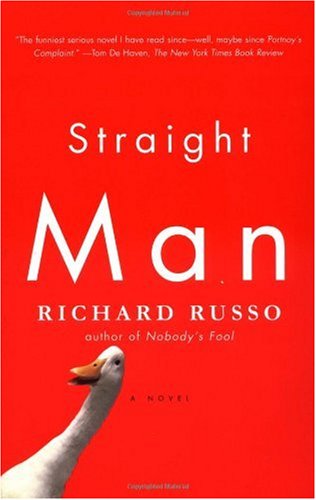
I previously posted about Emory University President James Wagner's three-fifths compromise statement, and I can't believe that in my haste to post about one of my favorite novels (Russo's university-infighting satire Straight Man), I forgot to mention a novel seemingly tailor-made for the Wagner story.

First, let's revisit the Wagner story. Here are the exact words from his column in Emory magazine:
One instance of constitutional compromise was the agreement to count three-fifths of the slave population for purposes of state representation in Congress. Southern delegates wanted to count the whole slave population, which would have given the South greater influence over national policy. Northern delegates argued that slaves should not be counted at all, because they had no vote. As the price for achieving the ultimate aim of the Constitution—“to form a more perfect union”—the two sides compromised on this immediate issue of how to count slaves in the new nation. Pragmatic half-victories kept in view the higher aspiration of drawing the country more closely together. 
Some might suggest that the constitutional compromise reached for the lowest common denominator—for the barest minimum value on which both sides could agree. I rather think something different happened. Both sides found a way to temper ideology and continue working toward the highest aspiration they both shared—the aspiration to form a more perfect union. They set their sights higher, not lower, in order to identify their common goal and keep moving toward it.
A part of me is hesitant to make the following book recommendation because in the novel I'm about to mention, unlike in real life, we can definitively know that the academic who "misspoke" is not racist.  Also, in the novel the academic's comments are "willfully misconstrued," which certainly isn't the case with all criticisms of Wagner's words.  Oh well:  few pairings of novels and headlines are in all ways perfect.  For a novel about a somewhat similar situation, try The Human Stain by Philip Roth:
Roth's hero, Coleman Silk...has been driven from his position as Dean of Faculty at a small New England liberal-arts school called Athena College because of a remark willfully misconstrued as racist. Coleman, a professor of classics, wonders why he has never seen two of his students in class. "Do they exist or are they spooks?" he asks his class. The absentees are, of course, black, and a decorous mob of the politically correct immediately launches itself at Coleman's throat, despite his honest protests that he had used the word only in its primary signification, as a synonym for "ghosts"...

Neo-Nazis in Europe & Mankell's The Return of the Dancing Master


Now that I've covered one of the most popular US crime novels, it's time for some Nazi-busting detectives from Europe!

But first, the news.  Here's last week's BBC article "Greek footballer Giorgos Katidis banned for Nazi salute:"
A Greek footballer has been banned for life from playing for the national team after making a Nazi salute. AEK Athens midfielder Giorgos Katidis, 20, made the gesture to celebrate his winning goal during a Saturday match. The Greek football federation called it "a severe provocation" that insulted "all the victims of Nazi bestiality". Katidis denied he gave a Nazi salute. "I am not a fascist and would not have done it if I had known what it meant," Katidis said on his Twitter account.
I think he originally claimed that he was "pointing at a friend in the stands," which is ridiculous because it certainly looked like a Nazi salute.

Want to read a novel about neo-Nazism in Europe? While The Girl with the Dragon Tattoo features neo-Nazis, a Swedish novel that focuses more closely on them is The Return of the Dancing Master by Henning Mankell:
When retired policeman Herbert Molin is found brutally slaughtered on his remote farm in the northern forests of Sweden, police find strange tracks in the snow — as if someone had been practicing the tango. Stefan Lindman, a young police officer recently diagnosed with mouth cancer, decides to investigate the murder of his former colleague, but is soon enmeshed in a mystifying case with no witnesses and no apparent motives. Terrified of the disease that could take his life, Lindman becomes more and more reckless as he unearths the chilling links between Molin’s death and an underground neo-Nazi network that runs further and deeper than he could ever have imagined.

Friday, March 22, 2013

University Faculty Politics & Russo's Straight Man


From Wednesday's Atlanta Journal-Constitution article "Emory faculty tables vote of no confidence in Wagner:"
Emory University President James W. Wagner, shown in an October 2012 photo, was censured by the faculty for his column about the notorious three-fifths compromise reached by the founders of the U.S. Constitution. Emory University faculty again tabled holding a vote of no confidence in President James Wagner, but agreed to meet within the next three weeks to continue the debate. “This is a serious issue and we want to get this right,” said Stefan Lutz, faculty governance chairman for the College of Arts and Sciences. Faculty in the college met privately with Wagner on Wednesday to discuss a variety of topics ranging from communication issues to cuts to college programs to the national condemnation Emory received because of a column he wrote. In the essay Wagner used the notorious three-fifths compromise as an example of how people with opposing viewpoints can work together toward a common goal. 
Wagner's essay was a major news story when it broke last month. I was glad to find the Atlanta Journal-Constitution's follow-up article because it allows me to mention one of my favorite novels, Richard Russo's Straight Man:
William Henry Devereaux Jr. finds himself past midlife, chair of the English department at an academic backwater, not having produced a book in 20 years, embroiled in departmental politics, maybe about to lay off colleagues, maybe on the block himself... Still, his relationships with his father, wife, daughter, and students occupy most of his time, until one day, wearing fake nose, glasses, and mustache, he threatens on TV to kill one of the campus ducks every day until his departmental budget is finalized, making the national morning talk shows.
There's a great review of Straight Man on the Tales from the Reading Room blog.

Thursday, February 28, 2013

Black History Month & Campbell's Your Blues Ain't Like Mine


 As Black History Month wraps up, we have this article from yesterday's Politico: "Obama hosts Black History Month reception:"
President Obama is hosting a Black History Month reception at the White House on Wednesday, an official told POLITICO. The president planned to speak at the afternoon event. Attendees included Rep. John Lewis (D-Ga.), Phylicia Rashad, Stevie Wonder, Hank Aaron and Magic Johnson, the official said. The reception after Obama attended the midday unveiling of a statue of civil rights leader Rosa Parks at the Capitol.

Best novel involving African-American history? I think many people would choose something by Toni Morrison or Alice Walker, but I could never get into their writing styles. Instead, I would recommend the under-appreciated Bebe Moore Campbell and her novel Your Blues Ain't Like Mine, which is loosely based on the Emmett Till murder:
The supreme court ruling on desegregation blew winds of change in Hopewell, Mississippi where the classes--monied, poor whites, and blacks--knew their places. When a 15-year-old African-American unknowingly crosses the accepted line, he is brutally murdered by a poor white, setting in motion a series of events that leave no one in the town untouched. Powerful in emotion (from understated to explosive), propelled by unstoppable forces, the book is compelling reading. It exposes family, race, and class divisions in America from the 1950s to the present...

Monday, February 4, 2013

U.S. Immigration Reform & Boyle's Tortilla Curtain

With Obama's and various senators' immigration reform proposals being in the news, this is a great time to read T. C. Boyle's Tortilla Curtain. Here's the description from Goodreads:
Topanga Canyon is home to two couples on a collision course. Los Angeles liberals Delaney and Kyra Mossbacher lead an ordered sushi-and-recycling existence in a newly gated hilltop community: he a sensitive nature writer, she an obsessive realtor. Mexican illegals Candido and America Rincon desperately cling to their vision of the American Dream as they fight off starvation in a makeshift camp deep in the ravine. And from the moment a freak accident brings Candido and Delaney into intimate contact, these four and their opposing worlds gradually intersect in what becomes a tragicomedy of error and misunderstanding.
The book is short, moves quickly, and does a good job of giving both sides' perspectives. I give it an A-. On a separate, non-fiction note: the Gang of Eight's immigration reform proposal in congress seems to have a lot in common with the reforms suggested in a 2010 book published by the American Enterprise Institute titled Beside the Golden Door:
"I lift my lamp beside the golden door!" the last line of Emma Lazarus's famous poem invites immigrants to enter a land of economic opportunity. Many have accepted that invitation; today, foreign-born workers make up nearly 16 percent of the U.S. workforce and account for almost half of workforce growth over the last decade. Rather than capitalizing on these gains, however, recent immigration reforms have resulted in an inefficient, patchwork system that shortchanges high-skilled immigrants and poorly serves the American public. Beside the Golden Door: U.S. Immigration Reform in a New Era of Globalization proposes a radical overhaul of current immigration policy designed to strengthen economic competitiveness and long-run growth. Pia M. Orrenius and Madeline Zavodny outline a plan that favors employment-based immigration over family reunification, making work-based visas the rule, not the exception. They argue that immigration policy should favor high-skilled workers while retaining avenues for low-skilled immigration; family reunification should be limited to spouses and minor children; provisional visas should be the norm; and quotas that lead to queuing must be eliminated. A selective immigration policy focused on high-skilled, high-demand workers will allow the United States to compete in an increasingly global economy while protecting the interests of American citizens and benefiting taxpayers.