Showing posts with label young adult. Show all posts

Monday, May 13, 2013

Kenya Asylum Break, Psychiatric Hospitals, & Kesey's One Flew Over the Cuckoo's Nest


From today's BBC article "Kenyan patients escape from Nairobi's Mathari hospital:"
Forty mentally ill patients have escaped from the Mathari Mental Hospital in Kenya's capital, Nairobi, after overpowering guards, police say.
A search has been launched for the patients, some of whom are known to be violent, police told the BBC. Kenya's Standard newspaper reports that the group escaped from the state hospital after complaining that the medicine given to them was ineffective.
Mathari is the biggest psychiatric hospital in Kenya. In 2011, rights groups called for an investigation into alleged human rights abuses at the hospital following a CNN documentary "Locked up and Forgotten". The CNN crew reported that during a visit to the hospital, they found a dead body locked up in a seclusion cell with a patient. Senior Nairobi police officer Moses Ombati told the BBC the patients had staged a protest, before overpowering guards and escaping.
For a novel about a psychiatric hospital, try Ken Kesey's classic One Flew Over the Cuckoo's Nest:
In this classic of the 1960s, Ken Kesey's hero is Randle Patrick McMurphy, a boisterous, brawling, fun-loving rebel who swaggers into the world of a mental hospital and takes over.
A lusty, life-affirming fighter, McMurphy rallies the other patients around him by challenging the dictatorship of Nurse Ratched. He promotes gambling in the ward, smuggles in wine and women, and openly defies the rules at every turn.
But this defiance, which starts as a sport, soon develops into a grim struggle, an all-out war between two relentless oppnonents: Nurse Ratched, back by the full power of authority, and McMurphy, who has only his own indomitable will. What happens when Nurse Ratched uses her ultimate weapon against McMurphy provides the story's shocking climax.
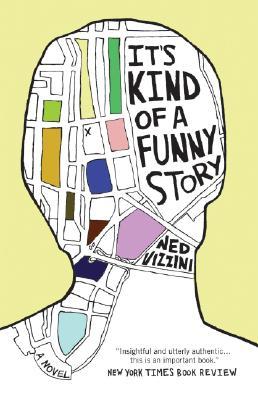
For a newer, young-adult psychiatric hospital novel, try It's Kind of a Funny Story by Ned Vizzini:
Like many ambitious New York City teenagers, Craig Gilner sees entry into Manhattan’s Executive Pre-Professional High School as the ticket to his future. Determined to succeed at life—which means getting into the right high school to get into the right college to get the right job—Craig studies night and day to ace the entrance exam, and does. That’s when things start to get crazy.
At his new school, Craig realizes that he isn't brilliant compared to the other kids; he’s just average, and maybe not even that. He soon sees his once-perfect future crumbling away. The stress becomes unbearable and Craig stops eating and sleeping—until, one night, he nearly kills himself.
Craig’s suicidal episode gets him checked into a mental hospital, where his new neighbors include a transsexual sex addict, a girl who has scarred her own face with scissors, and the self-elected President Armelio. There, isolated from the crushing pressures of school and friends, Craig is finally able to confront the sources of his anxiety.
Ned Vizzini, who himself spent time in a psychiatric hospital, has created a remarkably moving tale about the sometimes unexpected road to happiness.
Saturday, May 4, 2013

Guns for Kids, Child Gun-Casualties, & Brown's Hate List


From yesterday's Guardian article "Guns for kids: critics eye marketing practices after Kentucky shooting:"
The gun manufacturer Keystone Sporting Arms is in a defensive crouch this week. The Pennsylvania-based company has taken down a website for a popular product. When I called Keystone at noon on Friday I was immediately (and politely) referred to the company's lawyer.
Keystone is in retreat because one of the guns it makes for children, a lightweight, single-shot, .22-calibre rifle called the Crickett, was used Tuesday by a five-year-old boy in Kentucky to shoot and kill his two-year-old sister. The boy had been given the gun – full name Davey Crickett, a pun on the legendary American frontiersman – as a birthday gift. The siblings' mother was home but wasn't watching.
On the subject of children killing other children, a good young adult novel about a school shooting is Hate List by Jennifer Brown:
Five months ago, Valerie Leftman's boyfriend, Nick, opened fire on their school cafeteria. Shot trying to stop him, Valerie inadvertently saved the life of a classmate, but was implicated in the shootings because of the list she helped create. A list of people and things she and Nick hated. The list he used to pick his targets.
Now, after a summer of seclusion, Val is forced to confront her guilt as she returns to school to complete her senior year. Haunted by the memory of the boyfriend she still loves and navigating rocky relationships with her family, former friends and the girl whose life she saved, Val must come to grips with the tragedy that took place and her role in it, in order to make amends and move on with her life.
For a non-fiction book about a school shooting, try Columbine by Dave Cullen:
In this remarkable account of the April 20, 1999, Columbine High School shooting, journalist Cullen not only dispels several of the prevailing myths about the event but tackles the hardest question of all: why did it happen?
Drawing on extensive interviews, police reports and his own reporting, Cullen meticulously pieces together what happened when 18-year-old Eric Harris and 17-year-old Dylan Klebold killed 13 people before turning their guns on themselves.
The media spin was that specific students, namely jocks, were targeted and that Dylan and Eric were members of the Trench Coat Mafia. According to Cullen, they lived apparently normal lives, but under the surface lay an angry, erratic depressive (Klebold) and a sadistic psychopath (Harris), together forming a combustible pair. They planned the massacre for a year, outlining their intentions for massive carnage in extensive journals and video diaries.
Cullen expertly balances the psychological analysis—enhanced by several of the nation's leading experts on psychopathology—with an examination of the shooting's effects on survivors, victims' families and the Columbine community. Readers will come away from Cullen's unflinching account with a deeper understanding of what drove these boys to kill, even if the answers aren't easy to stomach.

Monday, April 29, 2013

Everest Fight, Mountaineering, & Rideout's Above All Things


From today's BBC article "Everest: Climbers Steck and Moro in fight with Sherpas:"
Police in Nepal are investigating an alleged fight between two famous European climbers and their Nepalese mountain guides on Mount Everest.
Switzerland's Ueli Steck and Simone Moro from Italy were nearing Camp Three at 7,470m (24,500ft) when the incident occurred.
The fight allegedly broke out after the pair ignored orders to hold their climb while the Sherpas were rigging ropes. The guides reportedly attacked the pair after they returned to their tents...
An unnamed eyewitness told the AFP news agency the incident had been "terrifying to watch - they nearly got killed".

For a novel about climbing Everest, try Above All Things by Tanis Rideout:
The Paris Wife meets Into Thin Air in this breathtaking debut novel of obsession and divided loyalties, which brilliantly weaves together the harrowing story of George Mallory's ill-fated 1924 attempt to be the first man to conquer Mount Everest, with that of a single day in the life of his wife as she waits at home in England for news of his return.
A captivating blend of historical fact and imaginative fiction, Above All Things moves seamlessly back and forth between the epic story of Mallory's legendary final expedition and a heartbreaking account of a day in the life of Ruth Mallory.
Through George's perspective, and that of the newest member of the climbing team, Sandy Irvine, we get an astonishing picture of the terrible risks taken by the men on the treacherous terrain of the Himalaya.
But it is through Ruth's eyes that a complex portrait of a marriage emerges, one forged on the eve of the First World War, shadowed by its losses, and haunted by the ever-present possibility that George might not come home.
For a young adult novel about Everest, try Peak by Roland Smith:
After Peak Marcello is arrested for scaling a New York City skyscraper, he's left with two choices: wither away in Juvenile Detention or go live with his long-lost father, who runs a climbing company in Thailand.
But Peak quickly learns that his father's renewed interest in him has strings attached. Big strings. He wants Peak to be the youngest person to reach the Everest summit--and his motives are selfish at best.
Even so, for a climbing addict like Peak, tackling Everest is the challenge of a lifetime. But it's also one that could cost him his life.
For a non-fiction book about climbing Everest, I recommend Into Thin Air by Jon Krakauer:
Into Thin Air is a riveting first-hand account of a catastrophic expedition up Mount Everest. In March 1996, Outside magazine sent veteran journalist and seasoned climber Jon Krakauer on an expedition led by celebrated Everest guide Rob Hall. Despite the expertise of Hall and the other leaders, by the end of summit day eight people were dead. Krakauer's book is at once the story of the ill-fated adventure and an analysis of the factors leading up to its tragic end.
Written within months of the events it chronicles, Into Thin Air clearly evokes the majestic Everest landscape. As the journey up the mountain progresses, Krakauer puts it in context by recalling the triumphs and perils of other Everest trips throughout history.

Thursday, April 4, 2013

Mike Rice, Abusive Coaches, & Walters' Power Play


From yesterday's New York Times article "Rutgers Fires Coach Over Abuse and Slurs:"
Rutgers fired Mike Rice, the coach of its men’s basketball team, on Wednesday, a day after a video surfaced showing him berating his players during practices, throwing balls at them, kicking them and taunting them with slurs. Rice’s termination comes nearly four months after the university’s athletic director, Tim Pernetti, suspended him for three games and fined him $50,000, with little elaboration. On Wednesday, Pernetti said that he erred in not taking stronger action and that he would “work to regain the trust of the Rutgers community.”
For a novel about an abusive coach, try Power Play by Eric Walters. While there are large differences between Rice's use of physical and verbal abuse and the sexual abuse depicted in the book, it's well-written and is the best novel on abusive coaching I could find. Here's the summary:
This gripping new novel by bestselling children’s/YA author Eric Walters explores the complex and disturbing relationship between a talented young hockey star and his predatory coach as it descends into sexual abuse.

Sunday, March 24, 2013

Rebel Takeover in CAR & Park's A Long Walk to Water


I've previously posted about the civil war in Congo.  Now we move to the civil war in the Central African Republic.

From today's BBC article "Central African Republic: Rebels 'take palace as Bozize flees:'"
Rebels in the Central African Republic say they have seized the presidential palace after President Francois Bozize reportedly fled the capital... The rebels joined a power-sharing government in January after talks brokered by regional leaders to end a rebellion they launched last year. But the deal quickly collapsed, with the rebels saying their demands, including the release of political prisoners, had not been met. BBC Africa editor Richard Hamilton says government soldiers have been unable to fend off the rebels because Mr Bozize fears being overthrown in a coup and is therefore wary of having a strong army. He came to power himself in a military coup in 2003.
I couldn't find any "perfect match" novels. I could hardly find any novels set in the Central African Republic. Suggestions welcome!

So instead I recommend a book set in Sudan which touches on several themes relevant to CAR, including rebels and refugees. That book is Linda Sue Park's young adult novel A Long Walk to Water:
A Long Walk to Water begins as two stories, told in alternating sections, about a girl in Sudan in 2008 and a boy in Sudan in 1985. The girl, Nya, is fetching water from a pond that is two hours’ walk from her home: she makes two trips to the pond every day. The boy, Salva, becomes one of the "lost boys" of Sudan, refugees who cover the African continent on foot as they search for their families and for a safe place to stay. Enduring every hardship from loneliness to attack by armed rebels to contact with killer lions and crocodiles, Salva is a survivor, and his story goes on to intersect with Nya’s in an astonishing and moving way.

Wednesday, March 20, 2013

Transgender Schoolchildren & Peters' Luna


I've previously posted about transgender elected officials. Now there has been a slew of articles about transgender schoolchildren. Here's Sunday's New York Times article "Dispute on Transgender Rights Unfolds at a Colorado School:"
Coy Mathis was born a boy. But after just a few years, biology succumbed to a more powerful force. A buzz cut grew into long hair. Jeans gave way to pink dresses. And the child’s big cheeks trembled with tears when anyone referred to Coy as male. Halfway through kindergarten, after consulting with doctors, Coy’s parents informed their child’s school that Coy identified as a girl and should be treated as one — whether that meant using feminine pronouns to describe her or letting Coy wear her favorite dresses. “It became really clear that it wasn’t just about liking pink or feminine things,” said Kathryn Mathis, Coy’s mother, recounting how Coy had anxiety attacks when people treated her as a boy. “It was that she was trying so hard to show us that she was a girl.” In December, however, when Coy, 6, was a few months into the first grade, the Mathises angrily pulled her out of school after being told that she could no longer use the girls’ bathroom but could instead use a gender-neutral restroom. A letter from a lawyer for the Fountain-Fort Carson school district explained that “as Coy grows older and his male genitals develop along with the rest of his body, at least some parents and students are likely to become uncomfortable with his continued use of the girls’ restroom.” Now, Coy’s case is at the heart of legal dispute that is likely to test Colorado’s anti-discrimination law, which expanded protections for transgender people in 2008.

The SF Chronicle followed up on Monday with the article "New state bill on transgender students:"
California public schools would be required to allow transgender students to use school facilities and participate in activities and on sports teams that match their gender identity under a bill introduced at the Capitol. State law already prohibits schools from discriminating on the basis of gender identity, but backers of the measure, AB1266, say some schools and school districts don't provide access to restrooms, locker rooms or sports teams that align with the identity of transgender students. Opponents say the proposal is extreme and could result in male and female students sharing locker rooms or showering together.

Also on Monday, the New Yorker published the report "About a Boy: Transgender surgery at sixteen:"
Skylar is a boy, but he was born a girl, and lived as one until the age of fourteen. Skylar would put it differently: he believes that, despite biological appearances, he was a boy all along. He’d just been burdened with a body that required medical and surgical adjustments so that it could reflect the gender he knew himself to be. At sixteen, he started getting testosterone injections every other week; just before he turned seventeen, he had a double mastectomy... Skylar is an F.T.M., or “female-to-male,” transgender person, a category that has been growing in visibility in recent years. In the past, females who wished to live as males rarely sought surgery, in part because they could “pass” easily enough in public; today, there is a desire for more thorough transformations. Skylar took hormones and underwent “top surgery” at a much younger age than would have been possible even a decade ago. Yet, in his new guise, he doesn’t labor to come across as conventionally masculine. Like many “trans” people of his generation, he is comfortable with some gender ambiguity, and doesn’t feel the need to be, as he puts it, a “macho bro.” He is not sure yet if he will have genital reconstruction when he’s older...

The previous book I had suggested for transgender issues was Eugenides' Middlesex. But since these reports involve schoolchildren, it would be interesting to read a novel about a transgender youth coming to terms with his/her situation. For that, try the young adult novel Luna by Julie Anne Peters, National Book Award Nominee:
Regan's brother Liam can't stand the person he is during the day. Like the moon from whom Liam has chosen his female namesake, his true self, Luna, only reveals herself at night. In the secrecy of his basement bedroom Liam transforms himself into the beautiful girl he longs to be, with help from his sister's clothes and makeup. Now, everything is about to change-Luna is preparing to emerge from her cocoon. But are Liam's family and friends ready to welcome Luna into their lives? Compelling and provocative, this is an unforgettable novel about a transgender teen's struggle for self-identity and acceptance.

Tuesday, March 19, 2013

Possible Cerebral Palsy Cure & Draper's Out of My Mind


From Sunday's (Melbourne) Herald Sun article "Cerebral palsy breakthrough gives new hope:"
Melbourne researchers have been able to stop and even reverse severe brain damage in baby lambs as they try to combat cerebral palsy, which affects more than two in every 1000 births...  Dr Suzanne Miller said cells in cord blood appeared able to stop swelling in babies' brains after a problem birth, and then reverse much of the damage. "After 48 hours, we can show significant improvements, and we would expect that over time, these improvements would progress even further," she said. "Our theory would be to take cord blood and then give them the cells that we know will reverse or prevent the progression of parts of the injury as it is going to occur. "Some cell types might have a repair property, whereas others will prevent progression of injury in the very early hours after birth." The research will attempt to pinpoint cells in cord blood that have anti-inflammatory properties, which can prevent some of the damage occurring, as well as those that have repair properties. The team will also continue animal trials to determine the best time to administer the different cells in order to help fragile newborns the most. Seven of eight sheep with severe brain damage treated in the most recent trial had significantly increased brain activity after receiving cord blood 12 hours after their birth... The only current treatment for oxygen-starved newborns is cooling them straight after birth. But the technique may only be effective in preventing one in nine cases of cerebral palsy.


If you'd like a book about cerebral palsy, try Sharon Draper's young adult novel Out of My Mind:
Eleven-year-old Melody has a photographic memory. Her head is like a video camera that is always recording. Always. And there's no delete button. She's the smartest kid in her whole school—but no one knows it. Most people—her teachers and doctors included—don't think she's capable of learning, and up until recently her school days consisted of listening to the same preschool-level alphabet lessons again and again and again. If only she could speak up, if only she could tell people what she thinks and knows . . . but she can't, because Melody can't talk. She can't walk. She can't write. Being stuck inside her head is making Melody go out of her mind—that is, until she discovers something that will allow her to speak for the first time ever. At last Melody has a voice . . . but not everyone around her is ready to hear it.

Thursday, March 14, 2013

Juvenile Hall & Myers' Lockdown


From today's Guardian article "MPs alarmed at rising use of force to restrain young offenders in detention," on the possibly excessive use of violence in British juvenile detention centers:
MPs have raised serious concerns about the rising use of force to restrain young offenders in detention last year. The Commons justice select committee says that the use of restraint has now been definitively linked to the death of at least one teenager and endorses calls for an independent inquiry to ensure no further deaths... The MPs say that the Office of Children's Commissioner found evidence in 2011 of a tendency in youth custody to focus on physical controls to manage risk and deal with challenging behaviour: "Restraint is supposed to be used as a last resort to prevent individuals from causing harm to themselves and to others.'' But the report says that 254 of the incidents led to injuries, 7% of which were serious. The chief inspector of prisons found last year that 44% of young male black and Asian detainees had been physically restrained by staff compared with 32% of young white men. Two teenagers have died in restraint-related incidents in privately run secure training centres. Adam Rickwood, 14, hanged himself in the Hassockfield centre in 2004. Gareth Myatt, 15, died in hospital in 2004, following a restraint incident at Rainsbrook centre.
For a book on the juvenile hall experience, try Walter Dean Myers' young adult novel Lockdown:
Myers takes readers inside the walls of a juvenile corrections facility in this gritty novel. Fourteen-year-old Reese is in the second year of his sentence for stealing prescription pads and selling them to a neighborhood dealer. He fears that his life is headed in a direction that will inevitably lead him “upstate,” to the kind of prison you don’t leave. His determination to claw his way out of the downward spiral is tested when he stands up to defend a weaker boy, and the resulting recriminations only seem to reinforce the impossibility of escaping a hopeless future. Reese’s first-person narration rings with authenticity as he confronts the limits of his ability to describe his feelings, struggling to maintain faith in himself; Myers’ storytelling skills ensure that the messages he offers are never heavy-handed.

Wednesday, March 13, 2013

The Iditarod & Henry's Murder on the Iditarod Trail


For those who enjoyed the Retirement Homes Are Murder recommendation from our retirement home post, we have another murder mystery for you.  But first, the news. 

From today's NPR article "Winning Musher Is Oldest Champion In Iditarod History:"
"Mitch Seavey scored one for the AARP-eligible crowd Tuesday night by becoming the oldest champion in Iditarod history," the Anchorage Daily News writes this morning. According to Alaska Public Telecommunications, the 53-year-old Seavey crossed the finish line at 10:39 p.m. local time on Tuesday — 2:39 a.m. ET Wednesday. It has "checkpoint to checkpoint" coverage of the race posted here. The Daily News says Seavey and his team of sled dogs finished the 1,000-mile race in "9 days, 7 hours, 39 minutes, 56 seconds." His team was led by "Tanner, a 6-year-old, orange-brown husky." Before this, the oldest musher to have led his team to victory was Jeff King. He was 50 when he won the race in 2006, the Daily News says. Seavey and his son Dallas are now the oldest and youngest winning mushers in Iditarod history. Dallas Seavey was 25 when he won the race in 2012. Mitch Seavey has won the Iditarod twice.

Want some Iditarod fiction? Try Sue Henry's Murder on the Iditarod Trail:
The winner of Alaska's world-famous Iditarod -- a grueling, eleven-hundred-mile dog sled race across a frigid Arctic wilderness---takes home a $250,000 purse. But this year, the prize is survival. Only the toughest and the most able come to compete in this annual torturous test of endurance, skill, and courage. Now, suddenly and inexplicably, the top Iditarod contestants are dying one by one in bizarre and gruesome ways. Jessie Arnold, Alaska's premier female "musher," fears she may be the next intended victim, but nothing is going to prevent her from aggressively pursuing the glory and the rewards that victory brings.
Oh yeah. Agatha Christie meets Jack London.

 If you're not into mysteries, you could try something by Hatchet-man Gary Paulsen. His dog-sledding books include both Winderdancea non-fiction account of his Iditarod experiences, and Dogsong, a young adult novel about an Eskimo boy's epic sled journey:
Something is bothering Russel Susskit. He hates waking up to the sound of his father's coughing, the smell of diesel oil, the noise of snow machines starting up. Only Oogruk, the shaman who owns the last team of dogs in the village, understands Russel's longing for the old ways and the songs that celebrated them. But Oogruk cannot give Russel the answers he seeks; the old man can only prepare him for what he must do alone. Driven by a strange, powerful dream of a long-ago self and by a burning desire to find his own song, Russel takes Oogruk's dogs on an epic journey of self-discovery that will change his life forever.

And while there's no Iditarod in Jack London's The Call of the Wild, there is a lot of dog sledding action, so you might want to give that a shot as well:
The story takes place in the extreme conditions of the Yukon during the 19th-century Klondike Gold Rush, where strong sled dogs were in high demand. After Buck, a domesticated dog, is snatched from a pastoral ranch in California, he is sold into a brutal life as a sled dog.

UPDATE:  there's a good review of Murder on the Iditarod Trail on the St. Thomas Dog Blog.

Steubenville Rape Trial & Anderson's Speak


From today's NPR article "Steubenville Rape Trial Begins:"
The case has already been "tried" in the social media, as The New York Times writes. But Wednesday in Steubenville, Ohio, a real court will be the setting as two high school football players in a town that's obsessed with high school football go on trial for the alleged rape of a 16-year-old girl last summer. It's a case...that has caused turmoil in Steubenville — where "accusations, recriminations and threats" have been flying in recent months as critics of the town's football culture charged that players have been allowed to get out of control and supporters of the team have tried to blame the accuser.
Whether or not the accused are guilty, I think it's important to consider what a rape survivor goes through. To get one take, try Laurie Halse Anderson's young adult novel Speak:
Melinda Sordino busted an end-of-summer party by calling the cops. Now her old friends won't talk to her, and people she doesn't even know hate her from a distance. The safest place to be is alone, inside her own head. But even that's not safe. Because there's something she's trying not to think about, something about the night of the party that, if she let it in, would blow her carefully constructed disguise to smithereens. And then she would have to speak the truth. 

UPDATE:  there's a good review of Speak over at Katie's Book Blog.

Saturday, March 2, 2013

Congo Civil Wars & Schrefer's Endangered


From today's Reuters article "Congo government troops retake territory left by rebels:"
Congolese government troops have re-occupied eastern towns for the first time in eight months after rebels weakened by an internal power struggle withdrew and turned their weapons on each other. The advance is the first significant progress by [the Democratic Republic of] Congo's army since a series of defeats last year, but raises fears of fresh clashes with M23 fighters who are intent on reclaiming the same areas after peace talks stalled. Government troops moved into the towns of Rutshuru and Kiwanja on Friday night to protect the population from bandits and armed groups who had taken advantage of the M23 rebel pullout to prey on civilians, a spokesman for the army said. "Since last night, those areas are under government control. (M23) left those areas and it is for us, the regular forces to take our responsibilities and secure them ... against the pillaging, rape and killings," Colonel Olivier Hamuli told Reuters... Eastern Congo has been ravaged by war and banditry for two decades, leaving millions dead through violence and disease. Civilians are regularly caught in the crossfire between armed groups and the country's notoriously ill-disciplined army.
For a novel about life in the DRC's wars, try Eliot Schrefer's Endangered:
Schrefer shines a light on an oft-overlooked part of the world with this intense adventure set in the Democratic Republic of the Congo. When Sophie, a half-American, half-Congolese 14-year-old, visits her mother at a bonobo sanctuary, her biracial origins make her feel out of place, but she finds purpose by bonding with and caring for Otto, an abused juvenile bonobo. Civil war breaks out while Sophie’s mother is away, and Sophie is inadvertently trapped in a country beset by starvation, roving bands of killers, and natural hazards. To stay alive, Sophie and Otto live off the land, travel in secret, and coexist with other bonobos, while seeking escape or refuge from the chaos. Schrefer spares no detail, fully exposing the horrors of war as he chronicles Sophie’s struggle for survival.

I couldn't find many novels about the DRC wars by a Congolese author.  Suggestions welcome.

Monday, February 25, 2013

Rwandan Genocide Asylum Case & Benaron's Running the Rift


Continuing the blog's recent Africa theme (we touched on Zimbabwe and South Africa earlier this week), here's Friday's BBC story "Rwandan woman stripped of US citizenship after lying about genocide:"
A Rwandan woman who won political asylum in the US after hiding her family's role in the 1994 genocide has been convicted in a New Hampshire court of lying about her own part in the mass killings. Beatrice Munyenyezi, 43, was immediately stripped of the US citizenship she had gained a decade earlier in the same courthouse where she was found guilty on Thursday of making false statements to officials in order to cover up how she selected Tutsis to be raped and murdered. She faces up to 10 years in prison and then likely deportation to face a trial in Rwanda for genocide.

For a novel based on the Rwandan genocide, try Naomi Benaron's award-winning Running the Rift:
Having worked extensively with genocide survivor groups in Rwanda, Benaron clearly acquired a very lucid sense of her characters' lives and of the horrors they endured. Her story tells, with compelling clarity, of Rwandan Tutsi youth, Jean Patrick Nkuba—who dreams of becoming Rwanda's first Olympic medalist. It's a dream he must postpone for more than a decade as the internecine savagery, Hutu vs.Tutsi, slaughters millions and derails the lives of countless others. While it would be counterintuitive to pronounce this a winning, feel-good story, there is something to be said for hope restored. (Review from Daily Beast.)

Saturday, February 9, 2013

Homelessness & Swindells' Stone Cold


From today's Washington Post editorial "600 homeless children in D.C., and no one seems to care:"
The District has set a dubious new record for the number of homeless kids crammed inside a scary, abandoned hospital that serves as the city’s makeshift family homeless shelter. There are about 600, according to a nightly census done by the Community Partnership for the Prevention of Homelessness... This, of course, is happening in the same city now rolling in a $417 million budget surplus and on track for a $240 million surplus in the coming year.
A good book about homelessness is Robert Swindells' young adult novel Stone Cold. Most of the book is narrated by a newly-homeless teenager, although we get occasional interludes from the perspective of a crazed man who kills homeless people. The serial-killer storyline seems a little unnecessary, but it does add suspense. Plus, if I'm going to read/watch something about serial-killers, at least this book also gives some insight into societal ills (unlike, say, Dexter).

If you prefer classics, I've heard George Orwell's semi-autobiographical novel Down and Out in Paris and London is, like most things Orwell, excellent.  If you'd prefer a book written by someone who spent much of their life homeless, I've heard John Healy's autobiography The Grass Arena is good.