Showing posts with label Western US. Show all posts

Tuesday, June 11, 2013

The Great Texas Novel: Philipp Meyer's The Son


I can't think of any book that could be called the "Great American Novel." The U.S. is so big, it's easier to find "Great Novels" state by state. For Texas, we have a strong nominee in Philipp Meyer's recently-released novel The Son:
In 1859, Eli McCullough, the 13-year-old son of Texas pioneers, is captured in a brutal Comanche raid on his family's homestead. First taken as a slave along with his less intrepid brother, Eli assimilates himself into Comanche culture, learning their arts of riding, hunting, and total warfare. When the tribe succumbs to waves of disease and settlers, Eli's only option is a return to Texas, where his acquired thirsts for freedom and self-determination set a course for his family's inexorable rise through the industries of cattle and oil. The Son is Philipp Meyer's epic tale of more than 150 years of money, family, and power, told through the memories of three unforgettable narrators: Eli, now 100 and known simply as "the Colonel"; Eli's son Peter, called "the great disappointment" for his failure to meet the family’s vision of itself; and Eli's great-granddaughter Jeanne Anne, who struggles to maintain the McCullough empire in the economic frontier of modern Texas.
Cattle, oil, and their environmental costs are big themes in the book. So perhaps a fitting news story is this May 17th article from CNN, "Texas sues BP, Halliburton, others over oil spill:"
Texas on Friday became the latest state to sue BP, Halliburton and others tied to the 2010 Deepwater Horizon oil spill, alleging the parties "engaged in willful and wanton misconduct" and seeking penalties and damages "to the fullest extent allowed by law." The lawsuit was filed in U.S. District Court in Beaumont, more than three years after one of the worst oil spills in American history.

Saturday, May 18, 2013

Germans in the Old West & Hershon's The German Bride


From Wednesday's BBC article "German dialect in Texas is one of a kind, and dying out:"
The first German settlers arrived in Texas over 150 years ago and successfully passed on their native language throughout the generations - until now.
German was the main language used in schools, churches and businesses around the hill country between Austin and San Antonio. But two world wars and the resulting drop in the standing of German meant that the fifth and sixth generation of immigrants did not pass it on to their children.
For a novel about German immigrants in the Old West, try The German Bride by Joanna Hershon:
Hershon's third novel...is a stylish account of a German Jewish young woman's often brutal odyssey to the post–Civil War American Southwest. After a family tragedy in Berlin, Eva Frank flees in shame and guilt to Santa Fe with her new husband, Abraham Shein. Abraham and his older brother, Meyer, are successful dry goods merchants, and once Eva and Abraham arrive in Santa Fe, Eva's narrative becomes a fish-out-of-water story as the promises Abraham made to her fail to materialize. Abraham, an abusive philanderer with a gambling addiction, wants a child, and Eva wants Abraham to build them a proper house. Eva—hoarding her dowry—begins scheming ways to abandon Santa Fe and establish a better life in San Francisco, but fleeing from unstable Abraham is a dangerous proposition.

Thursday, April 4, 2013

Arson, Firefighters, & Emerson's Vertical Burn


We've covered police. How about firefighters?

Here's yesterday's BBC article "Virginia 'serial arsonists' suspected of 77 blazes:"
A former volunteer fireman and his girlfriend are due in court accused of scores of arson attacks on the coast of the state of Virginia, police say. 
Charles Smith, 38, and Tonya Bundick, 40, were arrested on Tuesday morning, after a vacant house was set on fire. A police spokeswoman said each of the pair face one count of arson and one count of conspiracy over Monday's blaze, but more charges would follow. 
All the fires burned empty structures. No injuries have been reported. 
The couple are accused of setting most of the 77 fires that have been set on the Eastern Shore since November.

For a novel about arson and firefighters, try Vertical Burn by Earl Emerson:
Six months after firefighter John Finney fought his way out of a burning Seattle warehouse to get help, no one remembers him giving the directions that pinpointed his partner’s position inside. No one can remember anything about Finney except that he left his friend to die. 
But Finney doesn’t believe the fire was an accident. And he doesn’t believe the campaign against him is one either. 
Trying to reconstruct the events from that tragic day, Finney uncovers suspicious actions by men at the scene. With only one person on his side—a female firefighter who is herself an outcast in the department—Finney begins to piece together an astounding conspiracy that will turn friends into suspects and every man inside the department into a potentially deadly enemy. And the most horrific fire is yet to burn.

Tuesday, March 26, 2013

Google Glass & Gibson's Virtual Light


From today's BBC article “Privacy 'impossible' with Google Glass warn campaigners:”
Google Glass and other augmented reality gadgets risk creating a world in which privacy is impossible, warn campaigners. The warning comes from a group called "Stop the Cyborgs" that wants limits put on when headsets can be used. It has produced posters so premises can warn wearers that the glasses are banned or recording is not permitted.
If you’d like to read a book which features augmented reality glasses, try William Gibson’s science fiction novel Virtual Light:
Welcome to NoCal and SoCal, the uneasy sister-states of what used to be California. Here the millennium has come and gone, leaving in its wake only stunned survivors. In Los Angeles, Berry Rydell is a former armed-response rentacop now working for a bounty hunter. Chevette Washington is a bicycle messenger turned pick-pocket who impulsively snatches a pair of innocent-looking sunglasses. But these are no ordinary shades. What you can see through these high-tech specs can make you rich--or get you killed. Now Berry and Chevette are on the run…
For speculation on what the future of Google Glass might hold, I recommend PC World’s 2012 editorial “Google Glass Horror Stories From Your Privacy-Free Future:”
Google has amassed immense power by cataloging and analyzing the Internet, as well as selling ads there. They are masters of that universe. Like many other tech companies, however, Google isn’t satisfied with such a confined sphere of influence. Google has been searching for ways to treat things in the real world the way it treats things in the digital domain, by numbering, locating, mapping, cataloging, and analyzing them... 
What’s to prevent Google from tracking the movements of our eyeballs to discover the things that catch our attention? When I walk out of my apartment building, for example, a car might pass by that turns my head; I might glance at it in spite of myself. Could the Google Glass technology form a heat map showing the things my eyes rested on? Perhaps someday the technology will be able to measure how fast and how far I turned my head to look at something, and then develop a likelihood-to-buy score based on that. Call it the Whiplash Index. Capturing that kind of data is the stuff of fantasy for marketers, a simple and direct indication of which types of ads to push at the viewer, and when to deliver them… 
Then there’s facial recognition. That technology is unsettling enough when it identifies faces in still pictures or recorded video. But if Google Glass were connected to a server that could recognize faces, facial recognition could happen in real time. Potentially, the wearer could scan a crowd of people and see labels above those who happened to be friends of friends of friends in Google+… This might not be a big deal if just a few people in every city were to end up wearing Google Glass. But what if the device were to catch on, becoming as big as the iPhone is today? All those glasses would be collecting monstrous amounts of audio and video information every minute of every day, possibly piping the data through the network for storage in some vast server farm… Judging from the wording of Google’s overarching privacy policy and terms of use, the sounds and images that Google Glass records would not be the property of the person wearing the glasses. Google could use those sounds and images for whatever it wants.

Las Vegas' Fall/Rise & Thompson's Fear and Loathing in Las Vegas


Just like Detroit, Vegas was hit hard by the recession and is looking for urban renewal.

From Sunday's Guardian article "Downtown Las Vegas may have found what it's looking for:"
[B]roken pavements, empty lots, boarded-up facades. This urban wasteland is the real downtown Las Vegas, the product of decades of dysfunction and neglect, home to poverty, unemployment and foreclosures, a dystopian hangover to the strip's excesses in a town hit harder than most by the recession. Ocean's Eleven feels far away. 
Yet it is here an enigmatic tycoon is spending $350m (£230m) in a unique experiment at urban regeneration and, as he puts it, human happiness. Tony Hsieh (pronounced Shay) is luring poets, artists, inventors, investors, geeks, a motley band of British entrepreneurs and 1,500 ferociously cheerful employees known as Zapponians into an attempt to turn downtown Las Vegas into a hub of culture and innovation. 
Hsieh, 39, a Silicon Valley wunderkind with a Midas touch, has become an improbable aristocrat of Sin City. In the past year he has bought swathes of real estate, including the former city hall, as part of an ambitious plan to jumble together business, arts and architecture in a way that fosters "serendipity", connections between people that fuel creativity and fulfilment... 
He has been inspired by Edward Glaeser's book Triumph of the City (subtitle: how our greatest invention makes us richer, smarter, greener, healthier and happier) and its idea of cafes, parks or squares anchoring communities.


What is the "Great Las Vegas novel?"  I think the leading contender has to be Hunter S. Thompson's Fear and Loathing in Las Vegas (which, along with The The White Tiger and Straight Man, is one of my top twenty favorite novels of all time).  I don't know if it'll teach you much about Vegas, but you'll be enjoying yourself too much to notice:
Under the pseudonym of Raoul Duke, Thompson travels with his Samoan attorney, Dr. Gonzo, in a souped-up convertible dubbed the "Great Red Shark."... On assignment from a sports magazine to cover "the fabulous Mint 400"--a free-for-all biker's race in the heart of the Nevada desert--the drug-a-delic duo stumbles through Vegas in hallucinatory hopes of finding the American dream... They never get the story, but they do commit the only sins in Vegas: "burning the locals, abusing the tourists, terrifying the help." 


A half-decent effort that I would avoid is The Delivery Man by Joe McGinniss Jr:
After attending college in New York, Chase returns to Vegas and is drawn into the lucrative but dangerous world of a teenage call-girl service with his childhood friend Michele, a beautiful Salvadoran immigrant with whom he shares a tragic past. Over the course of one extraordinary summer they will confront the violence and emptiness at the heart of the city...
To give you an idea of what I don't like about McGinniss' writing, here's a brief excerpt:
Chase was scared and asked how much money Mom owed (but to whom? and why?) and Carly said she thought it was like maybe two hundred thousand dollars but Carly was only eleven that summer and not very good with numbers so it could have been much less.
Why are you writing run-on sentences and perhaps you are trying to maybe like use the kid's stream of consciousness but that can't be it because I doubt that character would use whom in an inner monologue and I think the war on commas needs to stop.

Thursday, March 21, 2013

Sexual Harassment at Work & Crichton's Disclosure


From yesterday's Washington Post article "Judge sets aside $3.5 million civil verdict in sexual harassment case:"
A federal judge has set aside a $3.5 million jury award to a former public pool lifeguard in the District who alleged she was sexually harassed by a supervisor and then fired in retaliation for complaining about the conduct. Chief U.S. District Judge Royce C. Lamberth, who presided over the trial last summer, wrote this week that the conduct alleged is “no doubt disgusting and extremely troubling, and the jury had good reason to be disturbed by the facts.” But he agreed with the District’s Attorney General that the jury’s award to the former Takoma Aquatic Center lifeguard was “so great as to shock the conscience” and “inordinately large.” Lamberth gave Carmen Jean-Baptiste 21 days to accept a smaller $350,000 award or chose a new trial on the issue of damages... At trial, Jean-Baptiste alleged that her supervisor, Rodney Weaver, spoke to her in sexually crude language, propositioned her and ogled her while she stood before him in her bathing suit, according to court documents. The District failed to respond to her complaints even after she spoke with six supervisors at various levels, she testified. Soon after filing a written complaint in October 2006, Jean-Baptiste was fired.
I imagine that there are probably a lot more instances of sexual harassment in the workplace, but we don't hear about it in the news because (a) it goes unreported or (b) if it is reported, it's handled in-house or quietly settled in order to avoid bad press.

For a novel about workplace sexual harassment, try Michael Crichton's Disclosure. My own disclosure to you is that it is becoming increasingly clear that Crichton, whose writing style I really admire (see last month's post on Airframe/airline glitches and Sunday's post on State of Fear/global warming), is a sexist.

When I first read Disclosure -- which, in addition to sexual harassment, also focuses on affirmative action policies -- it seemed like Crichton used the book as a means of exploring and debating affirmative action and that both sides get, more or less, a fair shake. But now that I'm re-reading the book, it's increasingly clear that while some characters do speak on behalf of the "women should hold more positions of power" perspective, those characters are usually despicable. Crichton's not as bad as Ayn Rand -- with her comic-book-worthy demi-god mouthpiece protagonists and her sniveling side characters that put forth straw-man arguments for all things Rand disagrees with -- but upon re-reading Disclosure seems sexist.  For example, the two main male characters which argue in favor of appointing a woman to the second-highest position in the company are the deranged boss and the two-faced lawyer.  Our near-flawless protagonist, the hard-working Tom Sanders, just wants positions to be decided by merit.  And of course, the woman in the novel who has been appointed to the company's second-highest position is not only less qualified than poor ol' Tom Sanders, but is also CRAZY.  Crichton writes well enough that you don't initially notice how contrived the whole scenario is.

Anyway: rant over! Here's the description of Disclosure (which, despite its flaws, is worth reading):
Beautiful, bright, and talented Meredith Johnson arrives at Digital Communications Technology company to become the head of a division, a position that Tom Sanders thought was going to be his. Meredith, his former lover, invites him to her office after hours and attempts to seduce him. When he rejects her, she accuses him of sexual harassment. Tom hires Louise Fernandez to defend him and reverses the accusation to name Meredith as the aggressor. To this plot, Crichton adds computer-industry sabotage, corporate mergers, video-linkups, stock options, CD-ROM jargon, and even a trip on a virtual-reality simulator to help Tom save his reputation and career.
As a final note, I find Demi Moore and Michael Douglas' exaggerated expressions on the book cover kind of hilarious.

UPDATE:  here's a longer review of Disclosure over at the Book in the Bag blog.

Wednesday, March 20, 2013

Police, Email Warrants, & Connelly's The Black Echo


From yesterday's Guardian article "Justice Department backs rewriting law that allows police to read emails:"
The Justice Department said on Tuesday that it supports rewriting 26-year-old legislation that has allowed US law enforcement officials to read a person's emails without a search warrant so long as the email is older than six months or already opened. The law has long been criticized by privacy advocates as a loophole when it comes to protecting Americans from government snooping. "There is no principled basis to treat email less than 180 days old differently than email more than 180 days old," Elana Tyrangiel, acting assistant attorney general in the Office of Legal Policy, told a House judiciary subcommittee. She also said emails deserve the same legal protections whether they have been opened or not. Tyrangiel's testimony gives Congress a starting point as it begins to review a complicated 1986 law known as the Electronic Communications Privacy Act.

I thought it would be interesting to read a novel about a police officer's experiences in the US. Apparently I'm far from alone in this, as "police procedural" appears to be a huge and growing fiction sub-genre. I checked around, including looking at an online police forum, and here's what I came up with:
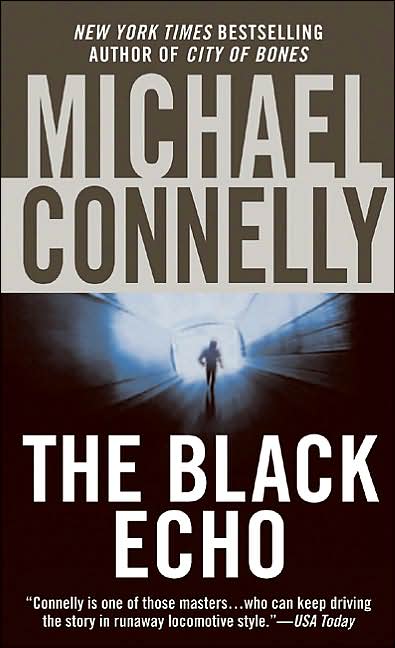
  • Michael Connelly is considered one of the best police/crime writers, and The Black Echo -- while at times clichéd and overdramatic -- appears to be a good starting point for his work:
For maverick LAPD homicide detective Harry Bosch, the body in the drainpipe at Mulholland Dam is more than another anonymous statistic. This one is personal...because the murdered man was a fellow Vietnam "tunnel rat" who had fought side by side with him in a hellish underground war. Now Bosch is about to relive the horror of Nam. From a dangerous maze of blind alleys to a daring criminal heist beneath the city, his survival instincts will once again be tested to their limit. Pitted against enemies inside his own department and forced to make the agonizing choice between justice and vengeance, Bosch goes on the hunt for a killer whose true face will shock him.
  • Suspect by Robert Crais. So the description for this novel started out fairly standard: "LAPD cop Scott James is not doing so well. Eight months ago, a shocking nighttime assault by unidentified men killed his partner Stephanie, nearly killed him, and left him enraged, ashamed, and ready to explode. He is unfit for duty...until he meets his new partner. Maggie is not doing so well, either..." At this point, I was expecting the usual trite nonsense about "Maggie, his astonishingly attractive new female partner etc etc." Instead, the author threw me a curveball and made Maggie a PTSD dog: "...Maggie is not doing so well, either. A German shepherd who survived three tours in Iraq and Afghanistan sniffing explosives before losing her handler to an IED, her PTSD is as bad as Scott's. They are each other's last chance. Shunned and shunted to the side, they set out to investigate the one case that no one wants them to touch: the identity of the men who murdered Stephanie." 
It's the 1960s. A hot August night lies heavy over the Carolinas. The corpse -- legs sprawled, stomach down on the concrete pavement, arms above the head -- brings the patrol car to a halt. The local police pick up a black stranger named Virgil Tibbs, only to discover that their most likely suspect is a homicide detective from California -- and the racially tense community's single hope in solving a brutal murder that turns up no witnesses, no motives, no clues.

Finally, I wanted to share this hilarious review of The Black Echo, by Goodreads user Kemper:
I’ve designed a gadget that will notify me when I run across clichés in crime thrillers with a *BEEP*. Let’s give it a test run on this Michael Connelly novel, shall we? So this is the first book in the series featuring a LAPD detective named Hieronymus “Harry” Bosch *BEEP*. .. ...why is it going off already? Oh, right. Quirky name for a main character. It seems to be calibrated correctly. Let’s proceed. 
In this novel published in 1992, Harry is a Vietnam veteran *BEEP* traumatized by his war experiences *BEEP* as a so-called tunnel rat who fought the VC in their network of underground passages. Harry is a driven detective whose inability to compromise often puts him at odds with his fellow cops *BEEP*. He has no family or life outside of his work *BEEP*, and he’s a borderline burn-out who lives on a diet of coffee, cigarettes and beer. *BEEP* Harry gets called to check out a dead body in a drainage pipe that everyone on the scene instantly assumes is a junkie who overdosed, but he has a hunch that it was actually a murder. *BEEP* Part of the reason Harry is convinced it was homicide is that he recognizes the victim as one of his fellow Vietnam tunnel rats. *BEEP* *BEEP* *BEEP* Damn, the old war buddy schtick really swung the needle into the red on this thing. 
Harry quickly finds evidence that the victim was involved in a high profile bank robbery that had involved tunneling into a vault and emptying the safe deposit boxes. When Harry tries to get the FBI’s attention, he meets a beautiful female agent *BEEP* *BEEP* *BEEP* named Eleanor Wish, but he also lands in hot water with his lieutenant who gets angry and yells at him a lot even though he hasn’t done anything wrong . *BEEP*. He also becomes the target of overzealous Internal Affairs cops *BEEP* that hound him even as he works with the FBI to try and solve the case. This quickly leads to a romance with Agent Wish *BEEP* *BEEP* *BEEP*..and *BEEP*….Uh oh.. I think it’s overloading…*BEEP* *BEEP* *BEEP* *BEEP* Is that smoke?? *BEEP* *BEEP* BEEP* Where’s the off switch? *BEEP* *BEEP* *BEEP**BEEEEEeeeeeeepppppp…pp..pp* Crap. I think Connelly broke it.
Anyhow, the odd thing about his book is that even though it’s got just about every cop thriller cliché you’ve ever heard of, it still works pretty well. 

UPDATE:  longer reviews of The Black Echo can be found at Carol's Notebook and Reactions to Reading.

Saturday, March 16, 2013

The Border Patrol, the US-Canadian Border, & Lynch's Border Songs


We've previously touched on the US-Mexico border (with the post about Boyle's Tortilla Curtain and Mexican immigration), but the northern border has been a little neglected. How are things going up there? Not well, it seems:
Sequester means fewer agents along Canadian border
The union representing border patrol agents says it's being unfairly targeted for spending cuts under the sequester, and that there will be less of a law enforcement presence along the North Country's border with Canada. Starting next month, all U.S. border patrol agents will have to take a day's furlough for every pay period... Shawn Moran is the vice-president of the National Border Patrol council, the agents' union. Moran says the cumulative effect will be 5,000 agents out of the field at any given time. And that means, he says, less secure borders. "We're going to see more people successfully crossing the border. When agents call for backup, there's going to be a longer response time to get backup, there'll be fewer people out there. On top of that, the agency is trying to save money in terms or vehicles and gas. That's also going to slash the amount of area we can effectively cover."

Looks like the sequester will also have a major economic impact on the US-Canada border, as reported last month by Canada's Globe & Mail in its article "Massive spending cuts could have Canada-U.S. border plan shelved:"
Lengthy lineups at the Canada-U.S. border. Long flight delays. A loss of lucrative American business contracts. The much-heralded Beyond the Border initiatives placed on the back burner indefinitely. Canada will feel the sting if U.S. Congress fails this week to avert what’s known as sequestration, an array of massive, mandated spending cuts to a host of federal departments and agencies aimed at slashing America’s $16-trillion national debt... For Canadians, that means quick shopping trips to nearby border communities will almost immediately become a hassle as they’re confronted with waits of several hours at busier entry points. They’ll also feel the long hand of sequestration when they fly given there will be a ripple effect across North America as U.S. officials cancel flights and shutter some control towers and airports.

For a novel centered around the US-Canadian border and the US border patrol, try Jim Lynch's Border Songs:
Six foot eight and severely dyslexic, Brandon Vanderkool has always had an unusual perspective—which comes in handy once his father pushes him off their dairy farm and into the Border Patrol. He used to jump over the ditch into British Columbia but now is responsible for policing a thirty-mile stretch of this largely invisible boundary. Uncomfortable in this uniformed role, he indulges his passion for bird-watching and often finds not only an astonishing variety of species but also a great many smugglers hauling pot into Washington State, as well as potentially more dangerous illegals. What a decade before was a sleepy rural hinterland is now the front line of an escalating war on both drugs and terrorism.

Monday, February 25, 2013

Marijuana in the US & Boyle’s Budding Prospects


 Earlier this month we touched on the War on Drugs and its impact on Mexico.  Now it's time for a look on how it is playing out in the US.  Here's today’s Politico story “Bill unveiled to legalize medical pot:”
Flanked by more than 150 advocates from around the country, Oregon Democrat [Representative] Earl Blumenauer on Monday put forward his legislation allowing states to legalize medical marijuana in an effort to end the confusion surrounding federal pot policy. Blumeanuer’s legislation, which has 13 co-sponsors — including GOP Rep. Dana Rohrabacher of California — would create a framework for the FDA to eventually legalize medicinal marijuana. It would also block the feds from interfering in any of the 19 states where medical marijuana is legal.

For a novel about growing pot in the US, try T.C. Boyle’s Budding Prospects:
All Felix Nasmyth and friends have to do is harvest a crop of Cannabis Sativa...and half a million tax-free dollars will be theirs. But they haven't reckoned on nosy Northern California-style neighbors, torrential rain, demands of the flesh, and Felix's improbable new love, a wayward sculptress on whose behalf he undertakes a one-man vendetta against a drug-busting state trooper named Jerpbak. As their deal escalates through crises into nightmare, their dreams of easy money get nipped in the bud.

Sunday, February 24, 2013

Oscar Night, Hollywood, & Leonard's Get Shorty


 Oscar night! From today's BBC story "Oscars: Hollywood prepares for Academy Awards:"
Hollywood is gearing up for what is likely to be one of the most unpredictable Academy Awards for years. Hundreds of fans and members of the world's media are in place on the red carpet and there is tight security outside the Dolby Theatre. The ceremony is due to start at 17:30 Los Angeles time (01:30 GMT). No film is expected to sweep the board, and hostage drama Argo has overtaken historical epic Lincoln in most predictions for the best picture prize. Daniel Day-Lewis, who plays Abraham Lincoln, is favourite for best actor, while Les Miserables star Anne Hathaway is tipped for supporting actress.
What is the quintessential novel about Hollywood culture? It certainly is *not* the inexplicably popular The Day of the Locust, a poorly-written snooze-fest. I vote for Elmore Leonard's Get Shorty:
Mob-connected loanshark Chili Palmer is sick of the Miami grind -- plus his "friends" have a bad habit of dying there. So when he chases a deadbeat client out to Hollywood, Chili figures he might like to stay. This town with its dreammakers, glitter, hucksters, and liars -- plus gorgeous, partially clad would -be starlets everywhere you look -- seems ideal for an enterprising criminal with a taste for the cinematic. Besides, Chili's got an idea for a killer movie -- thought it could very possibly kill him to get it made.