Showing posts with label police procedural. Show all posts

Sunday, May 19, 2013

Earth-Bound Asteroids & Winters' The Last Policeman


Back in February I posted about the meteor that injured hundred in Russia ("Impact Events & Lucifer's Hammer") and matched it with Lucifer's Hammer, a novel that speculated about what would happen to society after a cataclysmic impact event.

Now there's going to be another large rock flying near Earth (not hitting us, thankfully!), and I have a recommendation for a novel that looks at how we would react before a world-ending impact event, if we knew that impact was coming and that there was nothing we could do about it.

Here's Friday's LA Times article "Dark, massive asteroid to fly by Earth on May 31:"
It's 1.7 miles long. Its surface is covered in a sticky black substance similar to the gunk at the bottom of a barbecue. If it impacted Earth it would probably result in global extinction. Good thing it is just making a flyby.
Asteroid 1998 QE2 will make its closest pass to Earth on May 31 at 1:59 p.m. PDT.
Scientists are not sure where this unusually large space rock, which was discovered 15 years ago, originated from. But the mysterious sooty substance on its surface could indicate it may be the result of a comet that flew too close to the sun...
For a novel about Earth-bound asteroids, try The Last Policeman by Ben H. Winters:
What’s the point in solving murders if we’re all going to die soon, anyway?
Detective Hank Palace has faced this question ever since asteroid 2011GV1 hovered into view. There’s no chance left. No hope. Just six precious months until impact.
The Last Policeman presents a fascinating portrait of a pre-apocalyptic United States. The economy spirals downward while crops rot in the fields. Churches and synagogues are packed. People all over the world are walking off the job—but not Hank Palace. He’s investigating a death by hanging in a city that sees a dozen suicides every week—except this one feels suspicious, and Palace is the only cop who cares...
As Palace’s investigation plays out under the shadow of 2011GV1, we’re confronted by hard questions way beyond “whodunit.” What basis does civilization rest upon? What is life worth? What would any of us do, what would we really do, if our days were numbered?

Thursday, March 28, 2013

Irish Peace Process & Llywelyn's 1999


From yesterday's BBC editorial "Can Northern Ireland act as a template for Colombia?"
Fifteen years on from the Good Friday Agreement, there may be scepticism at home about the weaknesses of the Stormont assembly and executive. But in some other parts of the world Northern Ireland's 1998 peace deal is still being closely studied as a potential model for resolving conflict. 
As many as half a million people are thought to have died in the long running war in Colombia between the government in Bogota and the Marxist FARC, or Revolutionary Armed Forces of Colombia, which control areas in the south of the Latin American country... 
Thousands of miles apart, the two conflict zones became briefly linked in 2001 when three Irish republicans were arrested by the Colombian authorities, and later convicted of training the FARC guerrillas. Around the same time the FARC guerrillas and the Colombian government held a series of peace talks - but the process broke up amidst bitter recriminations. Now delegates from both sides are once again at the negotiating table - although this time they are keeping the details of their discussions under wraps and staying well away from the Colombian media in seclusion in the Cuban capital of Havana. 
Some key issues - like land reform - have no obvious parallel in the Stormont process. But others - such as disarmament, the treatment of victims, and discussion of how former combatants might participate in politics are more familiar.
Unfortunately, the article doesn't go into much detail about parallels between the two peace processes or which elements of the Stormont process could be applied to Colombia. Oh well.

For a novel about the Irish peace process, try 1999: A Novel of the CelticTiger and the Search for Peace by Morgan Llywelyn:
Barry Halloran, strong, clever, and passionately patriotic... Now a crippled photojournalist, he marries his beloved Barbara Kavanaugh, and steps back from the armed struggle. Through his work he documents the historic events that take us from the horrific aftermath of Bloody Sunday through the decades of The Troubles to the present.
For a little more action and a little less emphasis on the historical background, I recommend The Cold Cold Ground by Adrian McKinty:
At the height of conflict between the Catholic IRA and Protestant paramilitary factions in 1981, Sean Duffy, a Catholic police sergeant in the Protestant town of Carrickfergus, near Belfast, gets an unusual case. Two gay men have been murdered, their right hands severed (the classic modus for killing an informant) and switched between the two bodies. Duffy initially suspects a serial killer, but when no more gay men are targeted, he comes to believe that the second killing was done simply to cover up the first, in which the head of the IRA’s feared internal security force was the victim. Even after the case is reassigned, Duffy defies orders and keeps digging, coming up against corruption and collusion. Everything in this novel hits all the right notes, from its brilliant evocation of time and place to razor-sharp dialogue to detailed police procedures.
McKinty's novel is set during the early 1980s, but the as-yet-unpublished third book in the trilogy is expected to be set in the late 1980s/early 1990s and involve the peace process.

Tuesday, March 26, 2013

Neo-Nazis in Europe & Mankell's The Return of the Dancing Master


Now that I've covered one of the most popular US crime novels, it's time for some Nazi-busting detectives from Europe!

But first, the news.  Here's last week's BBC article "Greek footballer Giorgos Katidis banned for Nazi salute:"
A Greek footballer has been banned for life from playing for the national team after making a Nazi salute. AEK Athens midfielder Giorgos Katidis, 20, made the gesture to celebrate his winning goal during a Saturday match. The Greek football federation called it "a severe provocation" that insulted "all the victims of Nazi bestiality". Katidis denied he gave a Nazi salute. "I am not a fascist and would not have done it if I had known what it meant," Katidis said on his Twitter account.
I think he originally claimed that he was "pointing at a friend in the stands," which is ridiculous because it certainly looked like a Nazi salute.

Want to read a novel about neo-Nazism in Europe? While The Girl with the Dragon Tattoo features neo-Nazis, a Swedish novel that focuses more closely on them is The Return of the Dancing Master by Henning Mankell:
When retired policeman Herbert Molin is found brutally slaughtered on his remote farm in the northern forests of Sweden, police find strange tracks in the snow — as if someone had been practicing the tango. Stefan Lindman, a young police officer recently diagnosed with mouth cancer, decides to investigate the murder of his former colleague, but is soon enmeshed in a mystifying case with no witnesses and no apparent motives. Terrified of the disease that could take his life, Lindman becomes more and more reckless as he unearths the chilling links between Molin’s death and an underground neo-Nazi network that runs further and deeper than he could ever have imagined.

Wednesday, March 20, 2013

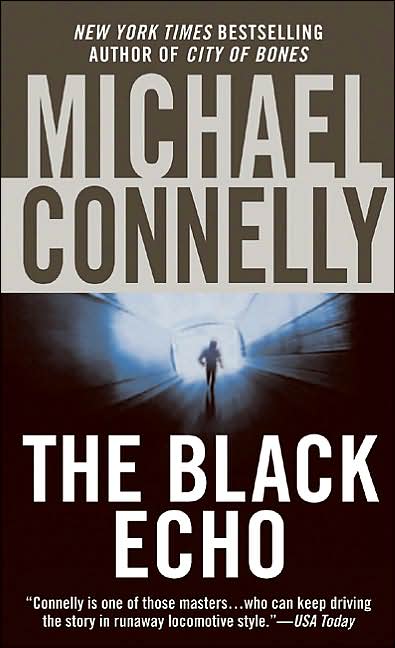
Police, Email Warrants, & Connelly's The Black Echo


From yesterday's Guardian article "Justice Department backs rewriting law that allows police to read emails:"
The Justice Department said on Tuesday that it supports rewriting 26-year-old legislation that has allowed US law enforcement officials to read a person's emails without a search warrant so long as the email is older than six months or already opened. The law has long been criticized by privacy advocates as a loophole when it comes to protecting Americans from government snooping. "There is no principled basis to treat email less than 180 days old differently than email more than 180 days old," Elana Tyrangiel, acting assistant attorney general in the Office of Legal Policy, told a House judiciary subcommittee. She also said emails deserve the same legal protections whether they have been opened or not. Tyrangiel's testimony gives Congress a starting point as it begins to review a complicated 1986 law known as the Electronic Communications Privacy Act.

I thought it would be interesting to read a novel about a police officer's experiences in the US. Apparently I'm far from alone in this, as "police procedural" appears to be a huge and growing fiction sub-genre. I checked around, including looking at an online police forum, and here's what I came up with:
  • Michael Connelly is considered one of the best police/crime writers, and The Black Echo -- while at times clichéd and overdramatic -- appears to be a good starting point for his work:
For maverick LAPD homicide detective Harry Bosch, the body in the drainpipe at Mulholland Dam is more than another anonymous statistic. This one is personal...because the murdered man was a fellow Vietnam "tunnel rat" who had fought side by side with him in a hellish underground war. Now Bosch is about to relive the horror of Nam. From a dangerous maze of blind alleys to a daring criminal heist beneath the city, his survival instincts will once again be tested to their limit. Pitted against enemies inside his own department and forced to make the agonizing choice between justice and vengeance, Bosch goes on the hunt for a killer whose true face will shock him.
  • Suspect by Robert Crais. So the description for this novel started out fairly standard: "LAPD cop Scott James is not doing so well. Eight months ago, a shocking nighttime assault by unidentified men killed his partner Stephanie, nearly killed him, and left him enraged, ashamed, and ready to explode. He is unfit for duty...until he meets his new partner. Maggie is not doing so well, either..." At this point, I was expecting the usual trite nonsense about "Maggie, his astonishingly attractive new female partner etc etc." Instead, the author threw me a curveball and made Maggie a PTSD dog: "...Maggie is not doing so well, either. A German shepherd who survived three tours in Iraq and Afghanistan sniffing explosives before losing her handler to an IED, her PTSD is as bad as Scott's. They are each other's last chance. Shunned and shunted to the side, they set out to investigate the one case that no one wants them to touch: the identity of the men who murdered Stephanie." 
It's the 1960s. A hot August night lies heavy over the Carolinas. The corpse -- legs sprawled, stomach down on the concrete pavement, arms above the head -- brings the patrol car to a halt. The local police pick up a black stranger named Virgil Tibbs, only to discover that their most likely suspect is a homicide detective from California -- and the racially tense community's single hope in solving a brutal murder that turns up no witnesses, no motives, no clues.

Finally, I wanted to share this hilarious review of The Black Echo, by Goodreads user Kemper:
I’ve designed a gadget that will notify me when I run across clichés in crime thrillers with a *BEEP*. Let’s give it a test run on this Michael Connelly novel, shall we? So this is the first book in the series featuring a LAPD detective named Hieronymus “Harry” Bosch *BEEP*. .. ...why is it going off already? Oh, right. Quirky name for a main character. It seems to be calibrated correctly. Let’s proceed. 
In this novel published in 1992, Harry is a Vietnam veteran *BEEP* traumatized by his war experiences *BEEP* as a so-called tunnel rat who fought the VC in their network of underground passages. Harry is a driven detective whose inability to compromise often puts him at odds with his fellow cops *BEEP*. He has no family or life outside of his work *BEEP*, and he’s a borderline burn-out who lives on a diet of coffee, cigarettes and beer. *BEEP* Harry gets called to check out a dead body in a drainage pipe that everyone on the scene instantly assumes is a junkie who overdosed, but he has a hunch that it was actually a murder. *BEEP* Part of the reason Harry is convinced it was homicide is that he recognizes the victim as one of his fellow Vietnam tunnel rats. *BEEP* *BEEP* *BEEP* Damn, the old war buddy schtick really swung the needle into the red on this thing. 
Harry quickly finds evidence that the victim was involved in a high profile bank robbery that had involved tunneling into a vault and emptying the safe deposit boxes. When Harry tries to get the FBI’s attention, he meets a beautiful female agent *BEEP* *BEEP* *BEEP* named Eleanor Wish, but he also lands in hot water with his lieutenant who gets angry and yells at him a lot even though he hasn’t done anything wrong . *BEEP*. He also becomes the target of overzealous Internal Affairs cops *BEEP* that hound him even as he works with the FBI to try and solve the case. This quickly leads to a romance with Agent Wish *BEEP* *BEEP* *BEEP*..and *BEEP*….Uh oh.. I think it’s overloading…*BEEP* *BEEP* *BEEP* *BEEP* Is that smoke?? *BEEP* *BEEP* BEEP* Where’s the off switch? *BEEP* *BEEP* *BEEP**BEEEEEeeeeeeepppppp…pp..pp* Crap. I think Connelly broke it.
Anyhow, the odd thing about his book is that even though it’s got just about every cop thriller cliché you’ve ever heard of, it still works pretty well. 

UPDATE:  longer reviews of The Black Echo can be found at Carol's Notebook and Reactions to Reading.