Showing posts with label mental illness. Show all posts

Sunday, May 19, 2013

Bipolar Disorder, Possible Flu Link, & Garey's Too Bright to Hear Too Loud to See


(Previous bipolar disorder posts: Bipolar Disorder & Eugenides’ The Marriage Plot, New Bipolar Disorder Treatment & Quick's The Silver Linings Playbook.)

Here's last week's New York Times article "Flu in Pregnancy Is Linked to Bipolar Disorder:"
Flu infection during pregnancy may increase the risk for bipolar disorder in the child, according to a new report...
From 1959 through 1966, researchers recruited more than 19,000 pregnant women enrolled in a large health insurance program in California, collecting data on influenza infection from just before conception until delivery.
Using various techniques, they tracked down cases of bipolar disorder among the offspring from 1981 to 2010 and found 92 cases of documented illness and 722 matched controls, a sample size the authors acknowledge is not large.
After controlling for maternal age, race, educational level, gestational age at birth and maternal psychiatric disorders, they found that people whose mothers had the flu during pregnancy had quadruple the risk for bipolar disorder as adults.
For a novel about bipolar disorder, try Too Bright to Hear Too Loud to See by Juliann Garey:
Debut novelist Juliann Garey channels movie studio exec Greyson Todd’s spiral into madness with the intimacy of memoir. Punctuated by electroshock treatments that dampen Greyson's extremes at the expense of his sense of self, Too Bright to Hear Too Loud to See maps his memories before and since his mother’s death threw his mind for a perpetual loop.
Greyson's roaring mania has an upside: It spawns a lust for risks that reward him richly in Hollywood. But as the highs give way to immobilizing lows that become impossible to hide, he leaves his wife and daughter and disappears into the Israeli outback, then Nairobi, Bangkok, and eventually New York, where everyone is “impatient and irritable and agitated,” so he fits right in.
Deep cash reserves allow Greyson to indulge the urges brought on by full-blown bipolar disorder for a good decade before he lands in a psych ward, and his exploits take on spectacularly lavish, absurd proportions, but you’ll laugh through gritted teeth. And though you may not ever like him, you’ll know his pain well enough to be grateful for every grain of sanity he regains.

Saturday, May 18, 2013

Obesity & Attenberg's The Middlesteins


From last week's BBC article "Rise in obesity poses dementia time bomb:"
Ever-growing waistlines could result in a big increase in the number of people who develop dementia in the future, researchers have warned...
Nobody knows exactly what causes dementias such as Alzheimer's disease, but body weight appears to be a risk factor. One study of 8,500 Swedish twins showed that those with a body mass index (BMI) greater than 30, who are classified as obese, were almost four times as likely to develop dementia as those with a normal BMI.
For a novel about obesity, try Attenberg's The Middlesteins:
For more than thirty years, Edie and Richard Middlestein shared a solid family life together in the suburbs of Chicago. But now things are splintering apart, for one reason, it seems: Edie's enormous girth. She's obsessed with food--thinking about it, eating it--and if she doesn't stop, she won't have much longer to live.
When Richard abandons his wife, it is up to the next generation to take control. Robin, their schoolteacher daughter, is determined that her father pay for leaving Edie. Benny, an easy-going, pot-smoking family man, just wants to smooth things over. And Rachelle-- a whippet thin perfectionist-- is intent on saving her mother-in-law's life, but this task proves even bigger than planning her twin children's spectacular b'nai mitzvah party.
Through it all, they wonder: do Edie's devastating choices rest on her shoulders alone, or are others at fault, too? With pitch-perfect prose, huge compassion, and sly humor, Jami Attenberg has given us an epic story of marriage, family, and obsession. The Middlesteins explores the hopes and heartbreaks of new and old love, the yearnings of Midwestern America, and our devastating, fascinating preoccupation with food.
If you'd prefer a young-adult novel, you might like Blubber by Judy Blume:
Sometimes a writer will make a character fat as a political tool, in order to convey their own intended message, be it one of size acceptance, tolerance, or other. This seems most prevalent, logically, in children's books - Judy Blume's Blubber is the strongest example that comes to mind.
Written realistically from the point of view of an average-sized, ordinary child named Jill, Blubber tells the story of the merciless, constant taunting of Jill's obese classmate, Linda. Jill struggles to reconcile her own feelings of guilt and her need to not be cruel with her fear of falling victim to the same cruelty as her overweight peer.
This is one of the few children's books I can think of that deals honestly with the kind of bullying fat (and other noticeably 'different') kids are subject to, and its brutality. Blume makes her point, without coming off as preachy or judgmental or bonking the reader over the head with obvious, overblown clearcut endings.
(The review above is from the excellent essay "The Skinny on Fat in Fiction.")

Monday, May 13, 2013

Kenya Asylum Break, Psychiatric Hospitals, & Kesey's One Flew Over the Cuckoo's Nest


From today's BBC article "Kenyan patients escape from Nairobi's Mathari hospital:"
Forty mentally ill patients have escaped from the Mathari Mental Hospital in Kenya's capital, Nairobi, after overpowering guards, police say.
A search has been launched for the patients, some of whom are known to be violent, police told the BBC. Kenya's Standard newspaper reports that the group escaped from the state hospital after complaining that the medicine given to them was ineffective.
Mathari is the biggest psychiatric hospital in Kenya. In 2011, rights groups called for an investigation into alleged human rights abuses at the hospital following a CNN documentary "Locked up and Forgotten". The CNN crew reported that during a visit to the hospital, they found a dead body locked up in a seclusion cell with a patient. Senior Nairobi police officer Moses Ombati told the BBC the patients had staged a protest, before overpowering guards and escaping.
For a novel about a psychiatric hospital, try Ken Kesey's classic One Flew Over the Cuckoo's Nest:
In this classic of the 1960s, Ken Kesey's hero is Randle Patrick McMurphy, a boisterous, brawling, fun-loving rebel who swaggers into the world of a mental hospital and takes over.
A lusty, life-affirming fighter, McMurphy rallies the other patients around him by challenging the dictatorship of Nurse Ratched. He promotes gambling in the ward, smuggles in wine and women, and openly defies the rules at every turn.
But this defiance, which starts as a sport, soon develops into a grim struggle, an all-out war between two relentless oppnonents: Nurse Ratched, back by the full power of authority, and McMurphy, who has only his own indomitable will. What happens when Nurse Ratched uses her ultimate weapon against McMurphy provides the story's shocking climax.
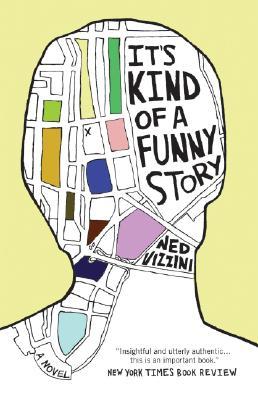
For a newer, young-adult psychiatric hospital novel, try It's Kind of a Funny Story by Ned Vizzini:
Like many ambitious New York City teenagers, Craig Gilner sees entry into Manhattan’s Executive Pre-Professional High School as the ticket to his future. Determined to succeed at life—which means getting into the right high school to get into the right college to get the right job—Craig studies night and day to ace the entrance exam, and does. That’s when things start to get crazy.
At his new school, Craig realizes that he isn't brilliant compared to the other kids; he’s just average, and maybe not even that. He soon sees his once-perfect future crumbling away. The stress becomes unbearable and Craig stops eating and sleeping—until, one night, he nearly kills himself.
Craig’s suicidal episode gets him checked into a mental hospital, where his new neighbors include a transsexual sex addict, a girl who has scarred her own face with scissors, and the self-elected President Armelio. There, isolated from the crushing pressures of school and friends, Craig is finally able to confront the sources of his anxiety.
Ned Vizzini, who himself spent time in a psychiatric hospital, has created a remarkably moving tale about the sometimes unexpected road to happiness.

Saturday, April 13, 2013

New Bipolar Disorder Treatment & Quick's The Silver Linings Playbook


I previously posted about bipolar disorder (in relation to Jesse Jackson Jr's shopping spree and his claim that he suffers from the disorder). Now the issue is in the news again due to a possible breakthrough in treatment.

From today's article in The Independent, "Genetic tests may help bipolar disorder patients:"
Scientists have identified a group of patients with a genetic predisposition to mental illness, opening up for the first time the prospect of personalised medicine in psychiatry.
Personalised medicine involves identifying groups of patients whose genes make them susceptible to certain diseases and responsive to certain drugs. Researchers from University College, London (UCL) studied 1,000 patients with bipolar disorder and found 1.7 per cent carried a mutation in an important brain receptor gene putting them at increased risk of the disease.
The findings suggest the patients with the mutation, called GRM3, could be treated with existing drugs which are not currently used for bipolar disorder.

For a novel about bipolar disorder, you might like The Silver Linings Playbook by Matthew Quick:
Meet Pat. Pat has a theory: his life is a movie produced by God. And his God-given mission is to become physically fit and emotionally literate, whereupon God will ensure a happy ending for him -- the return of his estranged wife Nikki. (It might not come as a surprise to learn that Pat has spent time in a mental health facility.) The problem is, Pat's now home, and everything feels off. No one will talk to him about Nikki; his beloved Philadelphia Eagles keep losing; he's being pursued by the deeply odd Tiffany; his new therapist seems to recommend adultery as a form of therapy. Plus, he's being hunted by Kenny G!

Monday, April 1, 2013

Asperger Syndrome & Picoult's House Rules


From yesterday's NYT article "Books of Hope, Found in Newtown Gunman’s Home:"
Words of comfort, encouragement and empathy had been available to Nancy Lanza and her son, Adam, within a pair of books that were found by the police during a search of their home in Newtown, Conn., after Mr. Lanza’s murderous rampage on Dec. 14. It is all but impossible to know if mother or son were helped by the books, “Look Me in the Eye: My Life With Asperger’s” and “Born on a Blue Day: Inside the Extraordinary Mind of an Autistic Savant,” or whether either opened, or even had use for, them. While those familiar with Mr. Lanza and his family have said he had an autism variant known as Asperger’s syndrome, investigators have not confirmed the diagnosis... 
Over the same period, Mr. Robison has been worrying about an ill-informed rush to judgment. “Reporters are saying the killer had Asperger’s syndrome, a form of autism,” he wrote on his blog on Dec. 20. “Every time a news story does that — by tying ‘killer’ and ‘Asperger’s’ in the same sentence — they are at some level implying that there is a connection between autism and mass murder. “There’s not,” he continued. “Statisticians have a phrase for this situation: Correlation does not imply causation.”
For a novel about Asperger Syndrome, try House Rules by Jodi Picoult:
When your son can't look you in the eye...does that mean he's guilty? Jacob Hunt is a teen with Asperger's syndrome. He's hopeless at reading social cues or expressing himself well to others, though he is brilliant in many ways. But he has a special focus on one subject - forensic analysis. A police scanner in his room clues him in to crime scenes, and he's always showing up and telling the cops what to do. And he's usually right. But when Jacob's small hometown is rocked by a terrible murder, law enforcement comes to him. Jacob's behaviors are hallmark Asperger's, but they look a lot like guilt to the local police. Suddenly the Hunt family, who only want to fit in, are directly in the spotlight. For Jacob's mother, Emma, it's a brutal reminder of the intolerance and misunderstanding that always threaten her family. For his brother, Theo, it's another indication why nothing is normal because of Jacob. And over this small family, the soul-searing question looms: Did Jacob commit murder?

Tuesday, March 19, 2013

Nuns & Salzman's Lying Awake


The slew of Pope-posts continues!  (See papal election, Pope and Dirty War, Pope and environmentalism.)

From Saturday's BBC article "Pope Francis wants 'poor Church for the poor':"
Pope Francis has said he wants "a poor Church, for the poor" following his election as head of the world's 1.2bn Catholics on Wednesday. He said he chose the name Francis after 12-13th Century St Francis of Assisi, who represented "poverty and peace". He urged journalists to get to know the Church with its "virtues and sins" and to share its focus on "truth, goodness and beauty". Pope Francis takes over from Benedict XVI, who abdicated last month.

What a change from Pope Benedict! In case you've forgotten, about a year ago Benedict slammed nuns for focusing too much on the poor. Here's the New York Times article on that incident, "Vatican Reprimands a Group of U.S. Nuns and Plans Changes:"
The Vatican has appointed an American bishop to rein in the largest and most influential group of Catholic nuns in the United States, saying that an investigation found that the group had “serious doctrinal problems.”...“I’m stunned,” said Sister Simone Campbell, executive director of Network, a Catholic social justice lobby founded by sisters. Her group was also cited in the Vatican document, along with the Leadership Conference, for focusing its work too much on poverty and economic injustice, while keeping “silent” on abortion and same-sex marriage.

So what is a nun's life like?  Here are three novels on the subject:

Lying Awake by Mark Salzman:
Mark Salzman's Lying Awake is a finely wrought gem that plumbs the depths of one woman's soul, and in so doing raises salient questions about the power-and price-of faith. Sister John's cloistered life of peace and prayer has been electrified by ever more frequent visions of God's radiance, leading her toward a deep religious ecstasy. Her life and writings have become examples of devotion. Yet her visions are accompanied by shattering headaches that compel Sister John to seek medical help. When her doctor tells her an illness may be responsible for her gift, Sister John faces a wrenching choice: to risk her intimate glimpses of the divine in favor of a cure, or to continue her visions with the knowledge that they might be false-and might even cost her her life.
In This House of Brede by Rumer Godden:
This extraordinarily sensitive and insightful portrait of religious life centers on Philippa Talbot, a highly successful professional woman who leaves her life among the London elite to join a cloistered Benedictine community. In this gripping narrative of the crises surrounding the ancient Brede abbey, Rumer Godden penetrates to the mysterious, inner heart of a religious community—a place of complexity and conflict, as well as joy and love.
The Nun's Story by Kathryn Hulme (warning: the novel was written in the 1950s and contains racist depictions of the Congolese):
The lead character of the book, Sister Luke (pre-convent name Gabrielle Van Der Mal), finds her faith tested in Africa where she finds herself at odds with headstrong Dr. Fortunati, operator of a remote Congo hospital, with whom she gradually builds respect, and again during World War II, when she is ordered not to take sides. Ultimately, Sister Luke is forced to decide whether to remain in the convent or return to the outside world. Gabrielle/Sister Luke is stretched between her desire to be faithful to the rule of her congregation and her desire to be a nurse. As a nun she must remove all vestiges of "Gabrielle Van Der Mal" and sublimate herself into the devoted bride of Christ. As a nun there is no room for her personal desires and aspirations. Ultimately, the conflict between her devotion to the Church and the nursing profession, juxtaposed with her passionate Belgian patriotism and her love of her father (killed by Nazi fighter planes while treating wounded) bring her to an impasse...

I wanted novels about modern (20th/21st century) nuns. There are plenty more novels on nuns set in earlier times. The blog Book Group of One has a good list in its post about Nun-Fiction. Another interesting blog post about nun novels is Faith and lies: Two fascinating novels about nuns on Tor.com.

Monday, February 25, 2013

Bipolar Disorder & Eugenides’ The Marriage Plot


Bipolar disorder has been in the news a few times this month.

The film Silver Linings Playbook, which won the Oscar for Best Actress last night, revolves around Patrizio Solitano Jr. (Bradley Cooper) and how he copes with bipolar disorder after leaving a mental health facility and moving in with his parents.

The disorder also featured in last week's Jesse Jackson Jr. story.  Here's a Chicago Tribune article from February 20th, “How much weight does Jesse Jackson Jr.'s illness deserve in the scales of justice?:”
You've probably heard the Jesse Jackson Jr. shopping list. The furniture, the furs, the $43,000 Rolex... All in all, according to federal prosecutors, the former Illinois congressman spent $750,000 of his campaign funds on personal purchases... What made him do it? Greed. Arrogance. Entitlement. Those are the easy, familiar explanations. But Jackson's family and the Mayo Clinic say he suffers from bipolar disorder, and if we take that claim on faith — I do — the answer to what made him do it is more complicated. And if it's more complicated, is he guilty in the usual criminal way? How responsible is any mentally ill person for his or her behavior?... Bipolar disorder brings wild mood swings. People with the condition go from depression to impulsive behavior. They may fluctuate between grandiosity and feelings of worthlessness. "Spending sprees" is on the list of symptoms. So is "poor judgment." But bipolar disorder is not insanity. People with the illness may not be able to control what they do, but that doesn't mean they're not aware of what they're doing. (Emphasis mine.)

If you would like to read a novel that features bipolar disorder prominently, try Jeffrey Eugenides' The Marriage Plot, described by The Daily Beast thusly:
In the book, Eugenides delves into the psychology of three college seniors (who, like the author, went to Brown) as they graduate in 1982 into a recession and a love triangle. There’s Mitchell, who loves Christian mysticism and his classmate Madeleine Hanna; Madeleine, who loves romantic idealism and her classmate Leonard Bankhead; and Leonard, a polymathic biology student and manic-depressive, who loves lithium [note: bipolar disorder was historically known as manic–depressive disorder]. “Being called to on to describe Leonard’s depression called for as much experimental writing as anything I’ve written,” Eugenides said.
How accurate is Eugenides' depiction of bipolar disorder? UCLA psychology professor David Miklowitz found it very accurate:
Many depictions of bipolar disorder have appeared in books and films, but few (in my opinion) accurately portray the ups and downs of bipolar I disorder. Instead, they tend to capitalize on Hollywood-style depictions that may be dramatic, funny or even tear-jerking, but rarely capture the pain caused by the illness for the sufferer or his or her family members, or the difficult decisions that have to be made. A notable exception is the novel “The Marriage Plot”... Leonard, one of the novel’s main characters, cycles from mania to hypomania to depression and back several times, and the descriptions of these different states are dead-on. What’s more, Eugenides shows us bipolar disorder through the eyes of a spouse, Madeleine, who is well-meaning and loves Leonard deeply, but is way out of her league in dealing with his disorder.