Showing posts with label books made into movies. Show all posts

Monday, April 29, 2013

Indian Wars, Wounded Knee Massacre, & Berger's Little Big Man


From Saturday's BBC article "To whom does Wounded Knee belong?:"
Part of the historical site at Wounded Knee is up for sale. Should it be developed as a landmark or left in peace out of respect for the Sioux people who died there?
Almost as soon as the 1890 massacre at Wounded Knee was over, the battle to define what happened on that bleak December day began... [A]s many as 300 unarmed men, women and children were killed. And official reports from some in government criticizing the massacre were simply buried.
For the Sioux descendants still living in the Pine Ridge reservation, who remember first-hand accounts of the atrocity, the news that a key part of that painful history could be sold outside the tribe has come as a shock.
A 40-acre parcel of land that's part of the massacre site is up for sale, and its owner has given the tribe until 1 May to come up with the $3.9m (£2.5m) asking price. If they don't, land owner James Czywczynski says he will be forced to accept one of several offers he has already secured from commercial buyers, who may attempt to capitalize on the land as a tourist attraction.
For a novel about the Indian Wars (including massacres like Wounded Knee), try Thomas Berger's Little Big Man:
'I am a white man and never forget it, but I was brought up by the Cheyenne Indians from the age of ten.' So starts the story of Jack Crabb, the 111-year old narrator of Thomas Berger's masterpiece of American fiction. As a "human being", as the Cheyenne called their own, he won the name Little Big Man. He dressed in skins, feasted on dog, loved four wives and saw his people butchered by the horse soldiers of General Custer, the man he had sworn to kill.
As a white man, Crabb hunted buffalo, tangled with Wyatt Earp, cheated Wild Bill Hickok and survived the Battle of Little Bighorn. Part-farcical, part-historical, the picaresque adventures of this witty, wily mythomaniac claimed the Wild West as the stuff of serious literature.

You also might like Dances with Wolves by Michael Blake:
Ordered to hold an abandoned army post, John Dunbar found himself alone, beyond the edge of civilization. Thievery and survival soon forced him into the Indian camp, where he began a dangerous adventure that changed his life forever.

Saturday, April 20, 2013

Rio's Favelas & Lins' City of God


From Wednesday's UPI article "Brazil beefs up security before pope's visit, World Cup:"
Brazil is beefing up national security in preparation for the July visit of Pope Francis, the FIFA World Cup next year and the 2016 Olympics...
The slums, known as favelas, haven't entirely disappeared despite repeated police and paramilitary operations and remain problem areas for Brazil's law enforcement agencies, including army units used occasionally when police action fails.
The favelas are seen as hotbeds of crime, drug trade and human trafficking -- blots on the image the government of President Dilma Rousseff wants to present to the pope when he visits in July, the World Cup next year and the Olympics.
Before the pontiff's visit, Brazil will also host the FIFA Confederations Cup, an international association soccer tournament conducted June 15-30, which is a prelude to the 2014 World Cup. Brazil is the defending champion.
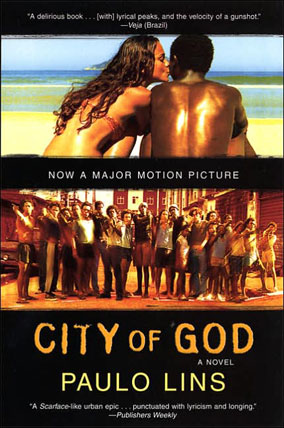
For a novel set in a favela, try City of God by Paulo Lins:
Lins's 1997 fiction debut—the source of the 2002 film published in English for the first time—chronicles two generations over three decades in the infamous Rio de Janeiro City of God, "a neo-slum of concrete, brimming dealer-doorways, sinister-silences and cries of despair."
From the slum's creation in the early 1960s for flood victims, through the rise of disco and cocaine in the 1970s, to the horrific gang wars of the 1980s, Lins traces the rise and fall of myriad, often teenaged gangsters for whom guns, girls and drugs are the tools of power.
While the film traces the divergent paths of two childhood friends, the novel rushes from vignette to vignette, with an ever-changing cast of characters with names like "Good Life," "Beelzebub" and "Hellraiser." Years, and pages, pass in a haze of smoking, drinking, snorting lines of cocaine, dancing sambas, swearing and planning the next big score. Guns dispense justice; the price for disrespect, whether to a spouse, a friend or the favela, is torture or death.
Lins, who grew up in the City, lets the horror speak for itself. He serves up a Scarface-like urban epic, bursting with encyclopedic, graphic descriptions of violence, punctuated with lyricism and longing.

Thursday, April 18, 2013

Political Appointees, Diplomats, & Boyd's A Good Man in Africa


 From last week’s Washington Post editorial, “Presidents are breaking the U.S. Foreign Service:”
…What accounts for the Foreign Service being marginalized? The most visible factor is the overwhelming — and growing — presence of political appointees in mid-level and top leadership positions at the State Department.
For all their merit, political appointees are short-term officials, subject to partisan, ­personality-specific pressures. They do not notably contribute to the institution’s longer-term vitality, and their ascension creates a system inherently incapable of providing expert, nonpartisan foreign policy advice…
Since 1975, the number of top leadership positions … filled by career Foreign Service officers has fallen from 61 percent in 1975 to 24 percent in 2012. Only five of the 35 special envoys, representatives, advisers and coordinators appointed during President Obama’s first term were Foreign Service officers.

For a hilarious, satirical novel about life as a diplomat (in this case, a British diplomat), try A Good Man in Africa by William Boyd -- one of my top ten favorite novels of all time:
In the small African republic of Kinjanja, British diplomat Morgan Leafy bumbles heavily through his job. His love of women, his fondness for drink, and his loathing for the country prove formidable obstacles on his road to any kind of success.
But when he becomes an operative in Operation Kingpin and is charged with monitoring the front runner in Kinjanja’s national elections, Morgan senses an opportunity to achieve real professional recognition and, more importantly, reassignment.
After he finds himself being blackmailed, diagnosed with a venereal disease, attempting bribery, and confounded with a dead body, Morgan realizes that very little is going according to plan...

Saturday, April 13, 2013

New Bipolar Disorder Treatment & Quick's The Silver Linings Playbook


I previously posted about bipolar disorder (in relation to Jesse Jackson Jr's shopping spree and his claim that he suffers from the disorder). Now the issue is in the news again due to a possible breakthrough in treatment.

From today's article in The Independent, "Genetic tests may help bipolar disorder patients:"
Scientists have identified a group of patients with a genetic predisposition to mental illness, opening up for the first time the prospect of personalised medicine in psychiatry.
Personalised medicine involves identifying groups of patients whose genes make them susceptible to certain diseases and responsive to certain drugs. Researchers from University College, London (UCL) studied 1,000 patients with bipolar disorder and found 1.7 per cent carried a mutation in an important brain receptor gene putting them at increased risk of the disease.
The findings suggest the patients with the mutation, called GRM3, could be treated with existing drugs which are not currently used for bipolar disorder.

For a novel about bipolar disorder, you might like The Silver Linings Playbook by Matthew Quick:
Meet Pat. Pat has a theory: his life is a movie produced by God. And his God-given mission is to become physically fit and emotionally literate, whereupon God will ensure a happy ending for him -- the return of his estranged wife Nikki. (It might not come as a surprise to learn that Pat has spent time in a mental health facility.) The problem is, Pat's now home, and everything feels off. No one will talk to him about Nikki; his beloved Philadelphia Eagles keep losing; he's being pursued by the deeply odd Tiffany; his new therapist seems to recommend adultery as a form of therapy. Plus, he's being hunted by Kenny G!

Dino Embryos, Crichton's Jurassic Park, & Bakker's Raptor Red


From yesterday's Wired article "Chinese dinosaur embryo fossils are oldest found so far:"
The oldest fossilised dinosaur embryos found so far have been discovered by palaeontologists in China. With several of the embryos petrified at different stages of development, it offers a rare insight into exactly how dinosaurs developed inside eggs.
Also exciting is that the embryos appear to contain organic matter that hasn't been fossilised, which would be the oldest organic material ever found from a terrestrial vertebrate. The fossils -- which are thought to be either Massospondylus or Lufengosaurus -- have been dated as being between 190 and 197 million years old, the Lower Jurassic period.
I have two recommendations for novels about dinosaurs. First, Jurassic Park by Michael Crichton:
An astonishing technique for recovering and cloning dinosaur DNA has been discovered. Creatures once extinct now roam Jurassic Park, soon-to-be opened as a theme park. Until something goes wrong...and science proves a dangerous toy.
A lesser-known novel that I would also recommend is Raptor Red by Robert T. Bakker:
Revolutionary paleontologist Bakker...has written a novel that might be subtitled "A Year in the Life of a Dinosaur," as he tells the story of Raptor Red, a giant carnivore of the Early Cretaceous period.
Having lost her mate in a botched hunting attack, Red (so-named because of the red stripe on her snout distinguishing her from other raptor species) joins forces with her sister and her sister's three chicks to survive in a world of hostile natural forces.
Bakker manages to mix scientific theories -- some of which are definitely on the cutting edge -- with a rip-roaring narrative. Perhaps even more miraculously, he has created a sympathetic nonhuman heroine without anthropomorphizing her into a Disney character.

Tuesday, April 9, 2013

Thatcher, Apartheid South Africa, & Brink's A Dry White Season


From yesterday's BBC article "Thatcher's role 'in saving Nelson Mandela':"
Did Margaret Thatcher play a role in helping to save Nelson Mandela's life? That is the remarkable claim made by one of the former South African president's closest friends, Ahmed Kathrada.
"Her word did count - I'm sure of it," Mr Kathrada told me, on hearing of the death of Baroness Thatcher. Between 1963 and 1964, Nelson Mandela was a defendant at the Rivonia trial, accused of trying to overthrow the apartheid government. Mr Kathrada was one of nine other men in the dock with him. The death penalty was initially sought by prosecutors, but was later changed to life imprisonment. Mr Mandela eventually spent 27 years in prison. Mr Kathrada was released a few months earlier in October 1989.
After the end of apartheid and the advent of democracy in South Africa in 1994, Mr Kathrada sometimes took visiting delegations and VIPs on guided tours of the notorious Robben Island jail where he and Mr Mandela had been incarcerated. "I had the opportunity to accompany [Margaret Thatcher] a few years ago," said Mr Kathrada. "She assured me that she had played a positive role during our trial."
"We were expecting a death sentence. We were well aware that there was all sorts of pressure from South Africa and abroad - pressure from people not necessarily agreeing with" the ANC's policies, he said.
The most popular comments on the article vehemently disagree that Thatcher saved Mandela. Here's of the highest rated comments:
This is historical revisionism. [...] The Thatcher Government resisted international pressure to impose economic sanctions on the apartheid country and she regarded the ANC as a 'typical terrorist organization' as late as 1987.
For a novel set in apartheid South Africa, try A Dry White Season by André P. Brink:
Ben Du Toit is a white schoolteacher in suburban Johannesburg in a dark time of intolerance and state-sanctioned apartheid. A simple, apolitical man, he believes in the essential fairness of the South African government and its policies--until the sudden arrest and subsequent "suicide" of a black janitor from Du Toit's school. Haunted by new questions and desperate to believe that the man's death was a tragic accident, Du Toit undertakes an investigation into the terrible affair--a quest for the truth that will have devastating consequences for the teacher and his family, as it draws him into a lethal morass of lies, corruption, and murder.

Wednesday, April 3, 2013

E-Cigarettes & Buckley's Thank you for Smoking


I've covered pot and alcohol; now it's time to move on to cigarettes.  Electronic cigarettes, that is.

From the March 23rd editorial in The Economist, "No smoke. Why the fire?:"
Some inventions are so simple, you have to wonder why no one has come up with them before. One such is the electronic cigarette. Smoking tobacco is the most dangerous voluntary activity in the world. More than 5m people die every year of the consequences. That is one death in ten. People smoke because they value the pleasure they get from nicotine in tobacco over the long-term certainty that their health will be damaged. So it seems rational to welcome a device that separates the dangerous part of smoking (the tar, carbon monoxide and smoke released by the process of combustion) from the nicotine. 
And that is what an e-cigarette does. It uses electricity from a small battery to vaporise a nicotine-containing solution, so that the user can breathe it in. E-cigarettes do not just save the lives of smokers: they bring other benefits too. Unlike cigarettes, they do not damage the health of bystanders. They do not even smell that bad, so there is no public nuisance, let alone hazard, and thus no reason to ban their use in public places. Pubs and restaurants should welcome them with open arms.  
No wonder the e-cigarette market is growing. Though still small compared with that for real smokes, it doubled in America last year and is likely to do so again in 2013. 
Who could object? Quite a lot of people, it seems. Instead of embracing e-cigarettes, many health lobbyists are determined to stub them out. Some claim that e-cigarettes may act as “gateways” to the real thing. Others suggest that the flavourings sometimes added to the nicotine-bearing solution make e-cigarettes especially attractive to children...
It seems that the next evolution in the long history of tobacco has arrived.

For a book about cigarettes and the tobacco lobby, try Christopher Buckley's satirical novel Thank You for Smoking:
Nick Naylor likes his job. In the neo-puritanical nineties, it's a challenge to defend the rights of smokers and a privilege to promote their liberty. Sure, it hurts a littIe when you're compared to Nazi war criminals, but Nick says he's just doing what it takes to pay the mortgage and put his son through Washington's elite private school St. Euthanasius. He can handle the pressure from the antismoking zealots, but he is less certain about his new boss, BR, who questions whether Nick is worth $150,000 a year to fight a losing war. Under pressure to produce results, Nick goes on a PR offensive. But his heightened notoriety makes him a target for someone who wants to prove just how hazardous smoking can be. If Nick isn't careful, he's going to be stubbed out.

Thursday, March 28, 2013

Baseball's Opening Day & Grisham's Calico Joe


I've already posted about college baseball.  Now how about some Major League action, especially since opening day is this weekend? Give it to me, Bleacher Report: what's on tap for the very first game of the season?
Major League Baseball will open its season with a battle of Texan teams, as the perennially contending Texas Rangers travel to face the perennially cellar-dwelling Houston Astros on Sunday night. Both teams come into 2013 with a lot of questions. Can the Rangers overcome major losses in their lineup in the tough AL West with the Los Angeles Angels of Anaheim and Oakland Athletics nipping at their heels? Can the Astros win 60 games?

Can the Astros win 60 games? Could a worse opening match-up have been made? Is there a reason the opening game doesn't feature headline teams like the Tigers, Yankees, or World Champion San Francisco Giants?

To escape from reality (highly recommended for any Astros fans) into the pages of a good book, try Calico Joe by John Grisham:
In the summer of 1973 Joe Castle was the boy wonder of baseball, the greatest rookie anyone had ever seen. The kid from Calico Rock, Arkansas dazzled Cub fans as he hit home run after home run, politely tipping his hat to the crowd as he shattered all rookie records. Calico Joe quickly became the idol of every baseball fan in America, including Paul Tracey, the young son of a hard-partying and hard-throwing Mets pitcher. On the day that Warren Tracey finally faced Calico Joe, Paul was in the stands, rooting for his idol but also for his Dad. Then Warren threw a fastball that would change their lives forever…

If you prefer a classic, you might like The Natural by Bernard Malamud:
The Natural, Bernard Malamud’s first novel, published in 1952, is also the first—and some would say still the best—novel ever written about baseball. In it Malamud, usually appreciated for his unerring portrayals of postwar Jewish life, took on very different material—the story of a superbly gifted “natural” at play in the fields of the old daylight baseball era—and invested it with the hardscrabble poetry, at once grand and altogether believable, that runs through all his best work.

I'm going to take a break from posting for a few days.  I'm thinking of drawing up a "best of" list of the books mentioned in the March posts.  I'll be back on Monday.

Wednesday, March 27, 2013

Indigenous Australians & Pilkington's Follow The Rabbit-Proof Fence


I’ve posted about Native American tribes in the US. Now let’s take a look at the experience of indigenous Australians.

Here's Monday’s BBC article “Living Black: Australia's trail-blazing indigenous show:”
Australia's trailblazing indigenous TV programme "Living Black" is celebrating a decade of bringing stories of triumph, resilience and tragedy to a national audience. The country's longest-running indigenous news and current affairs show has survived tight budgets and management changes to become a beacon of broadcasting in a country where indigenous life can be ignored by the mainstream media. 
"It is a unique programme that is filling a void," said Karla Grant, presenter and executive producer at the Living Black studio in Sydney. "No one else is doing the stories that we do." "We are closer to the issue because we may have faced it within our own families. Our programme gives indigenous people a voice right across the country," she said. 
The programme's small production crew is responsible for 26 episodes each year that aim to give in-depth coverage of social justice, employment, health, and housing issues. All are areas of crisis that make Australia's first peoples its most disadvantaged.
For a novel about Aboriginal Australians, try Follow the Rabbit-Proof Fence by Doris Pilkington:
The remarkable true story of three young girls who cross the harsh Australian desert on foot to return to their home. 
Following an Australian government edict in 1931, black aboriginal children and children of mixed marriages were gathered up by whites and taken to settlements to be assimilated. In Rabbit-Proof Fence, award-winning author Doris Pilkington traces the captivating story of her mother, Molly, one of three young girls uprooted from her community in Southwestern Australia and taken to the Moore River Native Settlement. At the settlement, Milly and her relatives Gracie and Daisy were forbidden to speak their native language, forced to abandon their aboriginal heritage, and taught to be culturally white. 
After regular stays in solitary confinement, the three girls scared and homesick planned and executed a daring escape from the grim camp, with its harsh life of padlocks, barred windows, and hard cold beds. The girls headed for the nearby rabbit-proof fence that stretched over 1,000 miles through the desert toward their home. Their journey lasted over a month, and the survived on everything from emus to feral cats, while narrowly avoiding the police, professional trackers, and hostile white settlers. Their story is a truly moving tale of defiance and resilience.

Tuesday, March 26, 2013

Tiger Woods' Comeback & Pressfield's The Legend of Bagger Vance


From yesterday's BBC article "Tiger Woods back as world number one after Bay Hill win:"
Tiger Woods returned to the top of the world rankings for the first time since October 2010 after winning the Arnold Palmer Invitational by two strokes. The 37-year-old...first became world number one in June 1997 following his maiden major victory at the Masters, aged 22. He topped the rankings for 264 weeks from August 1999 to September 2004 and 281 weeks from June 2005 to October 2010. But a five-month lay-off in late 2009 after an infamous scandal in his private life, a string of injuries, including four knee operations and an Achilles problem, and problems getting to grips with a new swing all contributed to his fall down the rankings.
Want a good golf novel? Try The Legend of Bagger Vance by Steven Pressfield:
In the Depression year of 1931, on the golf links at Krewe Island off Savannah's windswept shore, two legends of the game, Bobby Jones and Walter Hagen, meet for a mesmerizing thirty-six-hole showdown. Another golfer will also compete -- a troubled local war hero, once a champion, who comes with his mentor and caddie, the mysterious Bagger Vance. And he alone can show his protege the way back to glory.
The following two golf novels can be safely avoided:
  • Missing Links by Rick Reilly: too many cheap gags, not enough substance. 
  • Miracle on the 17th Green by James Patterson: reads like a cross between a Hallmark card and a story told by Grandpa Simpson. Excerpt:
Our kids, to use one of Noah's current favorite words, are "the bomb." That's good, by the way. They are also sensitive, caring, beautiful, and brilliant."

Alcoholism & Leary's The Good House


It seems that Las Vegas literature doesn't always focus on the feel-good aspects of the city: a post from earlier today discussed one novel about copious use of drugs and another about teen prostitution, and now it's time to talk about alcoholism in Glitter Gulch literature.

First off, the news. Here's last week's Huffington Post article "Alcoholism Rates Could Plummet With Higher College Enrollment, Penn State Researchers Find:"
The dark joke says that alcoholism only starts after college, but new research suggests that those who don’t enroll at all have a higher risk of developing a drinking problem. Despite all the binge day-drinking, beer funnels and massive parties, researchers from Pennsylvania State University -- a school that does its share of all of the above -- found that survey participants who attended college eventually developed a more responsible relationship with alcohol. The effect was heightened among students from low-income backgrounds, and the opposite was also true -- adults who did not enroll were six times more likely to develop a drinking problem by age 33. 
For a novel about alcoholism, you might like Ann Leary's recently released The Good House:
Hildy Good is a townie. A lifelong resident of an historic community on the rocky coast of Boston’s North Shore, she knows pretty much everything about everyone... Hildy is good at lots of things. A successful real-estate broker, mother and grandmother, her days are full. But her nights have become lonely ever since her daughters, convinced their mother was drinking too much, staged an intervention and sent her off to rehab. Now she’s in recovery—more or less.  
Alone and feeling unjustly persecuted, Hildy needs a friend. She finds one in Rebecca McCallister, a beautiful young mother and one of the town’s wealthy newcomers... When Frank Getchell, an eccentric local who shares a complicated history with Hildy, tries to warn her away from Rebecca, Hildy attempts to protect her friend from a potential scandal. Soon, however, Hildy is busy trying to cover her own tracks and protect her reputation. When a cluster of secrets become dangerously entwined, the reckless behavior of one threatens to expose the other, and this darkly comic novel takes a chilling turn.
I was not a fan of Leaving Las Vegas by John O'Brien.  Why not?  Well, here's Leary's opening:
I can walk through a house once and know more about its occupants than a psychiatrist could after a year of sessions.
That intrigues me:  I want to know more.  And it's clearly presented.

In contrast, here's a passage from O'Brien's novel describing his prostitute protagonist:
And she is a good thing, good at this thing.  Paying for and using her, there are always men available.  The tricks turn to her, for she glistens with the appealing inaccessibility of the always introspective.
Sentence one: cheap wordplay, playing cheaply with words.  Sentence two:  there's no noun for the verbs to refer to.  Maybe it's just me, but I think something like the following would sound better: "Paying for and using her, the men are always available."  Sentence three:  this part isn't too bad, but it still sounds a little cheesy, cliched, and overworked.  If you're still interested, here's a summary of the novel:
Leaving Las Vegas, the first novel by John O'Brien, is a disturbing and emotionally wrenching story of a woman who embraces life and a man who rejects it, a powerful tale of hard luck and hard drinking and a relationship of tenderness and destruction. An avowed alcoholic, Ben drinks away his family, friends, and, finally, his job. With deliberate resolve, he burns the remnants of his life and heads for Las Vegas to end it all in the last great binge of his hopeless life. 
On the Strip, he picks up Sera, a prostitute, in what might have become another excess in his self-destructive jag. Instead, their chance meeting becomes a respite on the road to oblivion as they form a bond that is as mysterious as it is immutable. Leaving Las Vegas tells a powerful story of unconditional love between two disenfranchised souls who connect for a fleeting moment.

Bond Traders & Wolfe's The Bonfire of the Vanities


Our focus on New Journalism authors continues here at Newsworthy Novels.  Now that we've covered Hunter S. Thompson, let's move on to Tom Wolfe.

But first, the news.  From the March 13th Wall Street Journal article "Bond Trading Revives Banks:"
One of Wall Street's most important profit engines is revving back up. Rising appetites for borrowing and investing are fueling a bond market revival, lifting revenue at Wall Street firms that took a beating last year. 
For the first time in a year, traders and bankers are optimistic about the future following a dark second half of 2011. Layoffs, pay cuts and public outrage against the financial industry undermined morale at banks and securities firms, while economic malaise throttled banking and trading businesses.
Perhaps fiction's most famous bond trader is Sherman McCoy, from Tom Wolfe's classic novel The Bonfire of the Vanities:
On a clandestine date with his mistress one night, top Wall Street investment banker and snobbish WASP Sherman McCoy misses his turn on the thruway and gets lost in the South Bronx; his Mercedes hits and seriously injures a young black man. The incident is inflated by a manipulative black leader, a district attorney seeking reelection and a sleazy tabloid reporter into a full-blown scandal...
If you prefer non-fiction, you might like Liar's Poker by Michael Lewis:
In this shrewd and wickedly funny book, Michael Lewis describes an astonishing era and his own rake's progress through a powerful investment bank. From an unlikely beginning (art history at Princeton?) he rose in two short years from Salomon Brothers trainee to Geek (the lowest form of life on the trading floor) to Big Swinging Dick, the most dangerous beast in the jungle, a bond salesman who could turn over millions of dollars' worth of doubtful bonds with just one call. With the eye and ear of a born storyteller, Michael Lewis shows us how things really worked on Wall Street. 

Las Vegas' Fall/Rise & Thompson's Fear and Loathing in Las Vegas


Just like Detroit, Vegas was hit hard by the recession and is looking for urban renewal.

From Sunday's Guardian article "Downtown Las Vegas may have found what it's looking for:"
[B]roken pavements, empty lots, boarded-up facades. This urban wasteland is the real downtown Las Vegas, the product of decades of dysfunction and neglect, home to poverty, unemployment and foreclosures, a dystopian hangover to the strip's excesses in a town hit harder than most by the recession. Ocean's Eleven feels far away. 
Yet it is here an enigmatic tycoon is spending $350m (£230m) in a unique experiment at urban regeneration and, as he puts it, human happiness. Tony Hsieh (pronounced Shay) is luring poets, artists, inventors, investors, geeks, a motley band of British entrepreneurs and 1,500 ferociously cheerful employees known as Zapponians into an attempt to turn downtown Las Vegas into a hub of culture and innovation. 
Hsieh, 39, a Silicon Valley wunderkind with a Midas touch, has become an improbable aristocrat of Sin City. In the past year he has bought swathes of real estate, including the former city hall, as part of an ambitious plan to jumble together business, arts and architecture in a way that fosters "serendipity", connections between people that fuel creativity and fulfilment... 
He has been inspired by Edward Glaeser's book Triumph of the City (subtitle: how our greatest invention makes us richer, smarter, greener, healthier and happier) and its idea of cafes, parks or squares anchoring communities.


What is the "Great Las Vegas novel?"  I think the leading contender has to be Hunter S. Thompson's Fear and Loathing in Las Vegas (which, along with The The White Tiger and Straight Man, is one of my top twenty favorite novels of all time).  I don't know if it'll teach you much about Vegas, but you'll be enjoying yourself too much to notice:
Under the pseudonym of Raoul Duke, Thompson travels with his Samoan attorney, Dr. Gonzo, in a souped-up convertible dubbed the "Great Red Shark."... On assignment from a sports magazine to cover "the fabulous Mint 400"--a free-for-all biker's race in the heart of the Nevada desert--the drug-a-delic duo stumbles through Vegas in hallucinatory hopes of finding the American dream... They never get the story, but they do commit the only sins in Vegas: "burning the locals, abusing the tourists, terrifying the help." 


A half-decent effort that I would avoid is The Delivery Man by Joe McGinniss Jr:
After attending college in New York, Chase returns to Vegas and is drawn into the lucrative but dangerous world of a teenage call-girl service with his childhood friend Michele, a beautiful Salvadoran immigrant with whom he shares a tragic past. Over the course of one extraordinary summer they will confront the violence and emptiness at the heart of the city...
To give you an idea of what I don't like about McGinniss' writing, here's a brief excerpt:
Chase was scared and asked how much money Mom owed (but to whom? and why?) and Carly said she thought it was like maybe two hundred thousand dollars but Carly was only eleven that summer and not very good with numbers so it could have been much less.
Why are you writing run-on sentences and perhaps you are trying to maybe like use the kid's stream of consciousness but that can't be it because I doubt that character would use whom in an inner monologue and I think the war on commas needs to stop.

WaPo's Iraq Coverage Controversy & Rachman's The Imperfectionists


I've previously posted about war journalism inside Iraq. How was the war reporting from back home?

Here's yesterday's Guardian article "Washington Post accused of censorship:"
The Washington Post has been accused by a journalist of spiking a piece he was commissioned to write about the US media's failures in the run-up to the invasion of Iraq. 
Greg Mitchell, a veteran journalist and author, claims his assigned piece for the Post was killed and replaced by an article that defended the media's coverage. Headlined "On Iraq, journalists didn't fail. They just didn't succeed", it was written by Paul Farhi. If Mitchell is right, then the Post is guilty of censorship because his own submission attacked the media coverage. That should not have been too surprising to the Post's editors given that Mitchell's latest book, So Wrong for So Long, is a detailed critique of the failures of US press, including the Washington Post, over Iraq.

For a novel about 21st century journalism and the controversies within newspaper offices, try The Imperfectionists by Tom Rachman:
Tom Rachman’s wry, vibrant debut follows the topsy-turvy private lives of the reporters, editors, and executives of an international English language newspaper as they struggle to keep it — and themselves — afloat. Fifty years and many changes have ensued since the paper was founded by an enigmatic millionaire, and now, amid the stained carpeting and dingy office furniture, the staff’s personal dramas seem far more important than the daily headlines. 

Here's an excerpt I really liked; I think Rachman makes it sound very authentic:
He feeds in a fresh sheet and starts anew, writing the piece as it ought to have been: full quotations, dates, troop numbers, disputes within the cabinet, transatlantic hostilities. He knows his craft -- all is couched in terms of possibilities, proposals, balloons floated. All the fabricated sources are "on condition of anonymity," or "officials close to," or "experts familiar with." No one is cited by name. Fourteen hundred words. He calculates how much that will earn him. Enough to pay the rent -- a reprieve. Enough to buy Jerome a decent shirt. To take Eileen out for drinks. 
He reads the article, using a red pen to slice away what might be contested. This shortens the text, so he concocts a couple of repetitive quotes from "an administration official in Washington."

If you'd prefer a non-fiction classic that reads like a novel (and which brings us full circle, back to The Washington Post), try All the President's Men by Carl Bernstein and Bob Woodward:
Beginning with the story of a simple burglary at Democratic headquarters and then continuing with headline after headline, Bernstein and Woodward kept the tale of conspiracy and the trail of dirty tricks coming -- delivering the stunning revelations and pieces in the Watergate puzzle that brought about Nixon's scandalous downfall. Their explosive reports won a Pulitzer Prize for The Washington Post and toppled the President. This is the book that changed America.

Thursday, March 21, 2013

Sexual Harassment at Work & Crichton's Disclosure


From yesterday's Washington Post article "Judge sets aside $3.5 million civil verdict in sexual harassment case:"
A federal judge has set aside a $3.5 million jury award to a former public pool lifeguard in the District who alleged she was sexually harassed by a supervisor and then fired in retaliation for complaining about the conduct. Chief U.S. District Judge Royce C. Lamberth, who presided over the trial last summer, wrote this week that the conduct alleged is “no doubt disgusting and extremely troubling, and the jury had good reason to be disturbed by the facts.” But he agreed with the District’s Attorney General that the jury’s award to the former Takoma Aquatic Center lifeguard was “so great as to shock the conscience” and “inordinately large.” Lamberth gave Carmen Jean-Baptiste 21 days to accept a smaller $350,000 award or chose a new trial on the issue of damages... At trial, Jean-Baptiste alleged that her supervisor, Rodney Weaver, spoke to her in sexually crude language, propositioned her and ogled her while she stood before him in her bathing suit, according to court documents. The District failed to respond to her complaints even after she spoke with six supervisors at various levels, she testified. Soon after filing a written complaint in October 2006, Jean-Baptiste was fired.
I imagine that there are probably a lot more instances of sexual harassment in the workplace, but we don't hear about it in the news because (a) it goes unreported or (b) if it is reported, it's handled in-house or quietly settled in order to avoid bad press.

For a novel about workplace sexual harassment, try Michael Crichton's Disclosure. My own disclosure to you is that it is becoming increasingly clear that Crichton, whose writing style I really admire (see last month's post on Airframe/airline glitches and Sunday's post on State of Fear/global warming), is a sexist.

When I first read Disclosure -- which, in addition to sexual harassment, also focuses on affirmative action policies -- it seemed like Crichton used the book as a means of exploring and debating affirmative action and that both sides get, more or less, a fair shake. But now that I'm re-reading the book, it's increasingly clear that while some characters do speak on behalf of the "women should hold more positions of power" perspective, those characters are usually despicable. Crichton's not as bad as Ayn Rand -- with her comic-book-worthy demi-god mouthpiece protagonists and her sniveling side characters that put forth straw-man arguments for all things Rand disagrees with -- but upon re-reading Disclosure seems sexist.  For example, the two main male characters which argue in favor of appointing a woman to the second-highest position in the company are the deranged boss and the two-faced lawyer.  Our near-flawless protagonist, the hard-working Tom Sanders, just wants positions to be decided by merit.  And of course, the woman in the novel who has been appointed to the company's second-highest position is not only less qualified than poor ol' Tom Sanders, but is also CRAZY.  Crichton writes well enough that you don't initially notice how contrived the whole scenario is.

Anyway: rant over! Here's the description of Disclosure (which, despite its flaws, is worth reading):
Beautiful, bright, and talented Meredith Johnson arrives at Digital Communications Technology company to become the head of a division, a position that Tom Sanders thought was going to be his. Meredith, his former lover, invites him to her office after hours and attempts to seduce him. When he rejects her, she accuses him of sexual harassment. Tom hires Louise Fernandez to defend him and reverses the accusation to name Meredith as the aggressor. To this plot, Crichton adds computer-industry sabotage, corporate mergers, video-linkups, stock options, CD-ROM jargon, and even a trip on a virtual-reality simulator to help Tom save his reputation and career.
As a final note, I find Demi Moore and Michael Douglas' exaggerated expressions on the book cover kind of hilarious.

UPDATE:  here's a longer review of Disclosure over at the Book in the Bag blog.

Wednesday, March 20, 2013

Police, Email Warrants, & Connelly's The Black Echo


From yesterday's Guardian article "Justice Department backs rewriting law that allows police to read emails:"
The Justice Department said on Tuesday that it supports rewriting 26-year-old legislation that has allowed US law enforcement officials to read a person's emails without a search warrant so long as the email is older than six months or already opened. The law has long been criticized by privacy advocates as a loophole when it comes to protecting Americans from government snooping. "There is no principled basis to treat email less than 180 days old differently than email more than 180 days old," Elana Tyrangiel, acting assistant attorney general in the Office of Legal Policy, told a House judiciary subcommittee. She also said emails deserve the same legal protections whether they have been opened or not. Tyrangiel's testimony gives Congress a starting point as it begins to review a complicated 1986 law known as the Electronic Communications Privacy Act.

I thought it would be interesting to read a novel about a police officer's experiences in the US. Apparently I'm far from alone in this, as "police procedural" appears to be a huge and growing fiction sub-genre. I checked around, including looking at an online police forum, and here's what I came up with:
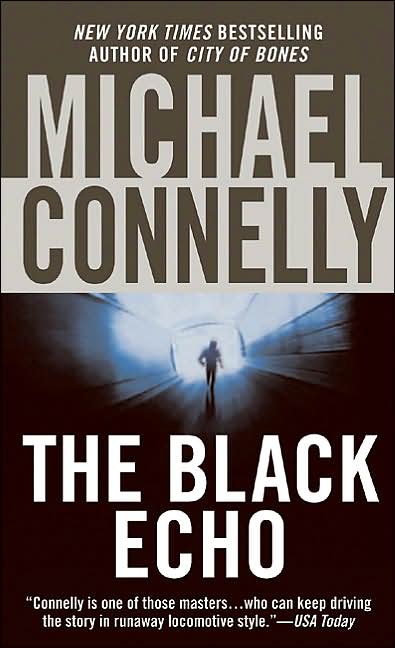
  • Michael Connelly is considered one of the best police/crime writers, and The Black Echo -- while at times clichéd and overdramatic -- appears to be a good starting point for his work:
For maverick LAPD homicide detective Harry Bosch, the body in the drainpipe at Mulholland Dam is more than another anonymous statistic. This one is personal...because the murdered man was a fellow Vietnam "tunnel rat" who had fought side by side with him in a hellish underground war. Now Bosch is about to relive the horror of Nam. From a dangerous maze of blind alleys to a daring criminal heist beneath the city, his survival instincts will once again be tested to their limit. Pitted against enemies inside his own department and forced to make the agonizing choice between justice and vengeance, Bosch goes on the hunt for a killer whose true face will shock him.
  • Suspect by Robert Crais. So the description for this novel started out fairly standard: "LAPD cop Scott James is not doing so well. Eight months ago, a shocking nighttime assault by unidentified men killed his partner Stephanie, nearly killed him, and left him enraged, ashamed, and ready to explode. He is unfit for duty...until he meets his new partner. Maggie is not doing so well, either..." At this point, I was expecting the usual trite nonsense about "Maggie, his astonishingly attractive new female partner etc etc." Instead, the author threw me a curveball and made Maggie a PTSD dog: "...Maggie is not doing so well, either. A German shepherd who survived three tours in Iraq and Afghanistan sniffing explosives before losing her handler to an IED, her PTSD is as bad as Scott's. They are each other's last chance. Shunned and shunted to the side, they set out to investigate the one case that no one wants them to touch: the identity of the men who murdered Stephanie." 
It's the 1960s. A hot August night lies heavy over the Carolinas. The corpse -- legs sprawled, stomach down on the concrete pavement, arms above the head -- brings the patrol car to a halt. The local police pick up a black stranger named Virgil Tibbs, only to discover that their most likely suspect is a homicide detective from California -- and the racially tense community's single hope in solving a brutal murder that turns up no witnesses, no motives, no clues.

Finally, I wanted to share this hilarious review of The Black Echo, by Goodreads user Kemper:
I’ve designed a gadget that will notify me when I run across clichés in crime thrillers with a *BEEP*. Let’s give it a test run on this Michael Connelly novel, shall we? So this is the first book in the series featuring a LAPD detective named Hieronymus “Harry” Bosch *BEEP*. .. ...why is it going off already? Oh, right. Quirky name for a main character. It seems to be calibrated correctly. Let’s proceed. 
In this novel published in 1992, Harry is a Vietnam veteran *BEEP* traumatized by his war experiences *BEEP* as a so-called tunnel rat who fought the VC in their network of underground passages. Harry is a driven detective whose inability to compromise often puts him at odds with his fellow cops *BEEP*. He has no family or life outside of his work *BEEP*, and he’s a borderline burn-out who lives on a diet of coffee, cigarettes and beer. *BEEP* Harry gets called to check out a dead body in a drainage pipe that everyone on the scene instantly assumes is a junkie who overdosed, but he has a hunch that it was actually a murder. *BEEP* Part of the reason Harry is convinced it was homicide is that he recognizes the victim as one of his fellow Vietnam tunnel rats. *BEEP* *BEEP* *BEEP* Damn, the old war buddy schtick really swung the needle into the red on this thing. 
Harry quickly finds evidence that the victim was involved in a high profile bank robbery that had involved tunneling into a vault and emptying the safe deposit boxes. When Harry tries to get the FBI’s attention, he meets a beautiful female agent *BEEP* *BEEP* *BEEP* named Eleanor Wish, but he also lands in hot water with his lieutenant who gets angry and yells at him a lot even though he hasn’t done anything wrong . *BEEP*. He also becomes the target of overzealous Internal Affairs cops *BEEP* that hound him even as he works with the FBI to try and solve the case. This quickly leads to a romance with Agent Wish *BEEP* *BEEP* *BEEP*..and *BEEP*….Uh oh.. I think it’s overloading…*BEEP* *BEEP* *BEEP* *BEEP* Is that smoke?? *BEEP* *BEEP* BEEP* Where’s the off switch? *BEEP* *BEEP* *BEEP**BEEEEEeeeeeeepppppp…pp..pp* Crap. I think Connelly broke it.
Anyhow, the odd thing about his book is that even though it’s got just about every cop thriller cliché you’ve ever heard of, it still works pretty well. 

UPDATE:  longer reviews of The Black Echo can be found at Carol's Notebook and Reactions to Reading.

Tuesday, March 19, 2013

Facebook vs App Developers & Mezrich's The Accidental Billionaires


From today's Wall Street Journal article "Tensions Rise Between Facebook, Developers:"
Last month in Paris, developer Antoine Morcos received an unexpected email: Facebook said it was cutting ties with his photo-sharing application, Vintage Camera. Mr. Morcos, 31 years old, instantly lost nearly half a million registered users who only accessed Vintage Camera through the social-networking site. Facebook, without being specific, said too many users had complained about Vintage Camera, said Mr. Morcos. He appealed, arguing his app fielded less than three complaints for every 1,000 photos shared, but Facebook didn't budge. "I was really shocked," Mr. Morcos said. "Users were sharing as much as 6,000 photos per day on Facebook; now access is blocked." 
Vintage Camera, which competes with Facebook's Instagram app, is one of a growing number of third-party apps that have been blocked by the social network recently. Facebook has long had a complex relationship with developers as it balances a complicated set of interests. The company says it is stepping up efforts to police the network by curbing spam and restricting apps that aren't adding sufficient value to the network. Developers say the crackdown is an attempt to stifle applications that compete with Facebook-owned services or part of an effort to get developers to pay for ads on Facebook...
On Friday, Facebook blocked MessageMe Inc., a messaging service that had just launched days earlier, from accessing users' friends list. Arjun Sethi, a MessageMe co-founder, said Facebook cited a section of its policy that addressed restricting apps that copied a core Facebook product or service. According to people familiar with the matter, the fledgling service had recently rebuffed takeover interest from the social networking company.

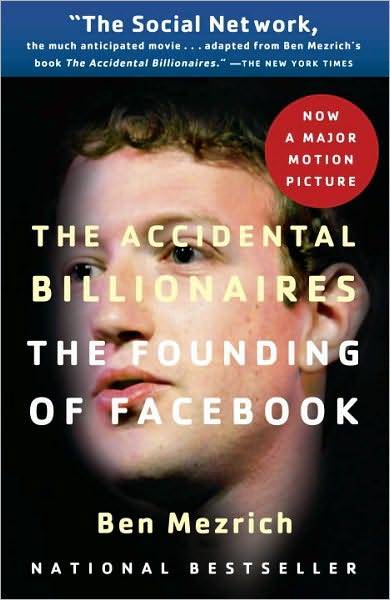
To see what makes Facebook tick, you might look into how it all started by reading Ben Mezrich's novel The Accidental Billionaires (which was the basis for the film The Social Network):
Best friends Eduardo Saverin and Mark Zuckerberg had spent many lonely nights looking for a way to stand out among Harvard University’s elite, comptetitive, and accomplished student body. Then, in 2003, Zuckerberg hacked into Harvard’s computers, crashed the campus network, almost got himself expelled, and was inspired to create Facebook, the social networking site that has since revolutionized communication around the world. With Saverin’s funding their tiny start-up went from dorm room to Silicon Valley. But conflicting ideas about Facebook’s future transformed the friends into enemies. Soon, the undergraduate exuberance that marked their collaboration turned into out-and-out warfare as it fell prey to the adult world of venture capitalists, big money, lawyers.
Keep in mind that since Mezrich's sources were Zuckerberg's enemies and not Zuckerberg himself, you should take the account with a grain of salt.

Women's Boxing & Toole's Million Dollar Baby


We've been a little light on sports news/books here at Newsworthy Novels:  we had our Iditarod post earlier this month and then our Rwandan track star post in February.  That's about it.  But thankfully, a couple of weeks ago the Guardian ran a story about female boxers in Afghanistan and the UK, giving us the perfect excuse for another sports read.

Here are some of the article highlights:
Sadaf Rahimi, Fahima Mohammad and Shabnam Rahman have overcome a host of cultural and financial barriers to pursue their sport in Kabul... Rahimi, Mohammad and Rahman are due to train and attend a charity auction in London to raise money for their gym in Kabul, then travel to Bristol to be coached by Britain's first officially licensed female boxer, Jane Couch MBE. Couch is no stranger to struggles with authorities – in 1998 she persuaded an industrial tribunal to overturn a British Boxing Board of Control ruling that had denied her a licence. The BBBC had argued that premenstrual syndrome made women too unstable to box. After years of lobbying from British women fighters, women's boxing was officially recognised as an Olympic sport on 14 August 2009. At London 2012 there were women boxers from Kazakhstan, North Korea and Turkey, while British boxer Nicola Adams became the first woman to win an Olympic boxing gold.


What's a great book about boxers? Try the heartbreaking novella Million Dollar Baby by the late boxing manager F. X. Toole:
A boxing cut man uses swabs, pressure, ice, and home-mixed salve to stop his fighter's bleeding between rounds. Toole, 70, whose experience as a cut man inspired this hard-boiled debut...writes with blunt authority about this world. His strongest tales feature old trainers or cut men like himself, wisely noble holdovers from boxing's Hibernian age...  His coldly plotted novella "Million $$$ Baby" begins like the most familiar old pulp story of the grumpy veteran trainer and the eager would-be student; then Toole freshens the clich by making the boxer an innocent young woman from the Ozarks.

Sunday, February 24, 2013

Oscar Night, Hollywood, & Leonard's Get Shorty


 Oscar night! From today's BBC story "Oscars: Hollywood prepares for Academy Awards:"
Hollywood is gearing up for what is likely to be one of the most unpredictable Academy Awards for years. Hundreds of fans and members of the world's media are in place on the red carpet and there is tight security outside the Dolby Theatre. The ceremony is due to start at 17:30 Los Angeles time (01:30 GMT). No film is expected to sweep the board, and hostage drama Argo has overtaken historical epic Lincoln in most predictions for the best picture prize. Daniel Day-Lewis, who plays Abraham Lincoln, is favourite for best actor, while Les Miserables star Anne Hathaway is tipped for supporting actress.
What is the quintessential novel about Hollywood culture? It certainly is *not* the inexplicably popular The Day of the Locust, a poorly-written snooze-fest. I vote for Elmore Leonard's Get Shorty:
Mob-connected loanshark Chili Palmer is sick of the Miami grind -- plus his "friends" have a bad habit of dying there. So when he chases a deadbeat client out to Hollywood, Chili figures he might like to stay. This town with its dreammakers, glitter, hucksters, and liars -- plus gorgeous, partially clad would -be starlets everywhere you look -- seems ideal for an enterprising criminal with a taste for the cinematic. Besides, Chili's got an idea for a killer movie -- thought it could very possibly kill him to get it made.