Showing posts with label professions. Show all posts

Thursday, April 4, 2013

Arson, Firefighters, & Emerson's Vertical Burn


We've covered police. How about firefighters?

Here's yesterday's BBC article "Virginia 'serial arsonists' suspected of 77 blazes:"
A former volunteer fireman and his girlfriend are due in court accused of scores of arson attacks on the coast of the state of Virginia, police say. 
Charles Smith, 38, and Tonya Bundick, 40, were arrested on Tuesday morning, after a vacant house was set on fire. A police spokeswoman said each of the pair face one count of arson and one count of conspiracy over Monday's blaze, but more charges would follow. 
All the fires burned empty structures. No injuries have been reported. 
The couple are accused of setting most of the 77 fires that have been set on the Eastern Shore since November.

For a novel about arson and firefighters, try Vertical Burn by Earl Emerson:
Six months after firefighter John Finney fought his way out of a burning Seattle warehouse to get help, no one remembers him giving the directions that pinpointed his partner’s position inside. No one can remember anything about Finney except that he left his friend to die. 
But Finney doesn’t believe the fire was an accident. And he doesn’t believe the campaign against him is one either. 
Trying to reconstruct the events from that tragic day, Finney uncovers suspicious actions by men at the scene. With only one person on his side—a female firefighter who is herself an outcast in the department—Finney begins to piece together an astounding conspiracy that will turn friends into suspects and every man inside the department into a potentially deadly enemy. And the most horrific fire is yet to burn.

Wednesday, April 3, 2013

Jay-Z, Sports Agents, & Coben's Deal Breaker


From yesterday's New York Times article "With New Move, Jay-Z Enters a Sports Agent State of Mind:"
Jay-Z has long been in the inner circle of A-listers like Alex Rodriguez and LeBron James, using their names in his lyrics and their star wattage to enhance his own. Now, he is making a move to turn those relationships into big business in a more formal way. 
With a double-barreled announcement Tuesday that he was opening his own sports agency, and that he was stealing the Yankees star Robinson Cano from the most powerful agent in baseball, Jay-Z stands poised to shake up the sports world by offering athletes something they cannot find anywhere else: himself. 
Roc Nation Sports is the newest arm of Roc Nation, Jay-Z’s “full-service entertainment company” that has quickly built a strong reputation representing artists like Rihanna, Shakira and M.I.A.
For a book with a sports agent protagonist, try Harlan Coben's crime novel Deal Breaker:
Sports agent Myron Bolitar is poised on the edge of the big time. So is Christian Steele, a rookie quarterback and Myron's prized client. But when Christian gets a phone call from a former girlfriend, a woman who everyone, including the police, believes is dead, the deal starts to go sour. Trying to unravel the truth about a family's tragedy, a woman's secret, and a man's lies, Myron is up against the dark side of his business--where image and talent make you rich, but the truth can get you killed.

Tuesday, March 26, 2013

Newspapers' Declining Ad Revenue & Hine's Russell Wiley Is Out to Lunch


I recently posted about reporters and the politics of editing and censorship. But what about the rest of the staff that keep newspapers going?

For some news about advertisers/publishers, I turn to last week's Forbes article "Newspaper Advertising In China Is Being Affected By New Media, Too:"
A switch to online content among newspaper readers in the U.S. has put pressure on the profits of publishers of traditional newspapers such as the New York Times. The same trend is affecting traditional newspaper publishers in Greater China, too. Hong Kong-traded shares of Beijing Media, which sells advertising for the popular China Youth Daily and other Beijing-based media, lost 6.5% today after the company said on Friday net profit last year plunged 46% to 65 million yuan, or $10.5 million.
For a novel about newspaper advertisers/publishers, try Russell Wiley Is Out to Lunch by Richard Hine:
Russell Wiley is in deep trouble. A media executive for the failing Daily Business Chronicle, his career is teetering on the brink of collapse, and his sexless marriage is fast approaching its expiration date. With his professional and personal lives floundering, it's no wonder Russell is distracted, unhappy, and losing faith in himself. Making matters worse are his scheming boss, a hotshot new consultant, and the beguiling colleague whose mere presence has a disconcerting effect on Russell's starved libido. Disaster seems imminent...and that's before he makes a careless mistake that could cost the paper millions. Russell realizes he must take drastic action if he is going to salvage his career, his love life, and what little remains of his self-respect. Sardonic, edgy, and true to life, this gripping novel from author Richard Hine offers an insider's view into a newspaper's inner sanctum.

Inflated Legal Bills & Blachman's Anonymous Lawyer


From yesterday's New York Times article "Suit Offers a Peek at the Practice of Inflating a Legal Bill:"
They were lawyers at the world’s largest law firm, trading casual e-mails about a client’s case. One made a sarcastic joke about how the bill was running way over budget. Another responded by describing a colleague’s approach to the assignment as “churn that bill, baby!” The e-mails, which emerged in a court filing late last week, provide a window into the thorny issue of law firm billing. The documents are likely to reinforce a perception held by many corporate clients — and the broader public — that law firms inflate bills by performing superfluous tasks and overstaffing assignments. 
The internal correspondence of the law firm, DLA Piper, was disclosed in a fee dispute between the law firm and Adam H. Victor, an energy industry entrepreneur. After DLA Piper sued Mr. Victor for $675,000 in unpaid legal bills, Mr. Victor filed a counterclaim, accusing the law firm of a “sweeping practice of overbilling.” 
Mr. Victor’s feud with DLA Piper began after he retained the firm in April 2010 to prepare a bankruptcy filing for one of his companies. A month after the filing, a lawyer at the firm warned colleagues that the entrepreneur’s bill was mounting. “I hear we are already 200k over our estimate — that’s Team DLA Piper!” wrote Erich P. Eisenegger, a partner at the firm. Another DLA Piper lawyer, Christopher Thomson, replied, noting that a third colleague, Vincent J. Roldan, had been enlisted to work on the matter. “Now Vince has random people working full time on random research projects in standard ‘churn that bill, baby!’ mode,” Mr. Thomson wrote. “That bill shall know no limits.”
I don't mean to be unfair to lawyers (I'm sure lots of professions overcharge), but this story was too good to pass up. For a novel to match this, I think satire would be best. It's hard to imagine To Kill a Mockingbird or A Time to Kill focusing much on billable hours. So my recommendation is Jeremy Blachman's hilarious Anonymous Lawyer, "A wickedly funny debut novel about a high-powered lawyer whose shockingly candid blog about life inside his firm threatens to destroy him." I love how it opens:
I see you. I see you walking by my office, trying to look like you have a reason to be there. But you don't. I see the guilty look on your face. You try not to make eye contact. You try to rush past me as if you're going to the bathroom. But the bathroom is at the other end of the hall. You think I'm naïve, but I know what you're doing. Everyone knows. But she's my secretary, not yours, and her candy belongs to me, not you. And if I have a say in whether or not you ever become a partner at this firm--and trust me, I do--I'm not going to forget this. My secretary. My candy. Go back to your office and finish reading the addendum to the lease agreement. I don't want to see you in the hall for at least another sixteen hours. AND STOP STEALING MY CANDY.

Bond Traders & Wolfe's The Bonfire of the Vanities


Our focus on New Journalism authors continues here at Newsworthy Novels.  Now that we've covered Hunter S. Thompson, let's move on to Tom Wolfe.

But first, the news.  From the March 13th Wall Street Journal article "Bond Trading Revives Banks:"
One of Wall Street's most important profit engines is revving back up. Rising appetites for borrowing and investing are fueling a bond market revival, lifting revenue at Wall Street firms that took a beating last year. 
For the first time in a year, traders and bankers are optimistic about the future following a dark second half of 2011. Layoffs, pay cuts and public outrage against the financial industry undermined morale at banks and securities firms, while economic malaise throttled banking and trading businesses.
Perhaps fiction's most famous bond trader is Sherman McCoy, from Tom Wolfe's classic novel The Bonfire of the Vanities:
On a clandestine date with his mistress one night, top Wall Street investment banker and snobbish WASP Sherman McCoy misses his turn on the thruway and gets lost in the South Bronx; his Mercedes hits and seriously injures a young black man. The incident is inflated by a manipulative black leader, a district attorney seeking reelection and a sleazy tabloid reporter into a full-blown scandal...
If you prefer non-fiction, you might like Liar's Poker by Michael Lewis:
In this shrewd and wickedly funny book, Michael Lewis describes an astonishing era and his own rake's progress through a powerful investment bank. From an unlikely beginning (art history at Princeton?) he rose in two short years from Salomon Brothers trainee to Geek (the lowest form of life on the trading floor) to Big Swinging Dick, the most dangerous beast in the jungle, a bond salesman who could turn over millions of dollars' worth of doubtful bonds with just one call. With the eye and ear of a born storyteller, Michael Lewis shows us how things really worked on Wall Street. 

WaPo's Iraq Coverage Controversy & Rachman's The Imperfectionists


I've previously posted about war journalism inside Iraq. How was the war reporting from back home?

Here's yesterday's Guardian article "Washington Post accused of censorship:"
The Washington Post has been accused by a journalist of spiking a piece he was commissioned to write about the US media's failures in the run-up to the invasion of Iraq. 
Greg Mitchell, a veteran journalist and author, claims his assigned piece for the Post was killed and replaced by an article that defended the media's coverage. Headlined "On Iraq, journalists didn't fail. They just didn't succeed", it was written by Paul Farhi. If Mitchell is right, then the Post is guilty of censorship because his own submission attacked the media coverage. That should not have been too surprising to the Post's editors given that Mitchell's latest book, So Wrong for So Long, is a detailed critique of the failures of US press, including the Washington Post, over Iraq.

For a novel about 21st century journalism and the controversies within newspaper offices, try The Imperfectionists by Tom Rachman:
Tom Rachman’s wry, vibrant debut follows the topsy-turvy private lives of the reporters, editors, and executives of an international English language newspaper as they struggle to keep it — and themselves — afloat. Fifty years and many changes have ensued since the paper was founded by an enigmatic millionaire, and now, amid the stained carpeting and dingy office furniture, the staff’s personal dramas seem far more important than the daily headlines. 

Here's an excerpt I really liked; I think Rachman makes it sound very authentic:
He feeds in a fresh sheet and starts anew, writing the piece as it ought to have been: full quotations, dates, troop numbers, disputes within the cabinet, transatlantic hostilities. He knows his craft -- all is couched in terms of possibilities, proposals, balloons floated. All the fabricated sources are "on condition of anonymity," or "officials close to," or "experts familiar with." No one is cited by name. Fourteen hundred words. He calculates how much that will earn him. Enough to pay the rent -- a reprieve. Enough to buy Jerome a decent shirt. To take Eileen out for drinks. 
He reads the article, using a red pen to slice away what might be contested. This shortens the text, so he concocts a couple of repetitive quotes from "an administration official in Washington."

If you'd prefer a non-fiction classic that reads like a novel (and which brings us full circle, back to The Washington Post), try All the President's Men by Carl Bernstein and Bob Woodward:
Beginning with the story of a simple burglary at Democratic headquarters and then continuing with headline after headline, Bernstein and Woodward kept the tale of conspiracy and the trail of dirty tricks coming -- delivering the stunning revelations and pieces in the Watergate puzzle that brought about Nixon's scandalous downfall. Their explosive reports won a Pulitzer Prize for The Washington Post and toppled the President. This is the book that changed America.

Monday, March 25, 2013

Medical School & Shem's House of God


I've previously posted about the difficulties of caregiving.  How about the difficulties of being a doctor -- or even just training to be one?

From today's Boston Globe article "Empathy gap in medical students:"
Flint Wang was eager to start his third year of medical school, when he would finally break free of the classroom and treat patients. But once in the hospital, Wang, like many classmates, felt insecure and discouraged. Doctors don’t hesitate to point out students’ knowledge gaps. And neither do some patients. Medical training can be so stressful that it is sometimes difficult to connect with those being treated. “Your knowledge is shaky and you walk around the wards frazzled,’’ said Wang, 25, who nonetheless is glad he decided to become a doctor. 
The third year of medical school can be particularly bruising. But growing research suggests that something about this formative but punishing experience may harden students toward patients — a transformation that could persist years down the road. At Boston University School of Medicine, where Wang is now in his fourth year, Dr. Daniel Chen has found in studies that students’ empathy scores fell between the time they started medical school and the time they graduated. The most significant drop occurred in the third year, just as students started caring for their first patients.
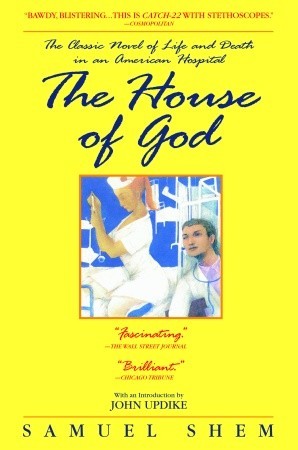
For a novel about medical school, try The House of God by Samuel Shem:
The hilarious novel of the healing arts that reveals everything your doctor never wanted you to know. Six eager interns -- they saw themselves as modern saviors-to-be. They came from the top of their medical school class to the bottom of the hospital staff to serve a year in the time-honored tradition, racing to answer the flash of on-duty call lights and nubile nurses. But only the Fat Man --the Clam, all-knowing resident -- could sustain them in their struggle to survive, to stay sane, to love-and even to be doctors when their harrowing year was done.
And according to the 2009 NYT article "A Book Doctors Can’t Close," the book is still frequently read among the medical community:
It was a raunchy, troubling and hilarious novel that turned into a cult phenomenon devoured by a legion of medical students, interns, residents and doctors. It introduced characters like “Fat Man” — the all-knowing but crude senior resident — and medical slang like Gomer, for Get Out of My Emergency Room. Called “The House of God,” the book was drawn from real life, and 30 years after its initial publication, it is still part of the medical conversation. Written by a psychiatrist, Stephen Bergman, under the pseudonym Samuel Shem, M.D., the novel is based on his grueling, often dehumanizing experiences as an intern at Harvard Medical School’s Beth Israel Hospital in 1974... 
What makes “The House of God” singularly compelling is its brutally honest portrayal of the absurd tragedies and occasional triumphs of hospital life; the once-common abuse of young physicians by their superiors; and the anger and frustration these interns directed at themselves and patients. The novel introduced many derogatory terms to the medical culture. Gomer referred to the elderly, chronically ill patients no intern wants to deal with. The shorthand LOL in NAD (Little Old Lady in No Apparent Distress), was for patients needlessly admitted by their private physicians for expensive work-ups...

Thursday, March 21, 2013

Modeling & Porizkova's A Model Summer


There's a fierce debate afoot in the comments section of the Guardian article "Has the Esquire editor escaped from a Benny Hill sketch?:"
According to Bilmes, Esquire uses pictures of women in his magazine "in the same way we provide pictures of cool cars". "The women that we feature in the magazine are ornamental," he said while speaking on a panel about feminism in the media and advertising. "I could lie to you and say we are interested in their brains as well. We are not. They are objectified."...  Lovely as Bilmes sounds, I can't help wondering whether or not he may also be in possession of a time-travelling automobile, as he is clearly stumbling around the wrong century. Isn't there a Benny Hill sketch somewhere, missing a ruddy-faced pervert?
The most popular comment arguing that it is okay to objectify women in a magazine is one by StVitusGerulaitis:
They [Esquire] are mainly using models as ornaments. That's what models are for. They know that when they take the job and are well paid. Same for male models. There's nothing wrong with appreciating the aesthetic value of other people. We are beautiful animals on the whole.
Regardless of where you stand on that debate, I have a novel for you about modeling, which might give us more perspective into the whole issue. Although the writing is so-so, the upside is that it was written by a former supermodel, so the author knows what she's talking about. The book is A Model Summer by Paulina Porizkova:
An incisive, beautifully written first novel by a former supermodel that explores the glamorous and gritty world she inhabitedOnly a handful of women in the world have experienced what Paulina Porizkova has -- being whisked away to model in Paris while still a teenager, reaching the pinnacle of the profession before her schoolmates had even graduated -- and fewer still have the insight to capture it on paper. In her first novel, Paulina tells the story of Jirina. A tall, scrawny fifteen-year-old girl from Sweden, she's much more accustomed to taunts and disdain than admiration and affection, whether from her classmates or her own family. That all changes when her only friend, Hatty, asks to practice her makeup and photography skills on Jirina. Almost before she knows it Jirina is on a plane to Paris, where she will spend the summer in a milieu entirely alien to her. Living at the home of her modeling agency's owner and constantly subjected to blunt physical assessments, catty and often cruel fellow models, and womanizing photographers...Jirina embarks on a journey beyond her wildest imaginings.

UPDATE:  for a longer review of the novel, please check out the I Read Too Much blog.

Wednesday, March 20, 2013

Police, Email Warrants, & Connelly's The Black Echo


From yesterday's Guardian article "Justice Department backs rewriting law that allows police to read emails:"
The Justice Department said on Tuesday that it supports rewriting 26-year-old legislation that has allowed US law enforcement officials to read a person's emails without a search warrant so long as the email is older than six months or already opened. The law has long been criticized by privacy advocates as a loophole when it comes to protecting Americans from government snooping. "There is no principled basis to treat email less than 180 days old differently than email more than 180 days old," Elana Tyrangiel, acting assistant attorney general in the Office of Legal Policy, told a House judiciary subcommittee. She also said emails deserve the same legal protections whether they have been opened or not. Tyrangiel's testimony gives Congress a starting point as it begins to review a complicated 1986 law known as the Electronic Communications Privacy Act.

I thought it would be interesting to read a novel about a police officer's experiences in the US. Apparently I'm far from alone in this, as "police procedural" appears to be a huge and growing fiction sub-genre. I checked around, including looking at an online police forum, and here's what I came up with:
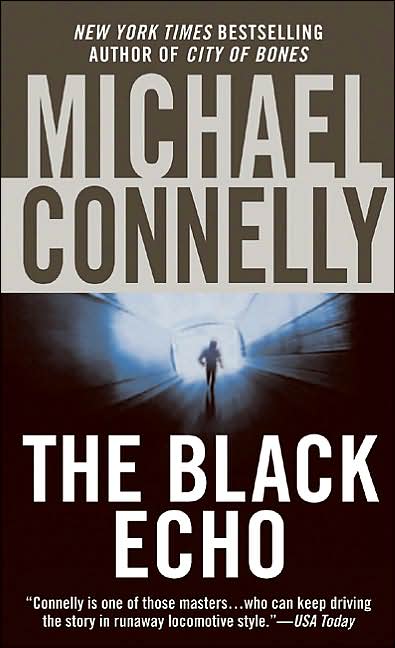
  • Michael Connelly is considered one of the best police/crime writers, and The Black Echo -- while at times clichéd and overdramatic -- appears to be a good starting point for his work:
For maverick LAPD homicide detective Harry Bosch, the body in the drainpipe at Mulholland Dam is more than another anonymous statistic. This one is personal...because the murdered man was a fellow Vietnam "tunnel rat" who had fought side by side with him in a hellish underground war. Now Bosch is about to relive the horror of Nam. From a dangerous maze of blind alleys to a daring criminal heist beneath the city, his survival instincts will once again be tested to their limit. Pitted against enemies inside his own department and forced to make the agonizing choice between justice and vengeance, Bosch goes on the hunt for a killer whose true face will shock him.
  • Suspect by Robert Crais. So the description for this novel started out fairly standard: "LAPD cop Scott James is not doing so well. Eight months ago, a shocking nighttime assault by unidentified men killed his partner Stephanie, nearly killed him, and left him enraged, ashamed, and ready to explode. He is unfit for duty...until he meets his new partner. Maggie is not doing so well, either..." At this point, I was expecting the usual trite nonsense about "Maggie, his astonishingly attractive new female partner etc etc." Instead, the author threw me a curveball and made Maggie a PTSD dog: "...Maggie is not doing so well, either. A German shepherd who survived three tours in Iraq and Afghanistan sniffing explosives before losing her handler to an IED, her PTSD is as bad as Scott's. They are each other's last chance. Shunned and shunted to the side, they set out to investigate the one case that no one wants them to touch: the identity of the men who murdered Stephanie." 
It's the 1960s. A hot August night lies heavy over the Carolinas. The corpse -- legs sprawled, stomach down on the concrete pavement, arms above the head -- brings the patrol car to a halt. The local police pick up a black stranger named Virgil Tibbs, only to discover that their most likely suspect is a homicide detective from California -- and the racially tense community's single hope in solving a brutal murder that turns up no witnesses, no motives, no clues.

Finally, I wanted to share this hilarious review of The Black Echo, by Goodreads user Kemper:
I’ve designed a gadget that will notify me when I run across clichés in crime thrillers with a *BEEP*. Let’s give it a test run on this Michael Connelly novel, shall we? So this is the first book in the series featuring a LAPD detective named Hieronymus “Harry” Bosch *BEEP*. .. ...why is it going off already? Oh, right. Quirky name for a main character. It seems to be calibrated correctly. Let’s proceed. 
In this novel published in 1992, Harry is a Vietnam veteran *BEEP* traumatized by his war experiences *BEEP* as a so-called tunnel rat who fought the VC in their network of underground passages. Harry is a driven detective whose inability to compromise often puts him at odds with his fellow cops *BEEP*. He has no family or life outside of his work *BEEP*, and he’s a borderline burn-out who lives on a diet of coffee, cigarettes and beer. *BEEP* Harry gets called to check out a dead body in a drainage pipe that everyone on the scene instantly assumes is a junkie who overdosed, but he has a hunch that it was actually a murder. *BEEP* Part of the reason Harry is convinced it was homicide is that he recognizes the victim as one of his fellow Vietnam tunnel rats. *BEEP* *BEEP* *BEEP* Damn, the old war buddy schtick really swung the needle into the red on this thing. 
Harry quickly finds evidence that the victim was involved in a high profile bank robbery that had involved tunneling into a vault and emptying the safe deposit boxes. When Harry tries to get the FBI’s attention, he meets a beautiful female agent *BEEP* *BEEP* *BEEP* named Eleanor Wish, but he also lands in hot water with his lieutenant who gets angry and yells at him a lot even though he hasn’t done anything wrong . *BEEP*. He also becomes the target of overzealous Internal Affairs cops *BEEP* that hound him even as he works with the FBI to try and solve the case. This quickly leads to a romance with Agent Wish *BEEP* *BEEP* *BEEP*..and *BEEP*….Uh oh.. I think it’s overloading…*BEEP* *BEEP* *BEEP* *BEEP* Is that smoke?? *BEEP* *BEEP* BEEP* Where’s the off switch? *BEEP* *BEEP* *BEEP**BEEEEEeeeeeeepppppp…pp..pp* Crap. I think Connelly broke it.
Anyhow, the odd thing about his book is that even though it’s got just about every cop thriller cliché you’ve ever heard of, it still works pretty well. 

UPDATE:  longer reviews of The Black Echo can be found at Carol's Notebook and Reactions to Reading.

Saturday, March 16, 2013

The Border Patrol, the US-Canadian Border, & Lynch's Border Songs


We've previously touched on the US-Mexico border (with the post about Boyle's Tortilla Curtain and Mexican immigration), but the northern border has been a little neglected. How are things going up there? Not well, it seems:
Sequester means fewer agents along Canadian border
The union representing border patrol agents says it's being unfairly targeted for spending cuts under the sequester, and that there will be less of a law enforcement presence along the North Country's border with Canada. Starting next month, all U.S. border patrol agents will have to take a day's furlough for every pay period... Shawn Moran is the vice-president of the National Border Patrol council, the agents' union. Moran says the cumulative effect will be 5,000 agents out of the field at any given time. And that means, he says, less secure borders. "We're going to see more people successfully crossing the border. When agents call for backup, there's going to be a longer response time to get backup, there'll be fewer people out there. On top of that, the agency is trying to save money in terms or vehicles and gas. That's also going to slash the amount of area we can effectively cover."

Looks like the sequester will also have a major economic impact on the US-Canada border, as reported last month by Canada's Globe & Mail in its article "Massive spending cuts could have Canada-U.S. border plan shelved:"
Lengthy lineups at the Canada-U.S. border. Long flight delays. A loss of lucrative American business contracts. The much-heralded Beyond the Border initiatives placed on the back burner indefinitely. Canada will feel the sting if U.S. Congress fails this week to avert what’s known as sequestration, an array of massive, mandated spending cuts to a host of federal departments and agencies aimed at slashing America’s $16-trillion national debt... For Canadians, that means quick shopping trips to nearby border communities will almost immediately become a hassle as they’re confronted with waits of several hours at busier entry points. They’ll also feel the long hand of sequestration when they fly given there will be a ripple effect across North America as U.S. officials cancel flights and shutter some control towers and airports.

For a novel centered around the US-Canadian border and the US border patrol, try Jim Lynch's Border Songs:
Six foot eight and severely dyslexic, Brandon Vanderkool has always had an unusual perspective—which comes in handy once his father pushes him off their dairy farm and into the Border Patrol. He used to jump over the ditch into British Columbia but now is responsible for policing a thirty-mile stretch of this largely invisible boundary. Uncomfortable in this uniformed role, he indulges his passion for bird-watching and often finds not only an astonishing variety of species but also a great many smugglers hauling pot into Washington State, as well as potentially more dangerous illegals. What a decade before was a sleepy rural hinterland is now the front line of an escalating war on both drugs and terrorism.

Sunday, March 10, 2013

Caregiving Difficulties & Evison's The Revised Fundamentals of Caregiving


 From last month's NYT editorial "The Reluctant Caregiver:"
Now and then, I refer to the people that caregivers tend to as “loved ones.” And whenever I do, a woman in Southern California tells me, I set her teeth on edge. She visits her mother-in-law, runs errands, helps with the paperwork — all tasks she has shouldered with a grim sense of duty. She doesn’t have much affection for this increasingly frail 90something or enjoy her company; her efforts bring no emotional reward... “It’s important to acknowledge that every relationship doesn’t come from ‘The Cosby Show,’” said Barbara Moscowitz when I called to ask her about reluctance. Ms. Moscowitz, a senior geriatric social worker at Massachusetts General Hospital, has heard many such tales from caregivers in her clinical practice and support groups... For a reluctant caregiver, “the satisfaction is, you haven’t turned your back,” Ms. Moscowitz said. “You can take pride in that.”
Okay: interesting moral quandary that I hadn't previously considered. And the debate only gets deeper in the comments section. Here's the most popular comment:
I strongly disagree with Ms. Moskowitz's claim that there's satisfaction in knowing you haven't turned your back, and you can take pride in that. I'm looking back with resentment and regret at the two years I've already spent in the caregiver role, and I can't imagine that I'll look back in 5 or 10 years or whenever it's over and feel anything but greater resentment and greater regret. I'm never getting these years back, after all, and by the time it's over it may be too late even to get a reasonable level of health back. I think it does caregivers a disservice to sugar-coat the reality, and claim that even for the reluctant caregiver, there's a benefit there at that end. I'd much prefer to hear the unvarnished truth - that many of us are simply unfortunate enough to be conscripted into a lengthy period of life-wasting, soul-sucking servitude for which there is no compensation and no benefit. I think if more people started telling the truth about this, it might make a dent in everyone's expectation that adult children (daughters and daughters-in-law, in particular) should and will just suck it up and do it.
Pretty heavy themes.  For a novel about difficult caregiving, try Jonathan Evison's The Revised Fundamentals of Caregiving:
Benjamin Benjamin has lost virtually everything: his wife, his family, his home, his livelihood. With few options, Ben enrolls in a night class called The Fundamentals of Caregiving, where he is instructed in the art of inserting catheters and avoiding liability, about professionalism, and on how to keep physical and emotional distance between client and provider. But when Ben is assigned to tyrannical nineteen-year-old Trevor, who is in the advanced stages of Duchenne muscular dystrophy, he soon discovers that the endless mnemonics and service plan checklists have done little to prepare him for the reality of caring for a fiercely stubborn, sexually frustrated adolescent with an ax to grind with the world at large. Though begun with mutual misgivings, the relationship between Trev and Ben evolves into a close camaraderie, and the traditional boundaries between patient and caregiver begin to blur as they embark on a road trip to visit Trevor's ailing father.
NB:  article focuses on difficult caregiving for parents, while the book focuses on (initially) difficult caregiving for a client who is not a relative.

UPDATE:  some well-written reviews of The Revised Fundamentals of Caregiving are available on The Book Reporter, the Fiction Writers' Review, and the Next Best Book Blog.

Tuesday, February 5, 2013

U.S. Embassy Ankara Attack & Hart's Savarona

The attack on the U.S. Embassy Ankara was recently in the news again now that Marxists have claimed credit for the bombing:
A Marxist group with a history of political violence in Turkey claimed responsibility on Saturday for a suicide bombing at the American Embassy in Ankara the day before, releasing a statement calling the United States “the murderer of the peoples of the world.”
A good piece of fiction for context on embassy/consulate life, threats abroad, and politics in modern Turkey is J. Patrick Hart's Savarona:
Bill Bigelow is a drifter with a history of mental illness and a habit of removing his clothes at the worst possible times. When he lapses into psychosis, his only hope is George McCall, a junior diplomat with demons of his own, both real and imagined. A literary journey to the heart of modern Turkey, this darkly comic first novel transcends genre with its penetrating wit and observation.